


Artificial AI - artificial intelligence capable of acting independently.
In the context of unprecedented acceleration in AI technology, Agentic AI is considered a revolutionary breakthrough. It can plan, make decisions, and act independently.
What is Artificial AI?
Agentic AI (Agent AI) is a groundbreaking advancement in the field of artificial intelligence, enabling AI systems not only to respond to commands but also to independently plan, make decisions, and proactively take action to achieve specific goals.
Unlike traditional AI, which only performs pre-programmed tasks, Agentic AI operates as an intelligent "agent" that can adapt and learn from its environment to optimize its performance.
Key features of Agentic AI
Autonomy in action
Agentic AI ushers in a new era where actions no longer require waiting for commands. With its ability to independently identify goals, analyze data, and build execution plans, this system operates as an independent 'agent' in the digital environment.
Unlike traditional AI models that only respond on demand, Agentic AI can proactively make decisions and complete tasks without constant human supervision. This not only saves time and resources but also lays the groundwork for self-operating systems—from virtual assistants to automated management platforms—to become increasingly common in modern businesses.
Continuous learning
One of the standout features of Agentic AI is its ability to learn continuously through reinforcement learning. Instead of operating according to a fixed script, this system can adjust its behavior based on real-world feedback from the environment. Each action is recorded, evaluated, and used as an "experience" to improve decisions for future occasions.
As a result, Agentic AI is becoming increasingly intelligent and efficient in its operations, much like an employee who can learn from experience and improve over time. This is what allows it to adapt quickly and maintain high performance in constantly changing environments.
Flexible adaptation
In a constantly changing technological world , adaptability is crucial for survival – and this is precisely Agentic AI's outstanding strength.
Beyond simply following commands or handling familiar situations, this system can quickly reassess the context, identify changes, and flexibly adjust its action strategy. Whether it's changes in input data, task objectives, or operating conditions, Agentic AI maintains effectiveness by adapting almost in real time.
It is this ability to react quickly and adapt intelligently that allows it to operate stably in complex environments, where previously rigid AI systems often failed.
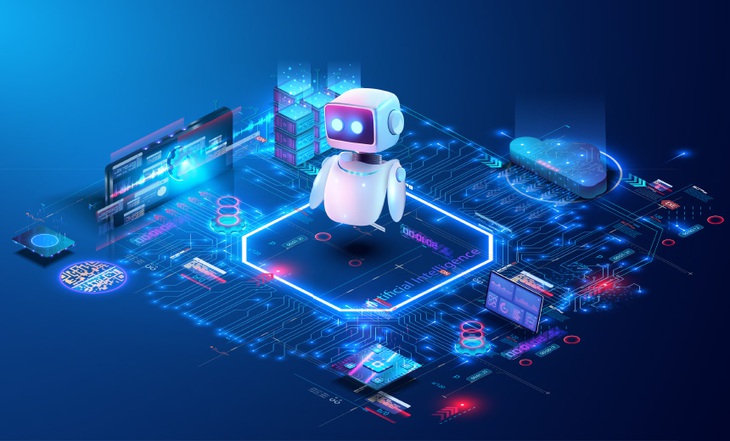
Artificial AI can act without waiting for commands.
Practical applications of Artificial AI
Customer service
In the field of customer service, Agentic AI is demonstrating the potential to completely transform how businesses interact with users. With its multi-channel support capabilities, this system can simultaneously handle a multitude of requests from email, chatbots, calls, and social media – all with quick, accurate, and near-instantaneous responses, without human intervention.
Beyond speed, Agentic AI also delivers depth through sentiment analysis. In call centers, AI can automatically summarize conversations, identify customer emotions such as satisfaction, frustration, or anxiety, and suggest appropriate responses. This not only enhances the user experience but also helps businesses proactively improve service quality and retain customers.
Project management and process automation
Agent AI is opening up a new approach to project management and business process automation. With its ability to process data and make decisions independently, this system can automate the entire operational chain – from input analysis and demand prediction to implementing specific actions. This not only saves businesses time and reduces errors but also increases operational consistency.
In the field of project management, Agentic AI acts as an intelligent "virtual manager": it can monitor progress in real time, automatically allocate resources appropriately, and flexibly adjust plans when changes occur. As a result, projects are ensured to be completed on time, within budget, and in line with objectives – a significant competitive advantage in the modern business environment.
Software programming and development
In the field of programming and software development, Agentic AI is becoming a powerful tool to support engineering teams. Unlike previous AI tools that simply suggested code snippets, Agentic AI can automatically write code, detect logic errors, and suggest optimization solutions, helping programmers shorten development time while maintaining output quality.
More importantly, this system continuously learns from real-world projects, so the more it's used, the more accurate and effective its support becomes.
Furthermore, during the software testing phase—a labor-intensive process—Agentic AI can automatically create and execute test scenarios, detecting potential errors before the software is deployed. This results in a smoother development process, reduced risk, and increased reliability of the technology product.
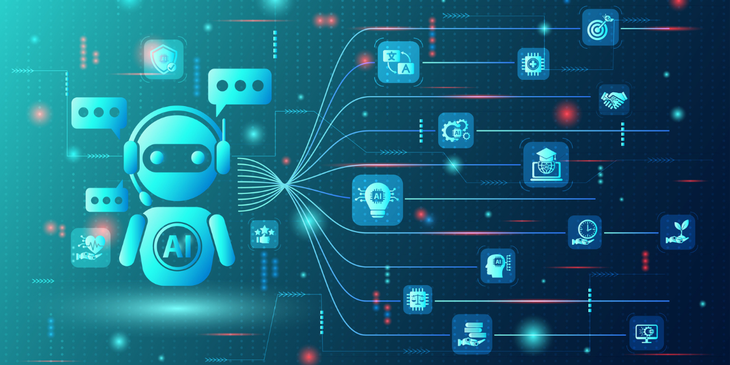
Artificial AI can be applied to many different fields.
Challenges and risks
Bias in decision-making
A major challenge for Agentic AI lies in the risk of bias in decision-making. Because the system learns and develops based on readily available training data, if this data contains biases or inaccuracies, the AI is very susceptible to adopting and reinforcing those biases.
As a consequence, decisions made by Agentic AI may be unfair or inaccurate, affecting users and operational processes. This problem highlights the urgent need for monitoring and reviewing input data, as well as developing control mechanisms to ensure AI operates transparently and objectively in all situations.
Lack of transparency
One of the major challenges for AI is the lack of transparency in the decision-making process. Next-generation AI systems often operate based on complex algorithms and deep neural networks, making it difficult to clearly explain how they make choices.
This creates barriers to controlling and monitoring system behavior, especially in cases where it is necessary to trace the root cause of errors or controversial decisions.
Lack of transparency not only erodes user trust but also poses a significant challenge to establishing regulations and standards that ensure the accountability of AI in the future.
Dependence on automation
The increasing reliance on AI in automation operations also brings significant risks.
When humans place too much trust in and delegate complete control to AI systems, the ability to intervene promptly in emergencies or unusual situations can be significantly diminished. This not only leads to a loss of control in incident handling but also poses a risk of AI's erroneous decisions having serious consequences before humans can intervene.
Therefore, maintaining a balance between automation and human control remains a key challenge in safely and effectively applying AI.
Artificial intelligence (AI) is ushering in a new era for automation and artificial intelligence with its ability to act independently and adapt flexibly. However, alongside these outstanding benefits, ensuring transparency, controlling risks, and balancing human-machine interactions remain major challenges that need to be addressed.
The future of Agentic AI will largely depend on how we apply and monitor this technology intelligently and responsibly.
Source: https://tuoitre.vn/agentic-ai-va-cuoc-cach-manh-tri-tue-nhan-tao-hanh-dong-doc-lap-20250603102737776.htm
![[Photo] Prime Minister Pham Minh Chinh presides over a meeting on private sector economic development.](/_next/image?url=https%3A%2F%2Fvphoto.vietnam.vn%2Fthumb%2F1200x675%2Fvietnam%2Fresource%2FIMAGE%2F2025%2F12%2F20%2F1766237501876_thiet-ke-chua-co-ten-40-png.webp&w=3840&q=75)




























































































Comment (0)