

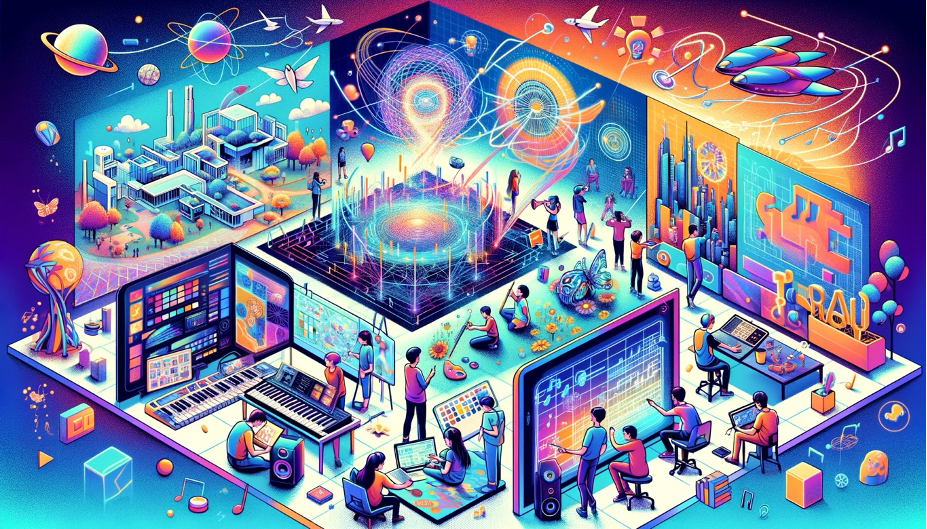
AI generative tools have astonished the academic world. They performed exceptionally well in their first year at Harvard, outperformed Stanford sophomores in clinical reasoning exercises, and even surpassed students at a prestigious university in the field of creativity—a field long considered the exclusive domain of humans.
We must not forget the long-standing shortcomings of the current education system – from unequal access to teacher burnout. AI is not only a challenge, but also an opportunity to address these persistent problems and elevate human potential and creativity. To do this effectively, we need a serious rethinking of how we develop skills, assess, and teach.
What skills are needed in the world of AI?
What skills will be essential for learners in an AI-driven world? While no one has a definitive answer yet, a logical starting point is to build a foundation of basic understanding of AI – how it works, its strengths, and its weaknesses. Developing this fundamental understanding is crucial to dispelling the mystique surrounding AI and avoiding misconceptions such as the anthropomorphism of AI.
Another essential skill is the ability to identify problems—a skill often overshadowed by problem-solving skills. In a world teeming with AI tools that can provide instant solutions, the real value lies in correctly identifying the problem, clearly analyzing its boundaries, and creatively reshaping it to expand the solution space.
The ever-changing AI landscape also demands that learners possess skills in exploration and experimentation. As new and updated AI tools emerge in increasing numbers, adaptability and rapid learning are crucial. Because these tools often lack user manuals, and their practical applications can surprise even their creators, cultivating an exploratory mindset and a willingness to learn through trial and error is key.
Critical thinking and self-reflection are also becoming increasingly important. As the lines between reality and virtuality blur, and AI tools sometimes generate misinformation or bias, we need people capable of processing information with a clear mind and critical thinking. At the same time, we need people who can reflect on the far-reaching impact of AI on how we solve problems, our personal identities, and the structure of society – because AI is increasingly permeating every aspect of life.
How do we assess the situation in the era of AI companionship?
Traditional assessment methods that the education sector has used for a long time are gradually becoming outdated. But that could be a positive sign.
When we acknowledge that students will use AI-generated tools—whether permitted or not—it opens up new expectations for learning outcomes. We can go beyond quantitative essays or assignments to require more modern, practical, and application-oriented learning products. This could involve creating prototypes, software, or functional objects that better prepare learners for the next steps in their studies and careers.
However, allowing the use of AI-generated learning in assignments is only the first step. Equally important is the integration with close guidance and mentorship from teachers. This requires new pedagogical approaches specifically designed for the AI context, but still based on proven educational theories.
Personalized education for everyone.
Personalized education has long been the privilege of a small segment of learners. AI generation could change that.
It offers a vision of a future where everyone has access to learning tailored to their individual needs – including the 250 million children who are currently out of school. Imagine a world where AI teaching assistants can create learning content and answers tailored to each learner, based on their individual abilities and interests, no matter where they are in the world.
It sounds like science fiction, but this is gradually becoming a reality. For example, Khanmigo – an AI assistant developed by Khan Academy to support students in various subjects. Currently, users can also create custom chatbots from ChatGPT without needing programming skills.
AI generation also promises to provide teachers with a suite of virtual assistants to handle administrative tasks or help create new learning materials. In the context of teacher shortages and burnout, AI could make a huge difference, allowing teachers to dedicate more time and energy to their primary job: teaching.
In a future where AI plays a central role in information dissemination, the goals of the classroom also need to change. Classrooms could shift to a “flipped classroom” model, where class time is dedicated to truly interactive and collaborative activities.
Perhaps the greatest threat to education in the age of AI lies not in the technology itself, but in our reluctance to seriously explore and leverage the vast potential of AI to usher in a new era of learning, teaching, and development.
(According to Weforum)
Source: https://vietnamnet.vn/ai-tao-sinh-gop-phan-mo-them-nhieu-huong-moi-trong-giao-duc-2393763.html

![[Photo] Prime Minister Pham Minh Chinh presides over a meeting on private sector economic development.](/_next/image?url=https%3A%2F%2Fvphoto.vietnam.vn%2Fthumb%2F1200x675%2Fvietnam%2Fresource%2FIMAGE%2F2025%2F12%2F20%2F1766237501876_thiet-ke-chua-co-ten-40-png.webp&w=3840&q=75)













































































Comment (0)