


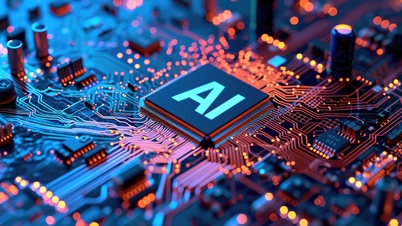
The conference consisted of five thematic workshops in the morning and one plenary session in the afternoon, focusing on the role of artificial intelligence (AI) in the governance, operation, and sustainable development of urban areas.
In the context of rapidly increasing urban populations, growing pressure on socio-technical infrastructure, and higher public expectations for transparent and convenient public services, the need for innovation in urban governance models based on data and technology has become urgent. AI is no longer an experimental trend but is gradually becoming an important tool to help cities improve their governance capacity and the quality of services provided to citizens.
According to experts, AI has become a key element in the operation of smart cities worldwide. Mr. Pham Quang Nhat Minh, Director of the AI Research and Development Center atFPT Group, stated that many cities around the world have effectively applied AI in infrastructure and traffic management. AI helps shorten construction inspection times, detect risks early in urban areas, and support authorities in handling incidents promptly. Furthermore, this technology is also applied in public finance management, helping to detect fraud and irregularities in tax declarations, social insurance, and bidding processes.
In Vietnam, Hanoi is one of the pioneering localities in applying AI in public administration and service delivery. Mr. Hoang Van Bang, Deputy Director of the Hanoi City Public Service Center, stated that with a population of nearly 10 million people and a massive volume of administrative procedures, AI not only optimizes processing efficiency but is also an essential requirement for improving the quality of service to citizens and businesses, as well as enhancing public administration capacity.
Notably, AI is helping public services shift from a "passive" to a "proactive" approach. Instead of citizens independently researching and completing applications, the system can analyze data to suggest appropriate services, assisting citizens in standardizing their applications from the outset. AI virtual assistants communicate in natural language, support multiple languages, and make services more accessible to the elderly and people with disabilities.
Currently, Hanoi's "AI Call Center," operating 24/7, has recorded tens of thousands of successful calls; the chatbot handles hundreds of thousands of question-and-answer interactions, contributing to reducing document errors and shortening waiting times. Complex situations are still forwarded to specialized staff to ensure accountability.
According to Mr. Nguyen Tu Quang, Vice Chairman of VINASA, this is a crucial time for Vietnam to catch up with the global AI trend. Building an AI ecosystem, promoting ethical principles, and strengthening cooperation between the government, businesses, and academia will help AI become an important driving force in urban governance, aiming towards smart, safe cities that better serve the people.
Source: https://daidoanket.vn/ai-trong-quan-tri-do-thi.html

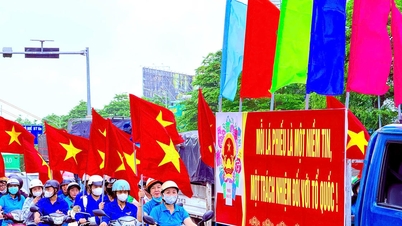
![[Photo] Hanoi is ready for the "National Festival"](https://vphoto.vietnam.vn/thumb/1200x675/vietnam/resource/IMAGE/2026/03/12/1773305846167_ndo_br_z7612336508628-14627dc7d18cc27532ffea5d4089713b-4105-jpg.webp)

























![[Photo] Trial run of the election process at polling stations in Dong Da ward (Hanoi)](https://vphoto.vietnam.vn/thumb/1200x675/vietnam/resource/IMAGE/2026/03/12/1773306146728_ndo_br_van-hanh-thu-to-bau-cu-4070-755-jpg.webp)




















































Comment (0)