

Change the way you do things, create stable livelihoods.
Previously, lack of capital was one of the biggest obstacles preventing many poor and near-poor households in the coastal plains of Quynh Luu from expanding production. Now, however, policy-based capital has become a support system, enabling people to be more proactive in their livelihoods. Many households have shifted from small-scale, purely agricultural production to family farms, large-scale farms, service, processing, and business models. The days of food shortages and lack of production capital are gradually receding; replaced by sturdy houses, machinery for production, fishing boats, and small businesses creating jobs for local workers.
The case of Mr. Nguyen Van Hoa in Quynh Luu commune is an example; from being a hired laborer, thanks to a loan from the employment creation program, he invested in buying saws and wood-cutting machines and opened a fine art woodworking workshop. The production facility not only provides a stable income for his family but also creates regular jobs for many workers in the village.
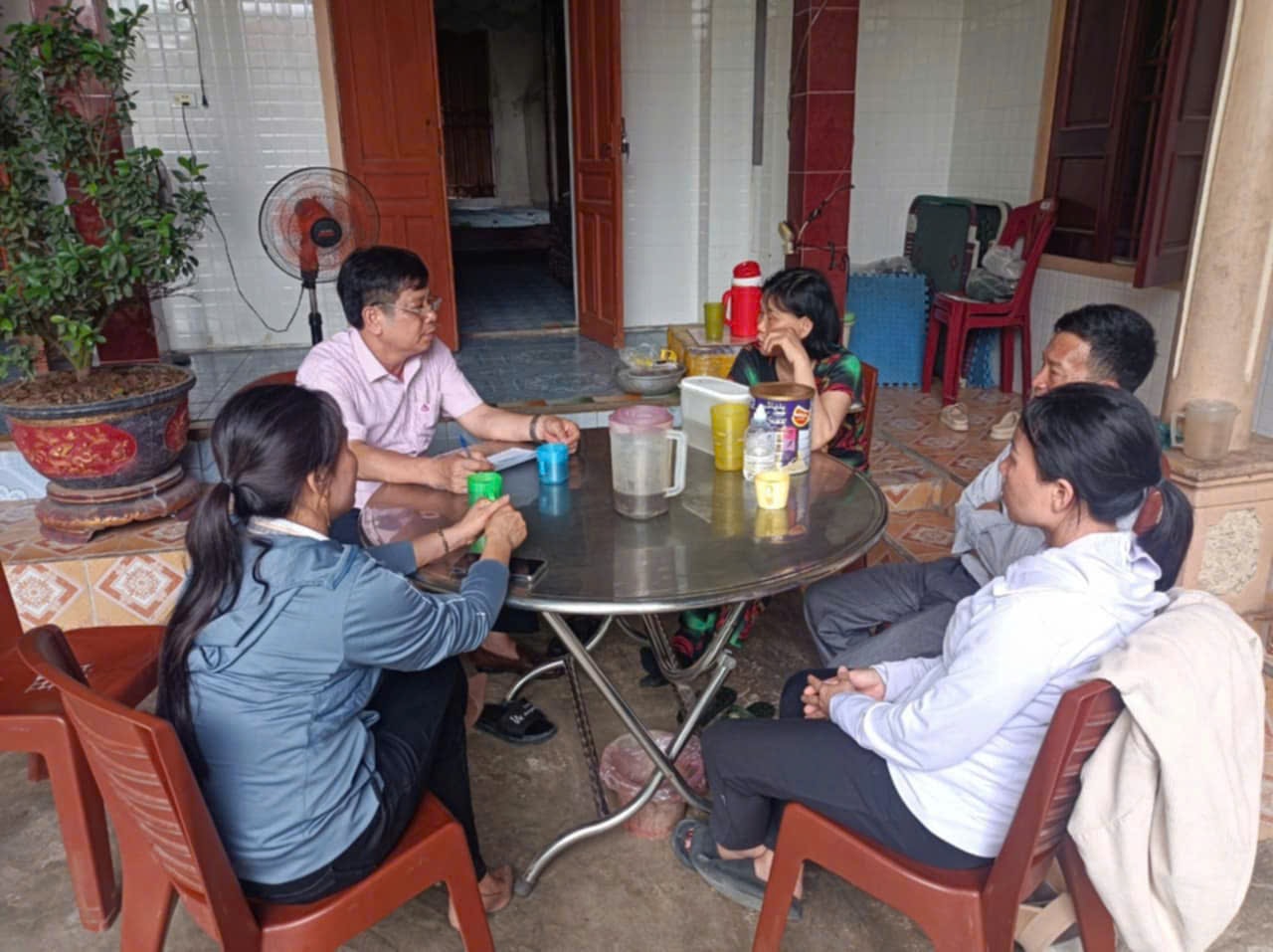
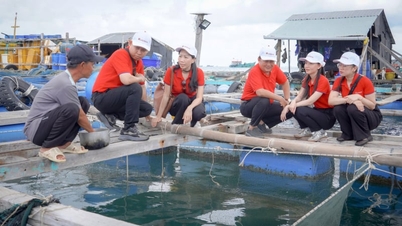
Also in Quynh Luu commune, Ms. Nguyen Thi Lien in Song Ngoc village used 90 million VND in loans for poor households to establish a model for exploiting and processing seafood. With this capital, her family was able to purchase fishing gear for their offshore fishing vessel and buy raw materials for their fish sauce production facility. Thanks to the effective use of the loan, her family escaped poverty, repaid the debt on time, and became a successful farming household.
"Thanks to the low-interest policy loans, my family was able to buy more tools, machinery, and raw materials in time for the production season, and at the same time pay salaries to contract workers, our family's finances have improved significantly," Ms. Lien shared.
Stories like those of Mr. Hoa and Ms. Lien demonstrate that policy-based credit is not just about immediate support loans; when it reaches the right people, with the right needs, and at the right time, that capital becomes a "lever" to help people change their business practices, create stable livelihoods, and gradually rise out of poverty sustainably.
Maintaining a smooth flow of capital after the merger.
Since its establishment in 2003, through 14 policy credit programs, the Quynh Luu branch of the Vietnam Bank for Social Policies has become an "extended arm" of the Party and the State in implementing social security policies and supporting the poor and vulnerable groups.
With a network of 25 fixed transaction points at the commune level, 473 Savings and Loan Groups in villages, hamlets, and neighborhoods, along with thousands of mobile transaction groups reaching out to the grassroots, policy credit funds have been conveniently and promptly delivered to the people. This is a crucial factor in rural and coastal areas, where many households need capital but face limitations in terms of transportation, information, and procedures for accessing credit.
According to Nguyen Quy Thai, Director of the Social Policy Bank of Quynh Luu district, the unit currently has a total capital of 1,057,026 million VND, an increase of 86,498 million VND compared to the end of 2025; of which, the entrusted capital from the local budget reached 3,884 million VND. All capital is delivered by credit officers directly to villages and communes, reaching the intended beneficiaries. Most poor households, near-poor households, and newly-escaped-poverty households with needs and eligibility have received timely policy loans.
Specifically, loan disbursements in the first three months of 2026 reached VND 126.308 billion; the entire unit has 18,761 customers with outstanding loans. This result shows that the flow of policy credit capital has been maintained smoothly after the implementation of the two-tiered local government model and the merger and expansion of commune-level administrative units.
Beyond just credit growth figures, the most evident effect of policy-based capital flows is their impact on people's lives and the local poverty reduction goals. As of March 31, 2026, the poverty rate in Quynh Luu was 3.71%. This result reflects the involvement of the entire political system, in which policy-based credit plays a crucial role in supporting people with capital for production and business, and improving their income.
According to Nguyen Van Thuong, Secretary of the Party Committee of Quynh Anh commune, former Vice Chairman of the People's Committee of Quynh Luu district, and former Head of the Board of Directors of the Social Policy Bank of Quynh Luu district, the poverty reduction results in the area clearly reflect the contribution of the Social Policy Bank. Preferential capital has become a "lever" helping people proactively engage in production and business, improving their quality of life.
To ensure the effective use of capital, the Quynh Luu branch of the Vietnam Bank for Social Policies (NHCSXH) not only focuses on disbursement but also emphasizes coordination with local Party committees, authorities, and entrusted socio-political organizations. The review, management, inspection, and supervision of loan capital are carried out through a network of savings and loan groups at the grassroots level, ensuring that capital reaches the right recipients, minimizing risks, and enhancing borrowers' responsibility in using the funds.
Entering a new phase, the Quynh Luu branch of the Vietnam Bank for Social Policies (NHCSXH) continues to effectively implement Directive No. 39-CT/TW of the Party Central Committee on improving the effectiveness of social policy credit in the new period; focusing on mobilizing resources, improving credit quality, expanding policy coverage, and prioritizing the application of digital transformation in credit activities, bringing modern banking transactions closer to poor households and policy beneficiaries.
In the coastal plains of Quynh Luu, policy-based capital continues to flow into every village, every household, and every production model. This is capital of social security, of trust, and of aspirations for progress. When preferential capital is delivered promptly, safely, and to the right recipients, people not only have more opportunities to escape poverty but also have the chance to legitimately become wealthy in their own homeland.
Source: https://daibieunhandan.vn/an-sinh-vung-ven-bien-quynh-luu-10418740.html
![[Image] A brilliant symphony and explosive power in the skies of Da Nang.](https://vphoto.vietnam.vn/thumb/1200x675/vietnam/resource/IMAGE/2026/05/31/1780196945787_anh-man-hinh-2026-05-31-luc-10-08-51.png)

























![[Video] Sunset at Lap An Lagoon – Where the sun sets over the fishing nets](https://vphoto.vietnam.vn/thumb/340x192/vietnam/resource/IMAGE/2026/05/31/1780192137701_beach-landscape-sea-water-nature-grass-745871-pxhere-com.jpeg)









































































Comment (0)