Over the years, Vietnam has consistently maintained its position as a fast-growing economy within ASEAN. In particular, attracting foreign direct investment (FDI) has been a crucial factor in the development of this S-shaped country.
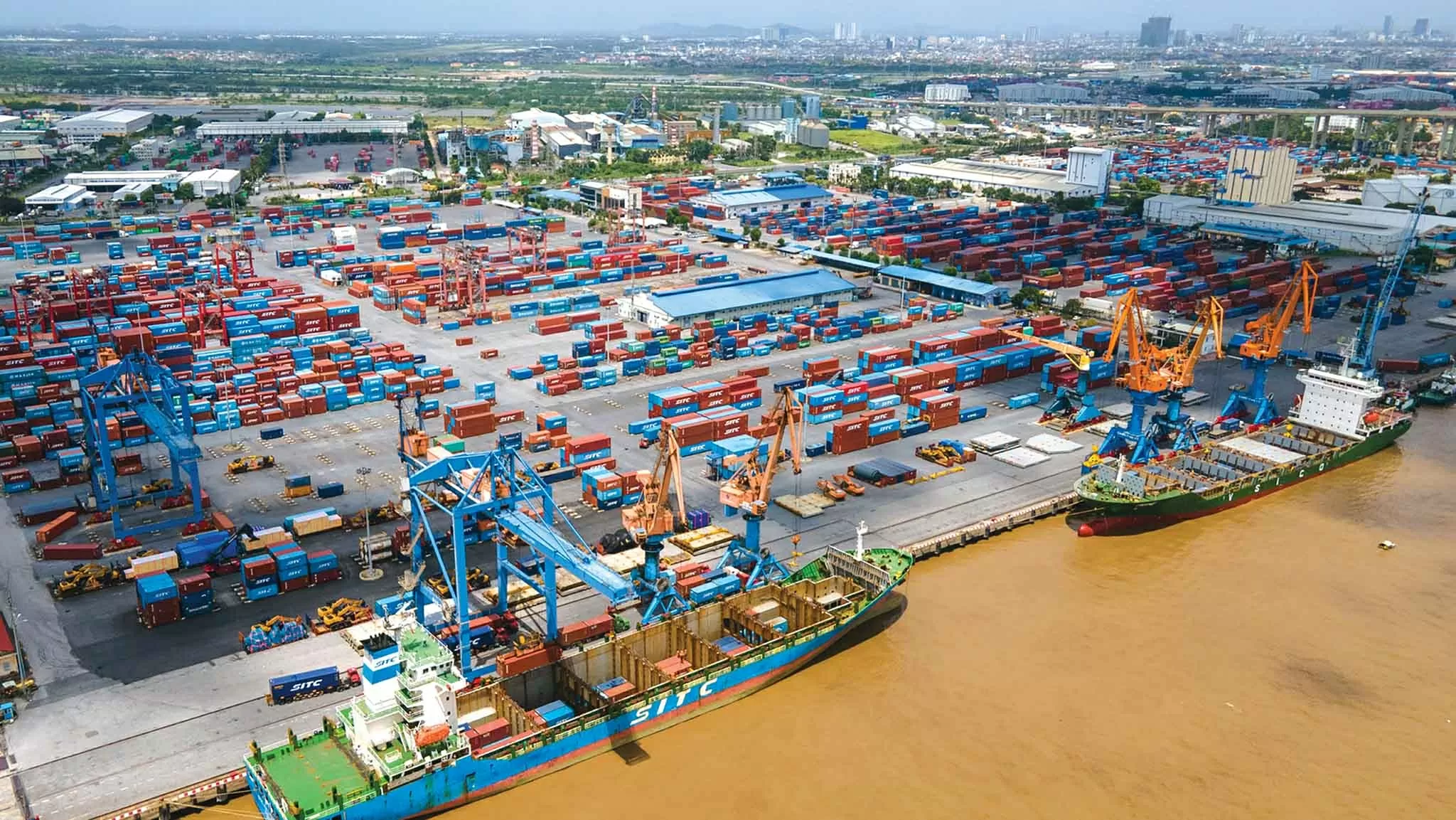 |
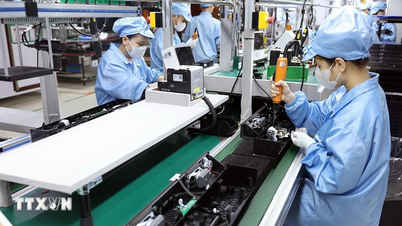
| Vietnam recorded impressive trade results, with broad-based growth across many key export product groups. (Photo: Hoang Anh) |
In a report titled “ASEAN Perspectives – Bigger, Better, and Much More Ahead,” published in November 2024, HSBC’s Global Research department stated that, from an economy worth $473 billion in 1992, ASEAN has grown significantly to reach $3.63 trillion in 2023.
The share of the ASEAN-6 region (including Singapore , Indonesia, Malaysia, Philippines, Thailand, and Vietnam) in global Gross Domestic Product (GDP) increased from 1.9% to 3.5% during the same period.
For investors seeking dynamism, ASEAN is an ideal destination as the region is capturing an increasing share of many economic activities worldwide . Each economy within the bloc leads in at least one sector.
Firmly committed to expanding coverage.
According to HSBC experts, manufacturing and exports are the two main drivers of ASEAN's economic development. Since 1992, ASEAN countries have continuously removed intra-regional trade barriers, transforming the region into a virtually borderless market. The Common Effective Preferential Tariff (CEPT) Agreement and the ASEAN Trade in Goods Agreement provide a solid foundation for the bloc to promote free trade.
From 2005 to 2010, ASEAN, as a unified entity, participated in free trade agreements with China, South Korea, Japan, Australia, and New Zealand. A notable example is the Regional Comprehensive Economic Partnership (RCEP).
When protectionism rose to power, ASEAN took the complete opposite approach. The bloc continued to leverage free trade to import crucial inputs at competitive prices, transforming them into higher-value goods and then selling them to a larger market. This strategy bore fruit, with ASEAN increasing its share of global merchandise exports from 6.1% in 2005 to 7.4% in 2023, surpassing Japan and South Korea combined.
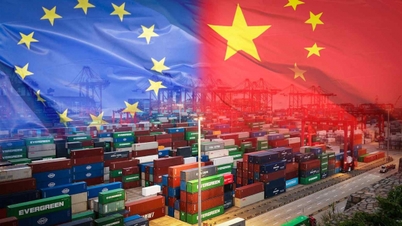
In recent times, as global trade tensions – particularly between the US and China – have increased, ASEAN has emerged as a leader in attracting FDI. This is due to the bloc's steadfast commitment to expanding its reach. This openness is the main strength of the ASEAN economy.
According to the International Monetary Fund's (IMF) World Economic Outlook report, over the next five years, ASEAN will not only maintain its impressive growth momentum but is also projected to become one of the fastest-growing economic blocs in the world, with an average growth rate of 4.7%. The bloc's growth will be not only about scale but also about quality. The bloc will increase its economic value through innovation and improved productivity.



“ASEAN demonstrates a commitment to innovation, absorbing modern technology and expertise to help businesses sharpen their weapons while seeking larger markets for consumption. Therefore, we believe that ASEAN – with its core being intra-regional free trade – will remain resilient, continue to grow in size and influence,” assessed HSBC’s Global Research department.
| Vietnam is projected to be the fastest-growing economy in the ASEAN region this year. This strong growth is driven by three key factors: trade, foreign direct investment (FDI), and public investment. |
The fastest-growing economy in ASEAN.
In the broader ASEAN landscape, in an interview with a reporter from the World and Vietnam Newspaper, Ms. Yun Liu, an economist in charge of ASEAN markets at HSBC's Global Research department, was particularly impressed with Vietnam as a "shining star." Over the past years, Vietnam has consistently maintained its position as a fast-growing economy within the bloc, with its Gross Domestic Product (GDP) reaching 7.09% in 2024 and projected to continue stable growth in the following years.
Moreover, the story of FDI has truly been a crucial factor in Vietnam's development over the past decade. The country is increasingly becoming an attractive destination for many foreign investors and has good momentum to attract high-quality FDI flows.
A young population, numerous Free Trade Agreements (FTAs), a stable currency, and low electricity prices compared to other countries in the region are factors that help Vietnam attract FDI. The S-shaped country is currently a destination for a series of large global businesses such as Samsung, LG, Apple's suppliers Foxconn, Goertek, Luxshare, Compal, Google, and Nvidia.
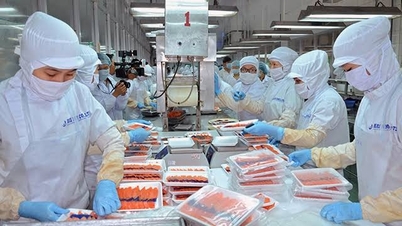
Vietnam has recorded impressive trade results, with widespread growth in many key export product groups. According to the Ministry of Industry and Trade, by 2024, Vietnam is considered the world's factory with annual trade turnover increasing by 15-17%, a trade volume of nearly 800 billion USD, ranking 18th among countries with large trade volumes in the world.
 |
| Ms. Yun Liu, ASEAN Market Economist, Global Research Department, HSBC Bank. (Photo: Provided by the interviewee) |
Based on these results, Ms. Yun Liu predicts that Vietnam will be the fastest-growing economy in the ASEAN region this year. This strong growth stems from three main factors.
Firstly , trade. This remains one of the main pillars of growth for the S-shaped country.
Secondly , FDI inflows. This year, HSBC believes that FDI inflows into Vietnam will continue to increase and strongly support economic growth. In the current context, many foreign investors, especially European investors, are seeking investment markets with a strong commitment to the green transition. Thus, "green" is a very important factor in attracting more FDI to Vietnam.



Thirdly , public investment. The Vietnamese government's efforts to accelerate the disbursement of public investment funds are crucial for maintaining strong growth.
Furthermore, economist Yun Liu believes that by 2025, domestic consumption will catch up with the growth of trade, thereby creating the necessary impetus to boost Vietnam's economy more strongly. Several government policies also support this growth momentum. For example, the policy of extending the 2% VAT reduction for the first six months of 2025 helps reduce the selling price of goods and services for consumers, promotes business production and consumption, and contributes to creating more jobs for workers...
Furthermore, Vietnam's capital market has significant potential. Currently, the country relies heavily on credit for capital mobilization, which can increase risks during economic downturns. According to Ms. Yun Liu, diversifying and expanding capital raising channels is crucial to strengthening Vietnam's financial resilience. Investors hope that Vietnam's capital market will be fully developed if the country is upgraded to emerging market status this year.
Naturally, the uncertainty surrounding US tariff policies could cast a dark cloud over global trade prospects, and Vietnam cannot remain unaffected. Investors may become more cautious in the short term, which could somewhat impact FDI flows into the country.
Nevertheless, Ms. Yun Liu believes that Vietnam's fundamentals remain relatively strong in the long term. This will be the "anchor" that helps Vietnam stand firm against instability and confidently continue writing its success story in the ASEAN region.
Source: https://baoquocte.vn/an-tuong-sao-sang-viet-nam-306070.html