

Food security and climate issues
On January 21st, in Hanoi, the Institute for Agricultural and Environmental Policy and Strategy (ISPAE), in collaboration with the International Rice Research Institute (IRRI), organized a workshop entitled "Investment Mechanisms to Promote Low-Emission Rice Farming in ASEAN Countries".
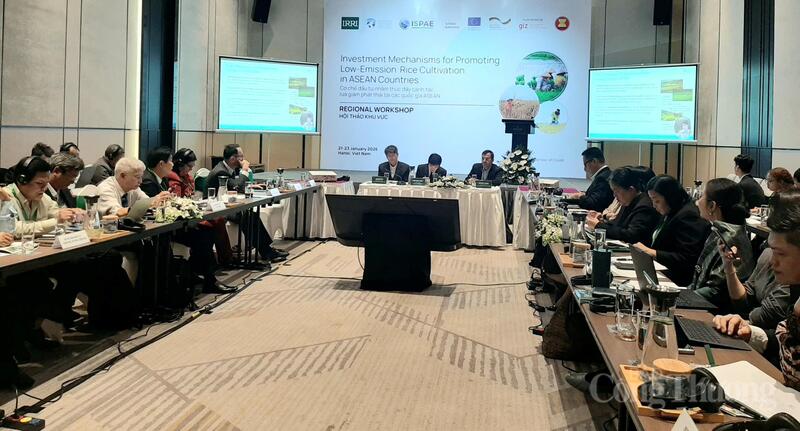
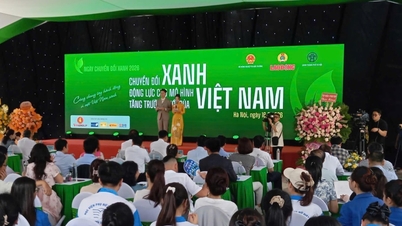
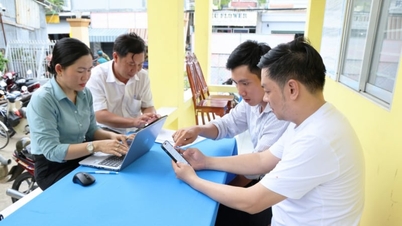
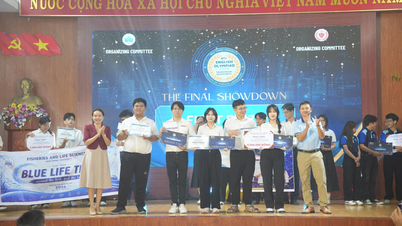
Overview of the workshop "Investment Mechanisms to Promote Low-Emission Rice Farming in ASEAN Countries". Photo: NH
The workshop brought together approximately 70 delegates representing government agencies, scientists , businesses, international organizations, and farmers from Vietnam, the Philippines, Thailand, Indonesia, Cambodia, and Laos. The event was co-organized by IRRI and ISPAE, with support from the Clean Air and Climate Alliance (CCAC), the Methane Reduction Acceleration in Southeast Asia (MASEA) project, and the German International Cooperation Organization (GIZ).
Southeast Asia is one of the world's largest rice-producing regions, providing livelihoods for tens of millions of farming households and playing a cornerstone of global food security. However, traditional wet rice farming is also a significant source of methane emissions. As ASEAN countries accelerate the implementation and updating of their Nationally Determined Contributions (NDCs) under the Paris Agreement, the rice industry faces a strong need for a transformation towards lower-emission, more sustainable practices.
Mr. Jongsoo Shin, Director of IRRI's Asia Region, stated that this is a crucial moment for ASEAN to assert its leading role globally in low-emission rice production. According to him, this transition will not only contribute to environmental protection but also open up new markets, enhance the value chain of rice production, and improve sustainable livelihoods for millions of farmers in the region.
In practice, each ASEAN country is at a different stage of transformation, but all offer noteworthy lessons. Thailand is expanding the effectiveness of the alternating wetting-drying technique; the Philippines is integrating climate change adaptation practices into its national program; Vietnam is implementing the conversion of one million hectares of rice in the Mekong Delta towards high-quality, low-emission crops; while Indonesia, Cambodia, and Laos are developing innovation strategies tailored to their domestic conditions.
At the workshop, delegations from the Philippines, Vietnam, and Thailand presented comprehensive information on policies, challenges, and field research findings. Surveys of thousands of farming households revealed the potential for widespread adoption of emission reduction technologies in rice cultivation.
Delegates also focused on discussing investment mechanisms, climate finance tools, and regional cooperation opportunities to develop low-emission rice production systems in ASEAN. The goal was to identify solutions and directions to strengthen regional linkages, contributing to the effective achievement of greenhouse gas emission reduction targets in rice production.
According to Dr. Alisher Mirzabaev, senior scientist at IRRI and project director at CCAC, the analyses have revealed feasible pathways for ASEAN countries to significantly reduce methane emissions while improving farmers' incomes, with socio-economic benefits attractive enough to drive large-scale transition.
Mobilizing climate finance and expanding regional cooperation.
Dr. Tran Cong Thang, Director of ISPAE, stated: Rice plays a particularly important role in Vietnam's emission reduction strategy. According to the 2020 inventory, rice cultivation accounts for approximately 40% of the country's total methane emissions and over 66% of emissions in the AFOLU sector. Therefore, transitioning to low-emission rice cultivation is a key condition for Vietnam to fulfill its commitment to reduce methane emissions by 30% by 2030 and achieve net emissions of "zero" by 2050.
Vietnam is implementing several major programs such as the VNSAT project, the sustainable development plan for one million hectares of high-quality, low-emission rice linked to green growth in the Mekong Delta, and the plan for reducing emissions from crop production in the period 2025-2035. However, the biggest challenge currently is mobilizing financial resources and attracting investment for the entire value chain.
According to Dr. Tran Cong Thang, the workshop not only aimed at specific policy recommendations but also laid the foundation for long-term cooperation among ASEAN countries in the green transformation of the rice industry, a strategically important sector for global food security and climate change.
The workshop "Investment Mechanisms to Promote Low-Emission Rice Farming in ASEAN Countries" kicked off a series of events taking place from January 21-23, aiming to develop coordinated strategies for transforming ASEAN rice production towards low-emission and sustainability.
Source: https://congthuong.vn/asean-tim-co-che-dau-tu-thuc-day-canh-tac-lua-giam-phat-thai-439986.html


















































































Comment (0)