

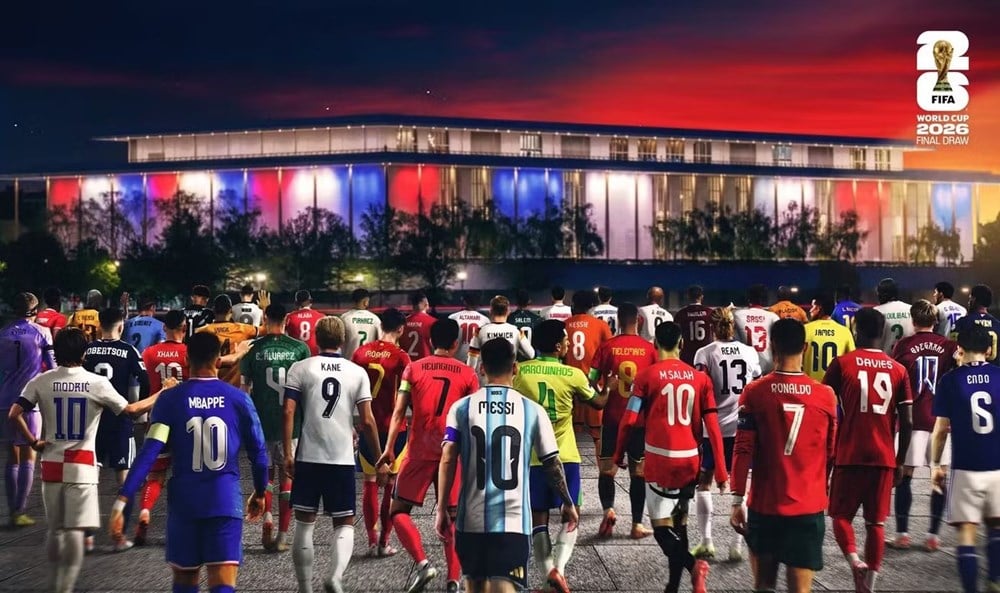
And behind that door lie unanswered questions, undecided destinies, characters waiting for their stories to continue or for the final chapter of their careers to close…
Three homeowners and an unprecedented adventure.
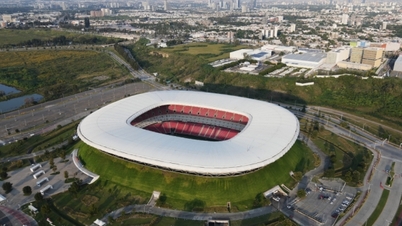
The 2026 World Cup will take place from June 11 to July 19, co-hosted by three North American countries: the United States, Canada, and Mexico. This marks the first time in history that a World Cup has been jointly hosted by three countries, creating an unprecedented organizational model.
Mexico became the first country to host or co-host the World Cup three times (1970, 1986, and 2026), while Canada made its debut as the host nation of the planet's most prestigious tournament. The combination of three countries with three distinct cultures not only expands the geographical scope of the tournament but also creates a vibrant tapestry of culture, society, and sport , transforming the 2026 World Cup into a true "transcontinental festival."
While recent World Cups have remained at 32 teams, 2026 marks a significant turning point as FIFA officially expands the tournament to 48 teams. This entails a series of fundamental changes: the number of matches increases from 64 to 104; the number of groups expands to 12, with 4 teams in each group; and the round of 32 will appear for the first time in World Cup history.
The new format allows 32 teams to advance to the knockout round, including the top two teams from each group and the eight best third-placed teams. This is seen as a step to increase competitiveness and create more opportunities for emerging football nations. From another perspective, expanding the scale not only has sporting significance but also reflects FIFA's globalization strategy, making the World Cup a playing field for more countries and cultures.
Two "kings" and the final summer
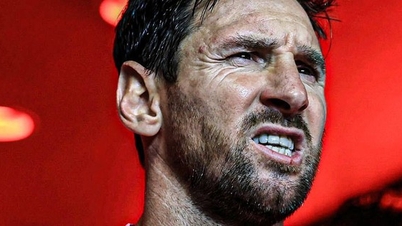
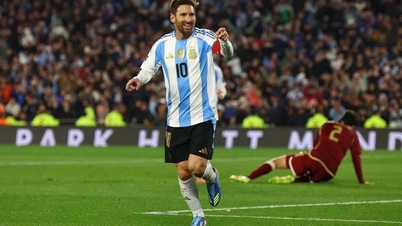
There's an indescribable feeling when looking at the lineups of the teams preparing for the 2026 World Cup: the feeling of a twilight hour, when the light is still bright but everyone knows night is about to fall. This summer may be the last time fans will witness Lionel Messi and Cristiano Ronaldo, two geniuses who have defined football for two decades, playing on the biggest stage on the planet.
Messi, 38, led Argentina to ultimate glory in Qatar 2022. Ronaldo, 41, is the only player in history to score in five consecutive World Cups (2006, 2010, 2014, 2018, and 2022). With this duo, any questions about motivation are superfluous. World football has had Di Stefano, Beckenbauer, Johan Cruyff, Pelé and Maradona, Zidane and Ronaldo…, but never has a generation maintained such a long period of parallel dominance.
Messi and Ronaldo have been contemporaries for 20 years, sparking endless debate about greatness. The 2026 World Cup, if both participate, could be their final farewell to the biggest stage on the planet. And football knows that the most beautiful farewells often come from those who don't want to leave. But the World Cup isn't just about those at the end of the horizon. Sometimes the brightest flame belongs to those who have just lit it.
Kylian Mbappé will enter 2026 at the age of 27, the peak of a footballer's career. Eight goals at the 2022 World Cup, including a hat-trick in the very final that France still lost to Argentina – a strange double for someone who achieved a miracle but didn't win the trophy. Mbappé is at the golden window of his career, and Les Bleus are being built around him as if there were no other backup options.
Alongside Mbappé, a new generation is knocking on the door more forcefully than ever before. Pedri and Gavi of Spain, youngsters who continue the tiqui-taka philosophy but with a completely different speed and fighting spirit. Jude Bellingham of England, who scored on his 2022 World Cup debut at just 19 years old and is becoming the soul of Real Madrid. Vinicius Jr., the Brazilian striker with a burning heart but an increasingly cool mind at the right time. And dozens of other names from Africa, Asia, and North America are arriving to write new chapters that the world hasn't yet noticed.
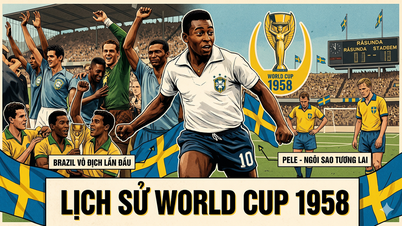
The World Cup is where unknown names become immortal in just 90 minutes. Just Fontaine did it in 1958. Sándor Kocsis did it in 1954. Oleg Salenko did it in 1994. Who will be the Fontaine of the 2026 tournament, the one who will score and score and score until the whole world knows his name?
A mystery awaiting resolution.
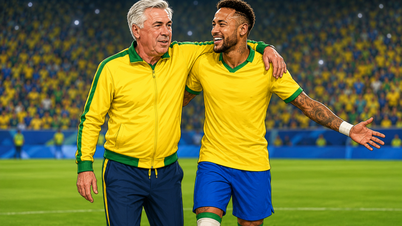
Argentina, as the reigning champions, is grappling with questions about the next generation after Messi. Brazil is rebuilding after a painful period and rediscovering the Samba spirit lost for so many years. Germany, the real Germany with Florian Wirtz and Jamal Musiala, Europe's most talented U25 pair, wants to prove that Die Mannschaft still exists after a series of disappointing tournaments.
Spain, with its young and talented squad, is the top contender in the eyes of many experts. And England, the country that has waited 60 years since Geoff Hurst and his controversial goal at Wembley, once again sits in the strong contender seat, with the familiar worry.
Football is a sport of surprises, of miracles, of moments that no algorithm can predict. The World Cup, with its 48 teams, means even more unknowns. For this tournament, it's the lack of surprises that truly happens. Notable examples include North Korea in 1966, Cameroon in 1990, Senegal in 2002, and Morocco in 2022… Salenko scored five goals in one match and disappeared from the national team forever. Eusébio scored nine goals but didn't win the trophy. Milla danced by the national flag at the age of 42. Germany's 7-1 victory over Brazil in Belo Horizonte. Mbappé's hat-trick in the final wasn't enough to secure the win. Football always finds ways to surpass its own imagination.
On June 11th (2:00 AM on June 12th Vietnam time), the opening whistle will blow. And world football will begin a new chapter, a story whose ending none of us know, but one we all want to be there to witness every page. There are World Cups we remember for the goals. There are World Cups we remember for the pain. There are World Cups we remember for a single moment that defines an entire generation.
What will the 2026 World Cup be like? The final tango Messi plays before bowing to the fans? The championship ballad Mbappé is waiting to write? A name nobody knows, who will score, dance, and drive the world crazy? Nobody knows for sure. And that's precisely why football remains the most beautiful sport on the planet.
Source: https://baovanhoa.vn/the-thao/ban-giao-thoi-cua-bong-da-the-gioi-231289.html
















































































Comment (0)