There's a great paradox of our time. Never before have people had so much information as they do today. With just a smartphone, each person can access more information than any previous generation could have accessed in their entire lifetime. Artificial intelligence can generate text, images, audio, and video in seconds. Social networks connect billions of people globally.
But trust has never been more fragile than it is today. Fake news, misinformation, deepfakes, and echo chambers in cyberspace are making the line between right and wrong, truth and falsehood, more blurred than ever. People not only lack information; they lack assurance that the information they receive is reliable.
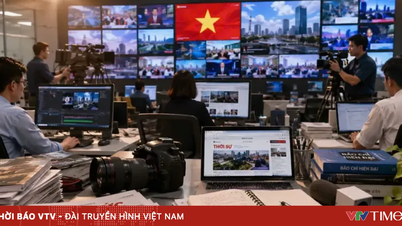
In this context, the role of journalism is changing. If in the 20th century, the greatest mission of journalism was to disseminate information, in the 21st century, a new mission is emerging: building trust. This is not only a requirement for Vietnamese journalism but also for any media outlet that wants to continue playing a central role in social life. And for Vietnam – a country entering a new era of development with great aspirations – this mission is even more significant.
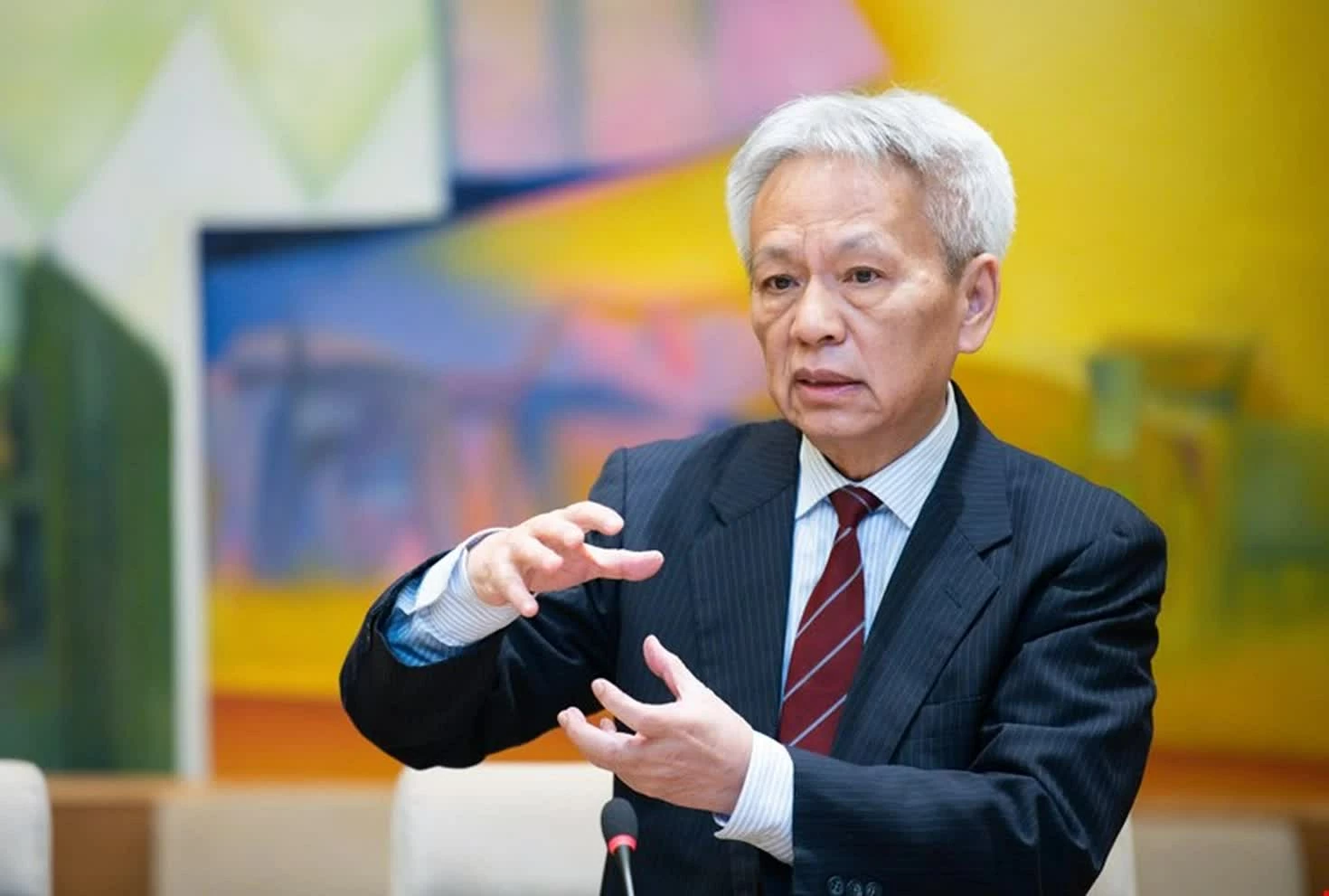 |
| Dr. Nguyen Si Dung. (Photo courtesy of the interviewee) |
National strategic capital
When we talk about resources for development, we often think of investment capital, science and technology, natural resources, or human resources. All are important. But the history of human development shows that there is an even more important resource: Trust.
Trust is the glue that holds society together, helping to reduce transaction costs, control costs, and increase cooperation among economic actors. When people trust the institutions, they are willing to support reform policies.
When businesses have confidence in the business environment, they are more willing to invest long-term. When investors believe in the future of the economy, capital will continue to flow in. Conversely, when confidence declines, all activities become more costly. More contracts, more procedures, and more inspection mechanisms are needed to replace what confidence could have solved.
Therefore, trust is essentially a form of social capital, and in fact, it is the most valuable type of capital. A country may lack resources but still develop if it has trust. Japan, Singapore, and South Korea are prime examples. Conversely, many resource-rich countries remain stagnant due to a lack of trust among their citizens and between citizens and public institutions.
In today's global competition, a nation's advantage lies not only in capital, technology, or resources. It also lies in its ability to build and maintain trust.
Institutions that build trust


If schools create knowledge and businesses create material wealth, then journalism creates a unique resource for modern society: trust. Every day, millions of people turn to the press not just to find out what happened. They turn to the press to answer more important questions: What is true? What is trustworthy? What truly matters? Therefore, the core role of journalism has never been merely to convey information; more profoundly, it is to help society establish a shared understanding of reality and strengthen faith in fundamental values.
Looking back at the history of revolutionary Vietnamese journalism, it is clear that the press has always fulfilled this function. From the first newspapers founded by President Ho Chi Minh to the modern press of today, journalism has not only disseminated ideas or reflected social life. More importantly, it has contributed to building trust.
It was the belief in national independence during the years of struggle for power; the belief in victory in the resistance wars to defend the homeland; in the process of reform when the country faced great challenges; and today, the aspiration for a prosperous and powerful nation. It can be said that the history of revolutionary Vietnamese journalism is also the history of accompanying the nation on its journey of building trust.
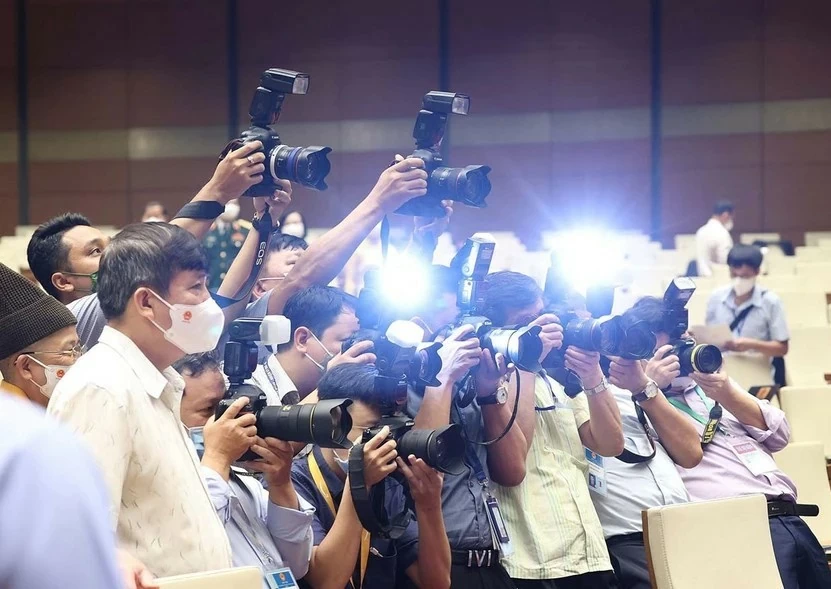 |
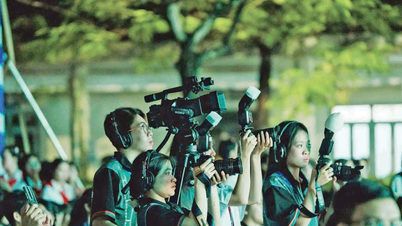
| Journalists continue to bravely venture into hotspots, reflecting on thorny issues in society. (Source: VNA) |
Technological advancements are fundamentally changing the media landscape. Information is no longer scarce. Anyone can become an information disseminator. A smartphone can perform many functions previously only found in professional newsrooms. This raises a big question: If everyone can spread information, what makes journalism different? The answer lies in its ability to build trust.
In the digital age, journalism cannot compete solely on speed or the quantity of information. Artificial intelligence can generate far greater volumes of content than humans. The most sustainable competitive advantage for journalism lies in authenticity, professionalism, social responsibility, and the ability to build trust.
This requires journalism to shift from a news-transmitting mindset to a constructive one. It must not only reflect events but also explain their essence; not only describe problems but also contribute to finding solutions; not only identify shortcomings but also spread positive values; and not only help the public understand the present but also contribute to envisioning the future.
A strong press must help society maintain faith while still facing the truth. Because genuine faith is not built on sugarcoating reality, but on truth—but truth illuminated by responsibility and a desire for progress.
Standing alongside the nation's aspiration for progress.
Vietnam is entering a crucial stage of development with ambitious goals for 2030 and 2045. However, no transformation can succeed without trust. Every reform requires social consensus; every policy needs the support of the people; every development strategy needs the confidence of businesses and investors; and every integration effort requires national prestige on the international stage. In other words, to achieve rapid and sustainable development, Vietnam must become a highly trustworthy nation.
Here, the press plays a special role. It is a bridge between the Party, the State, and the people; a bridge between policy and life; and a bridge between Vietnam and the world. Through truthfully conveying development policies, reflecting the aspirations of the people, promoting social dialogue, and spreading positive values, the press contributes to building the foundation of trust necessary for development.



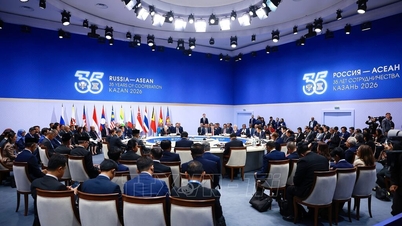
In the field of foreign affairs, this role becomes even more apparent. A nation that wants to be respected must first be understood correctly. A nation that wants to be trusted must be able to tell its own story honestly and convincingly. In today's world, a nation's image is built not only on economic or diplomatic strength but also on its communication capabilities.
The press has therefore become an important part of the nation's soft power. Every responsible journalistic work, every truthful story about Vietnam and its people, every effort to correctly explain development policies contributes to enhancing Vietnam's prestige on the international stage.
Technology can create information. Algorithms can distribute information. Artificial intelligence can process information. But no technology can replace the role of building trust. Trust is not built on mere data, but on truth, responsibility, professional integrity, and a spirit of service to the community. These are the core values that have sustained the vitality of Vietnamese revolutionary journalism for the past century.
Today, as the nation enters an era of powerful and prosperous development, that mission remains unchanged. However, it is placed on a new level. It is not merely a news reporter, nor a reflector of reality, but also a builder of trust – the most valuable asset for Vietnam to confidently bước into the future.
Source: https://baoquocte.vn/bao-chi-kien-tao-niem-tin-405857.html

![[Photo] "Hanoi Lotus Festival" honors the lotus flower that has been associated with Vietnam for thousands of years.](https://vphoto.vietnam.vn/thumb/1200x675/vietnam/resource/IMAGE/2026/06/27/1782516943048_sen-ha-noi-2026-minh-duy-1-jpg.webp)