


We visited Mr. Viet's farm, affectionately known as "Mr. Tu, the rice farmer" or "Tu Viet, the rice farmer." Pouring tea for his guests, he began recounting stories of the past, with its undulating fields of a clean rice variety in Cu La, Minh Luong town, Chau Thanh district, Kien Giang province (now Chau Thanh commune, An Giang province), and the Mekong Delta in general.
Restless nights filled with nostalgia.
At the age of 13, Mr. Viet lost his father. As the eldest son, he soon went to the fields with his mother to raise his younger siblings. By the age of 15, he had mastered everything from planting and harvesting rice to milling and pounding it. Life at that time was filled with the warmth of the countryside. During the planting season, the fields and meadows resounded with folk songs and rhymes. When the north wind arrived, neighbors would call each other to go fishing in the fields. On harvest day, the villagers would help with threshing, their laughter echoing along with the ox carts carrying rice. In the courtyard, the creaking of the mill echoed incessantly; the scene of the women and girls in the village gathered together, some carrying baskets, others sifting rice, and still others separating the husks... created a warm picture of the countryside.
Those memories were ingrained in the young Vietnamese man's being. After finishing high school, he enrolled in the horticulture program at Can Tho University. Upon graduation, he returned to his hometown to work, dedicating himself to agriculture. Traveling to many places, he was happy to see the villages changing, with high-yield, short-cycle rice varieties providing superior productivity and helping people escape food shortages. However, he also felt a pang of sadness at the changes. Traditional rice, while nutritious, had a hard, inedible texture, leading to fewer and fewer people cultivating it. People were switching to growing fragrant rice varieties and commercial rice for export.
Having passed the age of 50, the longing for the rice of yesteryear intensifies. Rice, once inextricably linked to the rice-farming civilization of the Mekong Delta, nourished generations and shaped the soul of the homeland—could it really only exist in casual conversations over tea and drinks? Looking at his graying hair and declining health, realizing he couldn't waste any more time, Mr. Viet decided to restore the traditional rice variety to preserve this cultural heritage.
With vast rice paddies, where could he find the old seed source? Undeterred, he traveled back and forth to the Mekong Delta Development Research Institute (Can Tho University) and An Giang University, searching for valuable genetic resources. In 2017, he dedicated a 2,500m² plot of land to recreate the scene of the past.
He fondly recalled: “The day I took the buffalo out to plow the fields, the old farmers in the area came to watch and cheered enthusiastically. When the rice ripened, I felt like I was transported back to my childhood, joining the harvesters in cutting bundles of rice with sickles. In this recreated space, all stages from cultivation to harvesting are done entirely by hand.”
On his rice field, Mr. Viet divided it into separate plots for growing different types of rice. He worked hard to cultivate them, but when the rice ripened and was delicious, rats and birds came to destroy it. He explained that seasonal rice is called "heavenly rice" because the plants ripen naturally without any intervention. Cultivating this type of rice requires maintaining water levels in the fields, and nature generously provides a source of freshwater fish.
Speaking about traditional farming, Mr. Viet is like a "living dictionary." True to its name, rice is cultivated only once a year during the rainy season; farmers rest during the dry season, and if natural disasters cause crop failure, the entire year is lost. The Kien Giang region, stretching down to Can Tho, grows various types of rice that, when ripe, produce pure white grains.
Through nearly 10 years of perseverance, Mr. Viet successfully restored more than 40 rare and endangered species such as: Than Nong 5, Tau Huong, Chau Hong Vo, Sa Quay, Mot Bui, Mong Chim Roi…
Speaking about the characteristics of each type, he explained in detail: "Each variety has its own unique qualities. For example, Ba Bui rice is best eaten with fermented fish sauce; while Mong Chim Roi rice is most suitable for a meal with soup, fish, and meat."
The fragrant sticky rice variety, true to its name, spreads its intoxicating aroma throughout the fields and is commonly used for making sticky rice porridge and flattened rice cakes; the Ha Tien sticky rice is unmatched in wrapping banh tet (Vietnamese rice cakes) and making banh in (Vietnamese rice cakes); and the White Dwarf variety has firm grains that make delicious, chewy rice noodles…
As for premium varieties like Tàu Hương and Tép Trắng, all you need is a bowl of pure Phu Quoc fish sauce, a little pork fat, and some seasoning, and you'll finish a whole bowl of rice before you even realize it.
He explained that rice from seasonal rice has the characteristic of absorbing water to swell and cook thoroughly from the inside. When combined with food or sauces, the flavors permeate the rice, so that when chewed, each grain breaks apart, unleashing its delicious taste on the tongue.
Preserving the soul of heritage for future generations.
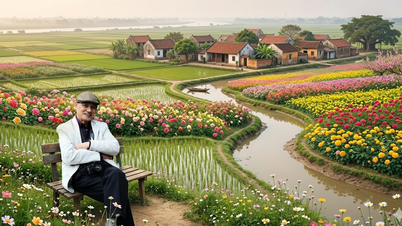
Stepping into Mr. Viet's rice-harvest cultural preservation area, visitors are transported to a bygone era. In the fields, a pair of buffaloes graze; there's a fish pond; a typical Southern Vietnamese wooden house; and a corner storing traditional farming and fishing tools. This place recreates a scene from the harvest season, allowing young people, students in agriculture , and anyone who loves the culture of pioneering to experience and understand more about the lives of their ancestors.
Based on successful trials at his farm, Mr. Viet combined good, soft-grained rice varieties with clean shrimp farmers to implement a "one shrimp crop - one clean rice crop" model on a scale of several tens of hectares. He likened it to "using seasonal rice to support seasonal rice culture" in the past, but now it's about "using seasonal rice to develop agricultural tourism to nurture passion" and, through that, bringing delicious rice varieties to the community.
Reflecting on his journey, Mr. Viet shared: “Many people ask me, going back to the old values, where have I gotten and what have I gained? I feel I have gained more than I have lost. The greatest gain is living fully within a traditional agricultural culture, from production, growing vegetables, fishing to daily life; receiving wholehearted support from scientists, research institutes, schools, and experienced farmers in finding seeds; and welcoming students from both domestic and international backgrounds to come and research and share their knowledge.”
Mr. Viet's contributions have been recognized by society. In 2024, he was honored by the Central Committee of the Vietnam Farmers' Association as "Scientist for Farmers". Local authorities provided funding for research on potential varieties; he had the honor of collaborating with associate professors and doctors to conduct trials and evaluate the adaptability of 850 rice varieties worldwide.
Along with that, Mr. Viet carefully gathered materials and practical experience to write books, so that future generations could gain a deeper understanding of a rice farming profession that has been lost. In 2023, upon retirement, he devoted all his efforts to two books, "Oh, How I Love the Rice Harvest" and "The Rice Farming Life in My Homeland".
The book, published in 2025, includes the title "Oh, How I Love the Rice Harvest," which was honored with a preface written by the then Vice Chairman of the National Assembly and former Minister of Agriculture and Rural Development, Le Minh Hoan: "Hearing about Mr. Tu's journey in preserving 40 traditional rice varieties, my heart swells with pride. These rice varieties are not only seeds of nature but also memories and the very soul of the people of the Mekong Delta through countless generations. He has done something few would have thought possible: preserving the rice harvest heritage not only for the rice plant but also for the unique rice-farming culture of the Mekong Delta."
Source: https://nhandan.vn/bao-ton-khong-gian-van-hoa-lua-mua-post966208.html
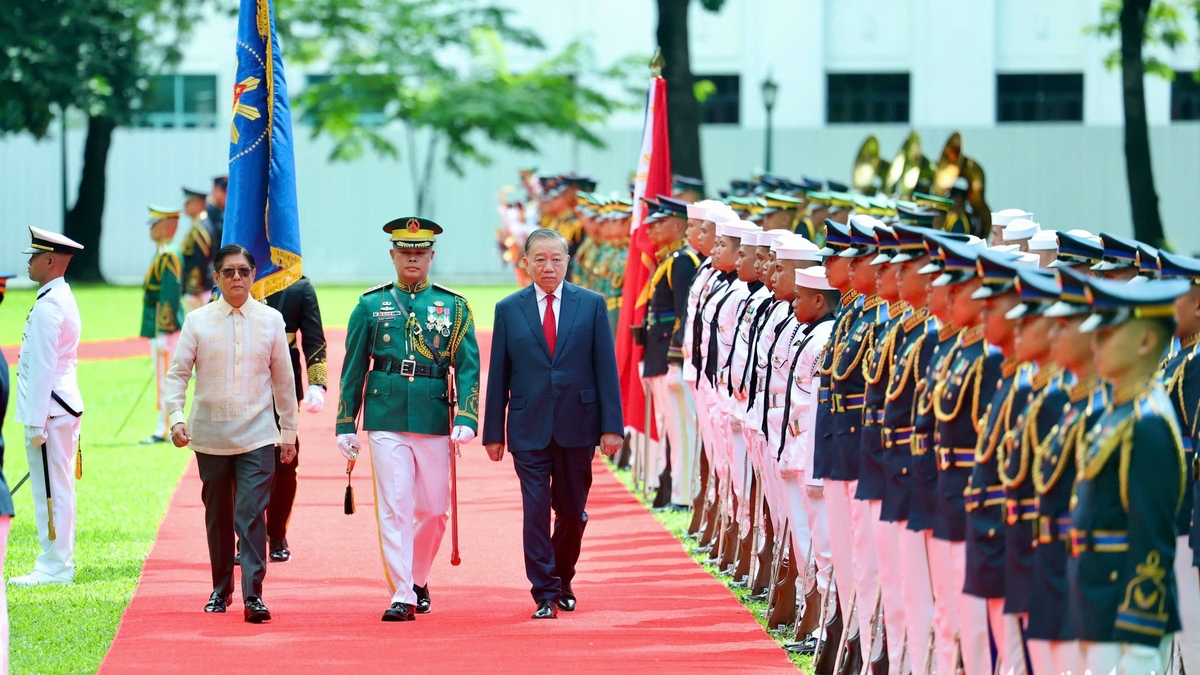
![[Photo] General Secretary and President To Lam and the President of the Philippines hold talks.](https://vphoto.vietnam.vn/thumb/1200x675/vietnam/resource/IMAGE/2026/06/01/1780283481955_vna-potal-tong-bi-thu-chu-tich-nuoc-to-lam-va-tong-thong-philippines-hoi-dam-8797519-1429-jpg.webp)









![[Photo] General Secretary and President To Lam and the President of the Philippines hold talks.](https://vphoto.vietnam.vn/thumb/402x226/vietnam/resource/IMAGE/2026/06/01/1780286997787_anh-man-hinh-2026-06-01-luc-11-09-43.png)

![[Photo] General Secretary and President To Lam and the President of the Philippines hold talks.](https://vphoto.vietnam.vn/thumb/1200x675/vietnam/resource/IMAGE/2026/06/01/1780286997787_anh-man-hinh-2026-06-01-luc-11-09-43.png)



















































Comment (0)