


Bringing fairy tales back to the stage.
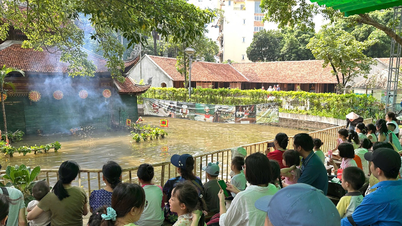
During the summer of 2026, the Vietnam Puppet Theatre will present the Andersen Fairy Tales program, bringing familiar stories such as The Little Mermaid and The Ugly Duckling back to the stage through puppetry combined with modern music , lighting, and effects. These fairy tale characters are vividly recreated through the movements of the puppets, captivating young audiences. Beyond entertainment, the program inspires children with feelings of courage, love, and the journey of growing up through accessible theatrical language.
Meanwhile, the Vietnam Circus Federation presented the show "A Fairy Tale Dream," a combination of circus arts, acrobatics, and modern technological effects. On stage, the story of superheroes protecting childhood dreams was told through visually rich performances and vibrant rhythms.
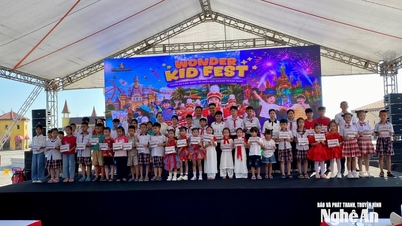
Notably, the program featured children with autism spectrum disorder from the Phuc Yen Inclusive Education Development Support Center. Playing the role of "superheroes," the children confidently appeared before a large audience and received enthusiastic applause. That moment was deeply moving, for behind each performance lay the children's journey of effort and integration.
Another approach chosen by the Vietnam Youth Theatre for the summer of 2026 is to bring to the stage works such as "Without Family" and "Pinocchio"... While "Without Family" guides the audience along the journey of the boy Rémi's coming-of-age through many challenges, "Pinocchio" is refreshed with a modern narrative rhythm that is more relatable to children today.
A common thread in these works is their approach to children, which focuses on emotions rather than imposed moral lessons. The curiosity, impulsiveness, and mistakes of the young characters are placed within the natural context of growing up. Through this, the stage becomes a space for children to observe, empathize, and draw their own lessons.
The audience's enthusiastic response is one of the positive signs for children's theater. Bringing her child to the Vietnam Puppet Theatre for the first time, Ms. Le Thi Tuyet Nga (36 years old, Hung Yen ) said she was surprised to see her child sitting attentively and watching the show from beginning to end.
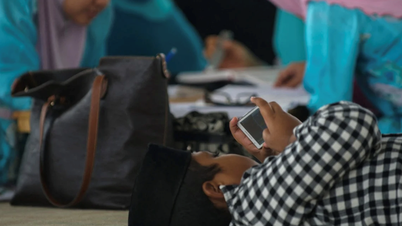
According to her, amidst the many entertainment options on phones and social media, the stage still holds a unique appeal thanks to the emotions and direct experiences it offers. “The children followed the story very attentively. Sometimes they laughed with joy, sometimes they felt suspense following each character. Seeing them focused throughout the performance, I understand why the stage still retains its appeal to young children,” Ms. Nga said.
Efforts to build a sustainable children's theater scene.
Behind the large summer performances lie numerous concerns for performing arts organizations. Children's theater still lacks new, enduring works, while performance activities are largely concentrated in a few periods of the year. How to encourage children to attend theaters more frequently, instead of only on special occasions, remains a question many theaters are trying to answer.
Besides scriptwriting, creative talent, and revenue, retaining audiences is also a significant challenge for children's theater. Many programs still mainly appear during the summer, June 1st (Children's Day), or Mid-Autumn Festival, while the vitality of an art form is only truly affirmed when it can maintain a regular presence in public life.
Meanwhile, today's young audience is very different from the past. Outdated storytelling methods or unappealing works are increasingly failing to capture their attention. To win over children, the theater cannot stand still but must constantly innovate both in content and presentation.
Based on years of experience, Meritorious Artist Nguyen Si Tien, Director of the Vietnam Youth Theatre, believes that children's theatre needs a long-term development direction instead of depending on peak seasons. According to him, young audiences deserve access to works that are seriously invested in both content and artistic quality.
Besides the efforts of arts organizations, building a habit of going to the theater for children also requires the participation of families, schools, and cultural management agencies. Only when theater is more frequently present in daily life can this art form expand its audience and maintain its vitality in the long term.
According to Meritorious Artist Nguyen Si Tien, for children's theater to have a long-term future, it must first have a strong creative team. Writing and directing for children is not easy work, because those in the profession must understand how children think, feel, and receive stories. Therefore, creating conditions for artists to confidently pursue this field is a very important factor.
From another perspective, he argued that children's theater also needs to find new ways to reach the public. When connected with schools, experiential activities, or appropriate media products, the theater will have the opportunity to be present more frequently instead of only appearing on a few peak occasions of the year.
Keeping children engaged with art in the digital age.
According to data cited by UNICEF, nearly 9 out of 10 Vietnamese teenagers use the internet. Social media, short videos, and online platforms are becoming an integral part of children's daily lives, leading to changes in how they entertain themselves and access information.
In this context, each International Children's Day on June 1st is both an opportunity for theaters to introduce new works and a chance for children to access experiences beyond the screen. A puppet show, circus, or musical may only last a few hours, but it's a time when children can immerse themselves in a real artistic space, meeting characters directly through emotions instead of through an electronic device.
Source: https://baovanhoa.vn/nghe-thuat/giu-mot-khong-gian-tuoi-tho-giua-thoi-dai-so-233207.html


![[Photo] General Secretary and President To Lam and the President of the Philippines hold talks.](https://vphoto.vietnam.vn/thumb/1200x675/vietnam/resource/IMAGE/2026/06/01/1780286997787_anh-man-hinh-2026-06-01-luc-11-09-43.png)













































































Comment (0)