

To answer the question of when International Children's Day originated, we need to go back in history and look at the tragic context of World War II. The significance of this holiday doesn't stem from a moment of glorious celebration, but is a crystallization of painful memories and the awakening of human conscience to the atrocities of war.
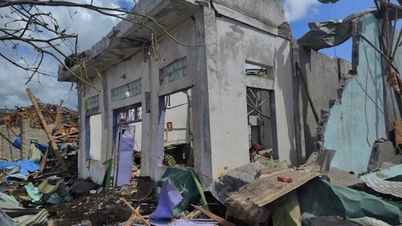
From a historical perspective, the establishment of International Children's Day on June 1st is linked to two horrific massacres perpetrated by Nazi Germany. In the early morning of June 10, 1942, Nazi troops surrounded and completely destroyed the village of Lidice (formerly part of Czechoslovakia, now the Czech Republic).
Hundreds of innocent people were brutally murdered. Even more heartbreaking, 88 children from the village were crammed into gas chambers, while nine others were taken away to be used as tools for "Germanization." Two years later, on June 10, 1944, a similar tragedy struck the town of Oradour-sur-Glane (France), claiming the lives of hundreds more children.
This inhumane cruelty sounded a profound global alarm. Millions realized that, in any conflict, children are always the most vulnerable, deprived of their lives, freedom, and the right to grow up. From those ashes, a powerful international movement to protect the future of humanity began to take shape.

International Children's Day, celebrated on June 1st, was established in 1949. (Photo: IG)
The historic decision at the Moscow Conference in 1949
Following the end of World War II, the world entered a period of reconstruction marked by immense losses. Recognizing the need for a mechanism to protect the rights of women and children globally, in November 1949, the Women's International Democratic Federation convened a major conference in Moscow, the former Soviet Union.
At this forum, with the strong consensus of member states, the Federation officially decided to designate June 1st as International Children's Day. This decision aims to commemorate the tens of thousands of innocent children who perished in the massacres at Lidice, Oradour-sur-Glane, and throughout the years of fierce war.
In 1950, International Children's Day on June 1st was celebrated simultaneously in many countries around the world for the first time, officially establishing an indelible historical milestone.
Upon closer examination, International Children's Day on June 1st transcends the boundaries of a mere commemorative holiday. Its establishment in 1949 laid a foundation of contemporary legal and moral principles, paving the way for subsequent international conventions on children's rights.
When issuing the resolution establishing June 1st, the International Federation of Democratic Women put forward practical demands to governments of all countries, such as requiring a reduction in military budgets to redirect investment towards education, health, and social welfare, and demanding the enactment of strict laws to protect the health and rights of mothers and children.
This represents a significant shift in thinking. Children are no longer merely passive recipients of assistance, but are recognized as individuals with fundamental rights: the right to live in peace, the right to equal access to education , the right to healthcare, and the right to free and holistic development.
This message remains true to its core values today, serving as a lens through which countries can reassess their social security policies.
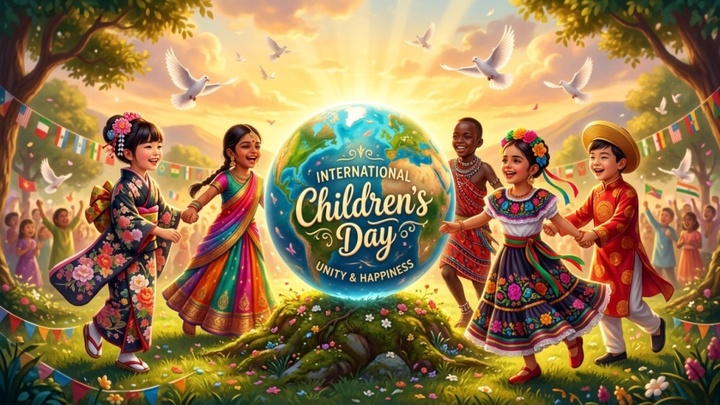
Children are no longer merely passive recipients of assistance, but have been recognized as individuals with fundamental rights.
The mark and commitment to child protection in Vietnam.
In Vietnam, International Children's Day holds special significance and is deeply intertwined with the nation's history. Even amidst the arduous resistance war against the French, on June 1, 1950, the world's first International Children's Day, President Ho Chi Minh sent a congratulatory letter to children and young people nationwide.
In the letter, he wrote: "I love you all very much. I promise you that: When we have driven out all the French invaders and the resistance war is successful, I, along with the Government and all organizations, will strive to ensure that you all have enough to eat, have fun, receive an education, and live happily."
That promise was not just the personal sentiment of a leader, but also shaped the guiding principles for action of the entire Party and State in the work of protecting and caring for children over many decades. In particular, in February 1990, Vietnam made history by becoming the first country in Asia and the second in the world to ratify the United Nations Convention on the Rights of the Child.
To date, the spirit of International Children's Day on June 1st has been strongly institutionalized through the Law on Children and a series of national action programs. Every child born in Vietnam is guaranteed the right to expanded immunization, free medical examination and treatment for children under 6 years old, and universal education.
In summary, International Children's Day on June 1st serves as a constant reminder to the adult generation that the responsibility of creating a safe, fair, and loving world for children is a continuous journey with no end. Protecting children is the wisest and most sacred investment for the survival and sustainable development of all humanity.
Source: https://vtcnews.vn/ngay-quoc-te-thieu-nhi-ra-doi-nam-nao-ar1020493.html



![[Photo] General Secretary and President To Lam and the President of the Philippines hold talks.](https://vphoto.vietnam.vn/thumb/1200x675/vietnam/resource/IMAGE/2026/06/01/1780283481955_vna-potal-tong-bi-thu-chu-tich-nuoc-to-lam-va-tong-thong-philippines-hoi-dam-8797519-1429-jpg.webp)

























![[Image] Hanoi Police officially crowned champions of V-League 2025/2026](https://vphoto.vietnam.vn/thumb/1200x675/vietnam/resource/IMAGE/2026/05/31/1780244769054_ndo_br_039d561b692be875b13a-jpg.webp)
![[Photo] The General Secretary, President and his wife begin their state visit to the Philippines.](https://vphoto.vietnam.vn/thumb/1200x675/vietnam/resource/IMAGE/2026/05/31/1780230559452_anh-man-hinh-2026-05-31-luc-19-28-11.png)
























































Comment (0)