Preserving the spirit of upland rice cultivation.
Since ancient times, the highlands of Quang Ngai have had a tradition of cultivating upland rice. More than just a staple food to sustain life, upland rice also embodies a beautiful cultural aspect of the highland people.
On special occasions such as festivals, ancestral worship ceremonies, and memorial services, upland rice or traditional cakes made from this ingredient are indispensable offerings , informing deities and ancestors about a bountiful and happy harvest season. Conversely, the offering tray would lose its unique character in daily life without the presence of upland rice.
Although not as productive as paddy rice, upland rice has a distinctive aroma, is rich in nutrients, and is considered the "jewel" of the mountains and forests. However, for many years, this agricultural product has remained confined to the self-sufficiency sector, failing to create significant economic value for the local people.


People in the highlands of Quang Ngai province are harvesting their upland rice crop.
Based on that reality, two Ca Dong students from Son Tan Ethnic Boarding Primary and Secondary School, Dinh Van Chinh and Dinh Thi Quynh Nhu, boldly sought a new direction, transforming traditional upland rice into commercially valuable products, contributing to bringing highland specialties closer to the community.
Initially, the two embarked on their research with the simple desire to help more people learn about their hometown's specialties. Using the knowledge they gained in school, they experimented with various recipes to create products that suited consumer tastes.
Elevating the status of local agricultural products.
After numerous trials, the first products, such as printed cakes, roasted rice tea, and nutritional powder made from upland rice, were perfected. These products quickly received positive feedback from consumers thanks to their unique flavors and distinctive ingredients from the highlands.


Two students introduced the products they produce from their upland rice fields.
According to Dinh Van Chinh, the group initially faced many difficulties due to their lack of experience in processing products from upland rice. “There were times when the cakes turned out badly, and the tea didn't have the desired aroma, so we had to try again and again. When the product was well-received, I was very happy because our hometown's specialty became more widely known,” Chinh shared.
Beyond simply processing the product, the two siblings also leveraged social media to showcase images of upland rice and Ca Dong culture in a way that resonates with young people. Videos and images of the cake-making process, rice roasting, and the stories behind the upland rice grains helped their products reach a wider audience.
Dinh Thi Quynh Nhu shared that many people have already placed orders for the product, but because they are still busy with school, they haven't been able to produce a large quantity yet. "This summer, we will try to dedicate more time to making the cakes and promoting the product so that more people know about our hometown's specialty," Nhu said.
According to teacher Dinh Thi Hanh (teacher at Son Tan Ethnic Boarding Primary and Secondary School), the project is the result of applying STEM education to real life, helping students develop their creativity and better understand the cultural values of their homeland.
"Currently, the area for upland rice cultivation is decreasing, posing a significant risk of extinction. Through this project, the students will better understand the value of traditional agricultural products, thereby fostering greater love for and awareness of preserving their ethnic cultural identity," Ms. Hanh said.


Products made from upland rice by two students from Son Tan Ethnic Boarding Primary and Secondary School.
The value of the project lies not only in the products created, but also in the way the two students from the mountainous region are telling the story of their people and homeland through the simplest things. The upland rice is no longer just food, but has become a bridge bringing the culture of the highlands closer to the community.
Recognizing the practicality and long-term development potential of the idea, the school is also collaborating with students to build the project in an entrepreneurial direction.
According to Mr. Huynh Van Thanh, Principal of Son Tan Ethnic Boarding Primary and Secondary School, the school will propose to relevant authorities for support in testing and perfecting the product in order to develop it into a local OCOP (One Commune One Product) product.
"With proper support in terms of process, packaging, and quality, products made from upland rice can absolutely become specialties with a unique identity of the Son Tay highlands," Mr. Thanh said.
Source: https://tienphong.vn/dua-hat-ngoc-nui-rung-vuot-khoi-dai-ngan-post1847002.tpo


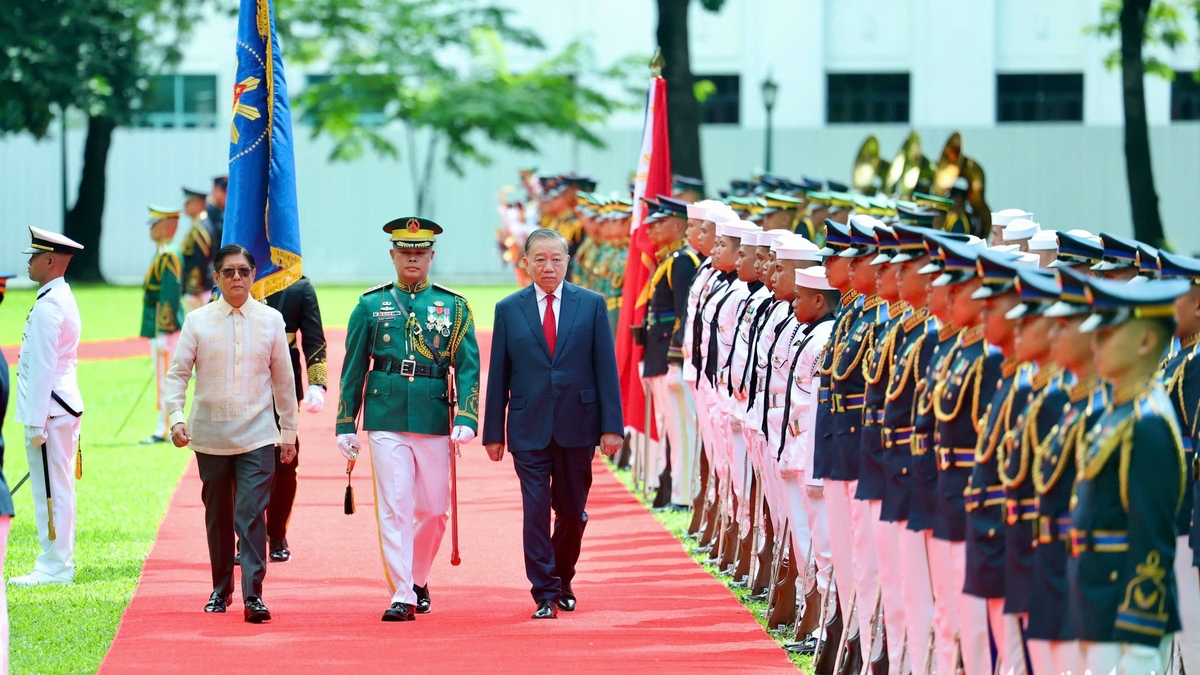
![[Photo] General Secretary and President To Lam and the President of the Philippines hold talks.](https://vphoto.vietnam.vn/thumb/1200x675/vietnam/resource/IMAGE/2026/06/01/1780286997787_anh-man-hinh-2026-06-01-luc-11-09-43.png)






























































Comment (0)