

A place where colors converge.
Coc Pai Market is located in Pa Vay Su commune, in the northwest of the province, formerly Coc Pai town, the center of the old Xin Man district. The market is situated halfway up the mountain, at an altitude of over 1,000 meters above sea level, enjoying a cool climate year-round. For generations, the market has been a familiar meeting place for the Mong, Dao, Tay, Nung, and La Chi ethnic groups from Pa Vay Su, Nam Dan, Trung Thinh communes and surrounding areas to socialize, exchange goods, share cultural experiences, and preserve the unique customs and traditions of the mountain people. Every Sunday morning, Coc Pai Market seems to put on a new look. People from all the villages carry goods and produce in a steady stream to the market before dawn.
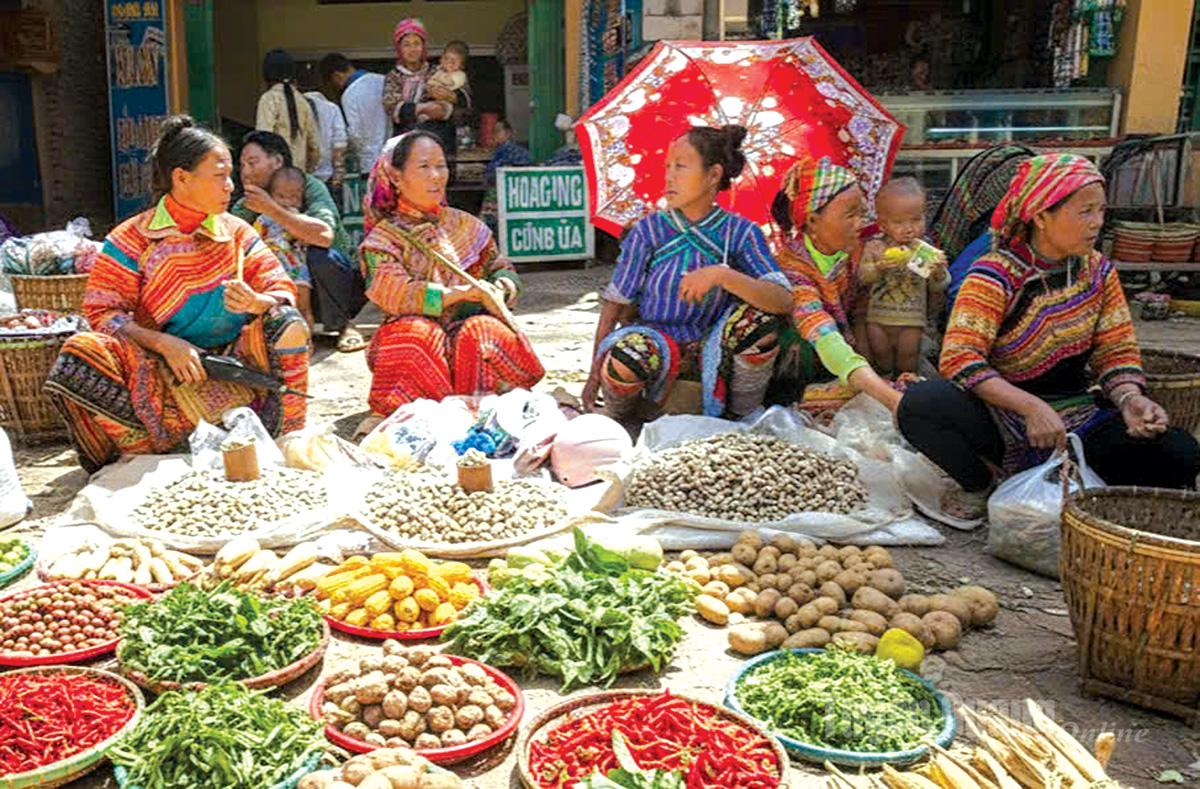 |
| Many of the agricultural products displayed for sale by the locals are the result of a year of diligent work. |
Our first impression upon arriving at the market was the vibrant colors of the Hmong girls' dresses, interspersed with the deep indigo of the Dao people, the simple black skirts of the Nung people, and the distinctive blue-indigo of the La Chi people. Among the bustling crowd were children carried on their parents' backs, their cheeks flushed from the wind and rain, their eyes wide with wonder as they gazed at the lively, year-end market. From the top of the market slope, the jingling of bells echoed from the horses laden with sacks of corn, rice, bamboo shoots, and honey still fragrant with the scent of forest flowers. Scattered among the crowd, some villagers dragged plump pigs, their squeals signaling the approaching Tet (Lunar New Year).
As the year draws to a close, the Coc Pai market becomes even more bustling and lively than usual. Everyone wants to prepare a prosperous Tet (Lunar New Year) for their families, with joy evident on every face. The market is divided into many sections selling agricultural products, precious medicinal herbs, livestock, household goods, and characteristic local cuisine . From agricultural products like corn, rice, wood ear mushrooms, soybeans, and chili peppers, all grown by the locals themselves, to fresh, vibrant wild vegetables.
In another corner of the market, the Tet atmosphere is more evident through the familiar goods. From lush green banana leaves to bamboo tubes, mung beans, and cakes and pastries, a continuous stream of items appears, signaling the approaching season of family reunion. Next to them are simple products, the culmination of a year of hard work in the fields, such as Gia Dui rice, upland sticky rice, and fragrant corn wine... Among these, bundles of upland sugarcane are also a popular choice. According to folk belief, sugarcane is placed respectfully beside the ancestral altar during Tet, symbolizing a wish for a sweet, peaceful, and prosperous new year.
The vibrant and colorful atmosphere of Coc Pai market has attracted many tourists to visit and shop. Sharing her feelings on her first visit, Ms. Dao Hong Phuong, a tourist from Da Nang city, said: “I was truly surprised when I entered the market. From the colors of the brocade dresses, the way the locals chat, to the products brought down from the fields to sell, everything is so simple and abundant. It feels like I'm not just going to a market, but stepping into a lively cultural space of the highland people that is very close, authentic, and captivating.”
A place that preserves traditional culture.
The Coc Pai market is held only once a week, but it serves as a connecting thread for the entire community and the cultural rhythm of the people in this mountainous region. Among the crowds flocking to the market on the days leading up to Tet (Lunar New Year), Mr. Lu Pin Ho, a Nung ethnic silversmith from Pa Vay Su commune, is familiar with his tranquil posture in a corner of the market. On his small wooden table are exquisite silver-engraved items such as necklaces, bracelets, hairpins, and silver amulets, all gleaming with a metallic sheen.
He shared: “These jewelry pieces are a family tradition. Selling them at the market is not only a way to earn extra money for Tet (Lunar New Year) but also a way to preserve our traditional culture. The Nung and Dao ethnic people here believe that buying silver jewelry brings good luck and peace to the household in the new year.”
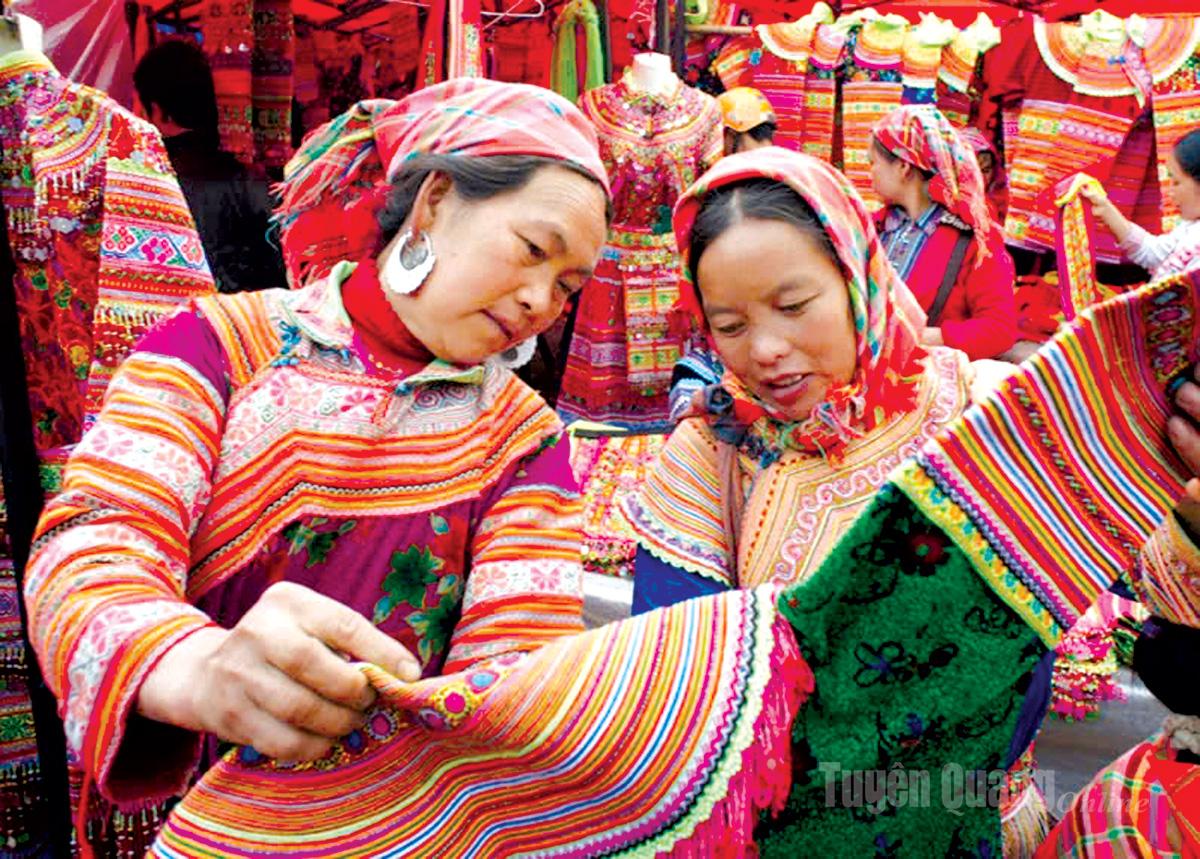 |
| Hmong women choose to shop for traditional New Year's clothing. |
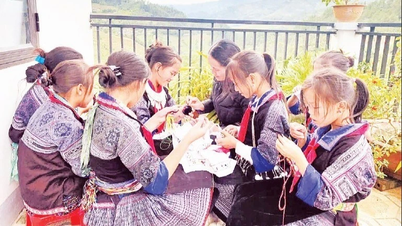
Continuing along the silver-plated rows is the vibrant space of brocade weaving by the highland ethnic minorities, where each story of preserving cultural identity is told through enduring colors that stand the test of time. Women sit weaving, their hands still smelling of flax, watching over their work while slowly recounting stories of farming, of winter nights spinning yarn by the warm fire. Each piece of fabric is the culmination of traditional weaving techniques, from the spinning and dyeing process to every stitch.
Ms. Thào Thị Mua from Nấm Dẩn commune shared: “As Tet approaches, bringing brocade fabrics to the market is like bringing the fruits of a whole year's labor. Some pieces were woven during leisure time, others were spun over cold winter nights. Buyers are not just looking for a dress to wear during Tet, but also want to take home the story of the person who made it. We Hmong people believe that each beautiful brocade fabric is a measure of a woman's talent and virtue.”
At Coc Pai market, visitors can also hear the traditional sounds of the mountains and forests through ethnic musical instruments. In a small corner of the market, an old artisan quietly adjusts the reed pipe of a Hmong mouth organ, attaches a reed to a flute, and tests the sound of a mouth harp with gentle vibrations. Each mouth organ not simply produces sound, but also embodies the soul of the Hmong people, the memories of their villages, and the rhythm of life in the highlands. In the days leading up to Tet (Lunar New Year), the sounds of mouth organs and flutes resonate amidst the crowds descending to the market, blending with footsteps, laughter, and conversation, making Coc Pai market vibrant with color and rich in cultural identity.
The market day is not only a place to buy and sell agricultural products, but also an opportunity for the highlanders to meet friends after days of hard work. People gather around a steaming bowl of thang co (a traditional stew), toasting each other with fragrant corn wine. There, no one rushes to buy or sell; instead, they leisurely raise their glasses, sharing stories about their fields and the year that is about to end. The wine warms the hearts of those at the market, and the bowl of thang co entices others to linger. And even after the market closes, the lingering taste of camaraderie and the spirit of Tet (Vietnamese New Year) still permeates the winding mountain roads back to the villages.
Source: https://baotuyenquang.com.vn/phong-su/202601/cho-phien-coc-pai-ngay-giap-tet-39e6746/


![[Photo] General Secretary and President To Lam presides over a meeting on preparations for the review of one year of operation of the three-tiered government system.](https://vphoto.vietnam.vn/thumb/1200x675/vietnam/resource/IMAGE/2026/06/02/1780391821195_a1-bnd-4595-9717-jpg.webp)






























































Comment (0)