

Located just over 30km from the capital city center, the Mausoleum and Temple of King Kinh Duong Vuong stand beside the tranquil Duong River, amidst the ancient and serene countryside. The site is situated on high ground on the southern bank of the Duong River, in the A Lu residential area, Thuan Thanh ward, Bac Ninh province. This is a special complex of relics dedicated to King Kinh Duong Vuong, considered the progenitor of the ancient Vietnamese people.
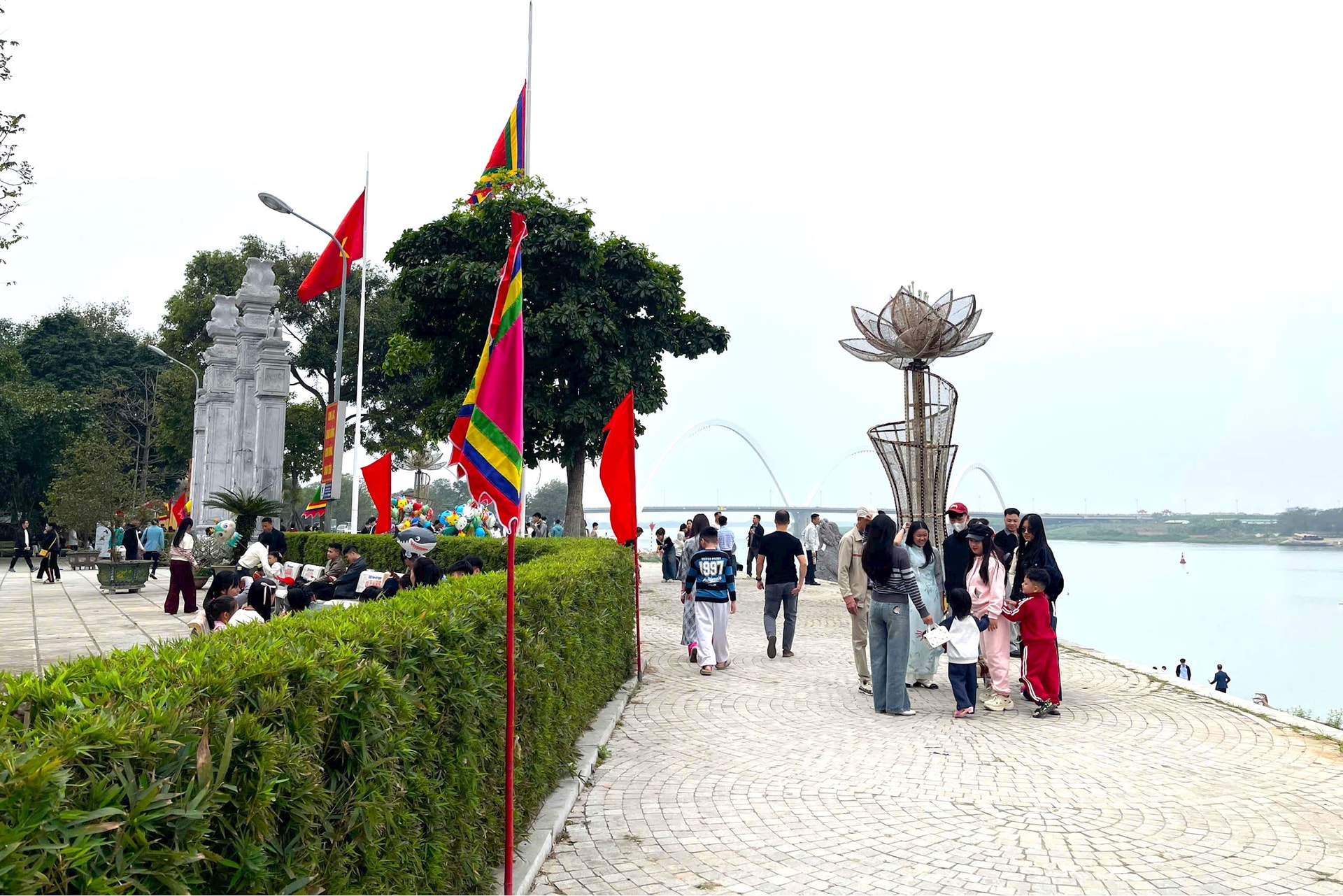
According to legends and ancient texts, in 2879 BC, King Kinh Duong Vuong ascended the throne, establishing the Xich Quy Kingdom – the first independent state of the Vietnamese people. He married the Dragon God, giving birth to Lac Long Quan; the marriage of Lac Long Quan and Au Co later opened the lineage of the Hung Kings. In the Vietnamese consciousness, this is not just a legend, but also the spiritual source that fosters the sense of community as "descendants of Lac and Hong".
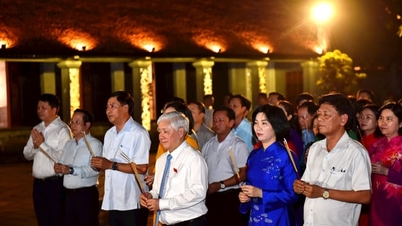
Therefore, every Lunar New Year, many families make pilgrimages here to pay homage, remember, and express gratitude for the contributions of the founding ancestors who pioneered and established the first nation of the Vietnamese people.
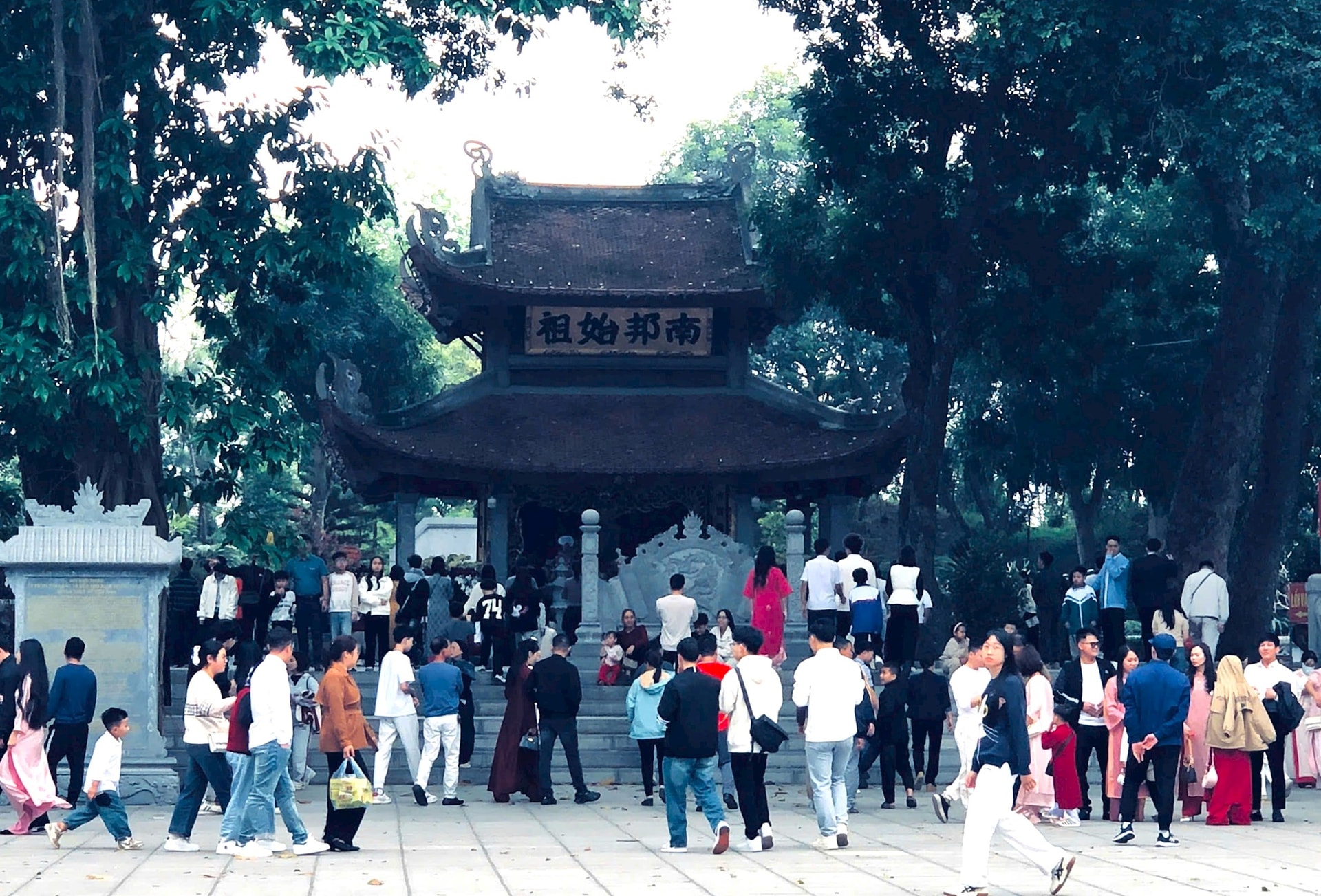
The architectural complex still retains its traditional features, harmoniously blending with the natural landscape. The mausoleum has a screen wall in front, surrounded by lush, ancient trees. In 1993, the site was recognized by the State as a National Historical and Cultural Monument.
Mr. Nguyen Nho Bac (Phu Dien ward, Hanoi ), after offering incense, shared: “What impressed me most is that this place still maintains its solemnity and is not too noisy. The mausoleum is secluded, with lush greenery, and stepping inside makes you feel calm. Coming here with my family at the beginning of the year, I feel like I am giving my children a connection to their ancestors.”
For many young families, a spring trip is not only about praying for peace and good fortune, but also a hands-on history lesson. Instead of just hearing about it in textbooks, young children get to stand before ancient tombs and listen to their parents tell stories about King Kinh Duong Vuong, Lac Long Quan, Au Co, and the Hung Kings. The children's innocent questions make the stories of their origins more relatable and vivid.
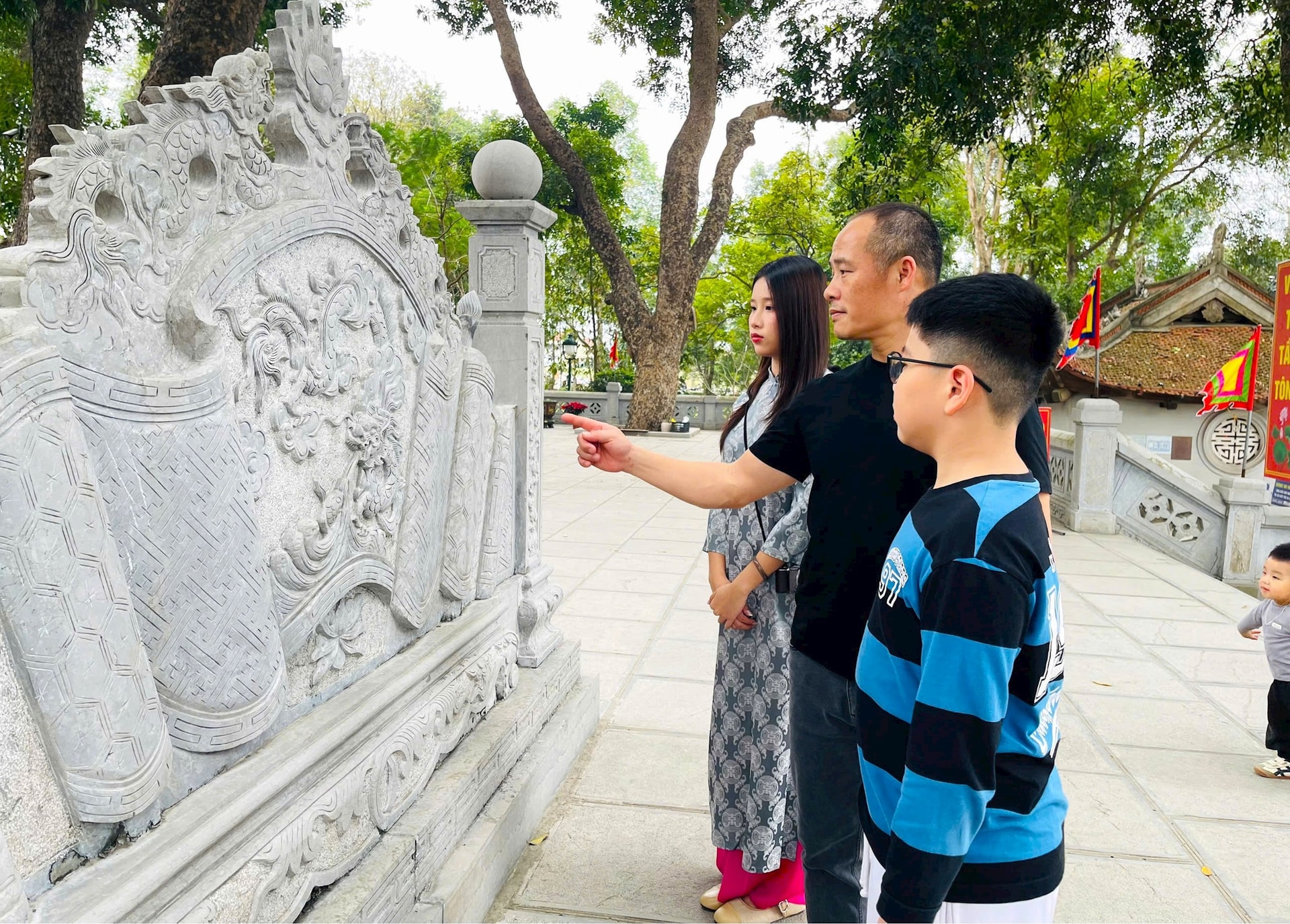
Ms. Vu Thi Huyen (Nghia Do ward, Hanoi) said: “My job involves technology, I spend almost all day in front of a screen. At the beginning of the year, visiting historical sites with my family helped me regain balance. When my children asked about our ancestors, I also had the opportunity to reflect on myself.”
According to folklore researcher Phung Hoang Anh, this trend reflects a notable shift in urban spiritual life: “As material conditions improve, people begin to pay more attention to cultural identity and values. Young families proactively taking their children to places of worship like the Kinh Duong Vuong shrine is not only a spiritual activity at the beginning of the year, but also a way to cultivate community memories. Children who hear stories about their national origins in this sacred space will have a much deeper understanding than if they only received information through books.”
He also argued that, for these trips to the roots to be truly meaningful, preserving the originality, solemnity, and cultural landscape of the historical site is crucial. "Heritage can only survive when it is properly preserved and approached by the younger generation with respect," Mr. Phung Hoang Anh emphasized.
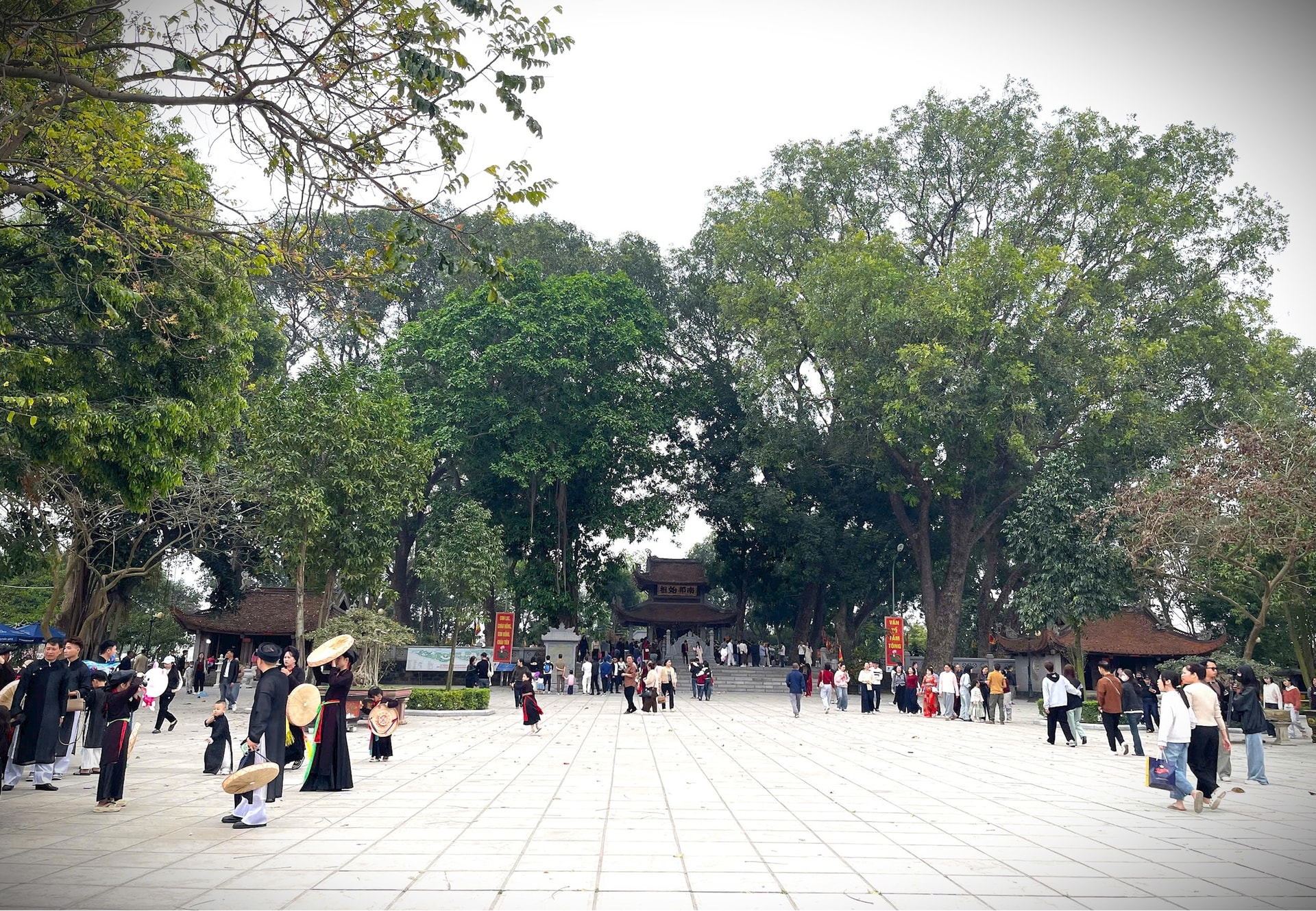
Therefore, the trend of seeking out heritage is not simply a different choice for spring travel, but also reflects the need to find spiritual anchors amidst the hustle and bustle of modern life. When young people proactively seek out heritage, they are not just tourists, but also agents of preservation and continuation of cultural flow.
Amidst numerous entertainment and shopping options, taking the time to visit a historical site shows that today's young people celebrate Tet with more depth, enjoying the spring atmosphere while proactively connecting with enduring cultural values.
Source: https://hanoimoi.vn/khi-nguoi-tre-gin-giu-mach-van-hoa-dan-toc-734217.html
![[Photo] The courage of new recruits of Brigade 144 on the training ground.](https://vphoto.vietnam.vn/thumb/1200x675/vietnam/resource/IMAGE/2026/05/27/1779881651341_anh-man-hinh-2026-05-27-luc-18-32-52.png)
![[Photo] The heat at the fireworks display site on the opening night of the Da Nang International Fireworks Festival 2026](https://vphoto.vietnam.vn/thumb/1200x675/vietnam/resource/IMAGE/2026/05/27/1779889741485_ndo_br_z7872039145157-fecaba5112f39e8352544099d7ef4738-5140-jpg.webp)









































![[Photo] The courage of new recruits of Brigade 144 on the training ground.](https://vphoto.vietnam.vn/thumb/402x226/vietnam/resource/IMAGE/2026/05/27/1779881651341_anh-man-hinh-2026-05-27-luc-18-32-52.png)




















Comment (0)