

The historical significance of International Day for the Protection of Children, June 1st.

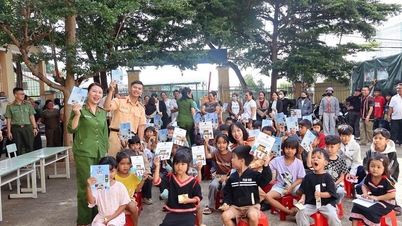
The origins of International Children's Day are linked to a poignant history concerning children during World War II. In the early morning of June 1, 1942, the Nazi Germans surrounded the village of Lidice (Czech Republic), capturing 173 men and 196 women and children. There, they brutally massacred 66 people and sent 104 children to concentration camps, 88 of whom died in gas chambers.
Two years later, on June 10, 1944, they continued their siege of the town of Oradous (France). The Nazis herded more than 400 people into a church, including many women and over 100 children, and then set the entire building on fire.
In memory of the innocent children murdered, in 1949, the International Federation of Democratic Women decided to designate June 1st as International Children's Day. This action aimed to demand that governments reduce military spending to increase funding for education and childcare. Since 1950, June 1st has officially become International Children's Day.
President Ho Chi Minh's love for children nationwide.
Vietnam's first International Children's Day was celebrated on June 1, 1950, during a critical and fierce period of the resistance war against French colonialism. President Ho Chi Minh always thought of the children of the whole country and took the time to write "A Letter to the Children of the Nation".
Published in the newspaper Pravda on June 1, 1950, although the letter is only a little over 200 words long, each sentence and each paragraph carries the weight of a great idea. It is the spirit of character education , arousing patriotism, and protecting children as a revolutionary duty.
Since that first letter, for nearly two decades afterward, despite being busy with countless national affairs, President Ho Chi Minh always dedicated special affection to sending letters to children on this occasion. His letters were always imbued with love and responsibility for the future generation of the country.
The Youth Pioneer Newspaper published its first issue in the Viet Bac war zone.
On June 1, 1954, following President Ho Chi Minh's directive, the Youth Vanguard Newspaper – the first newspaper for Vietnamese children – was officially launched in the Viet Bac war zone. Initially, the newspaper operated as a supplement to the Tien Phong Newspaper.
It wasn't until January 1, 1957, that this media outlet officially adopted its independent name, the Youth Vanguard Newspaper. This event opened up a specialized channel for mass information and education, becoming a close companion for the younger generation.
Throughout its more than 70 years of development, the newspaper has continuously innovated to fulfill its mission of educating and nurturing children to become good children and excellent students. The newspaper has also initiated many meaningful movements such as "Small Plan," "Young Sapling Cooperative," and "A Thousand Good Deeds"...
The art of Hmong flute playing has been recognized as a National Intangible Cultural Heritage.
On June 1, 2023, the Ministry of Culture, Sports and Tourism issued Decision No. 1401/QD-BVHTTDL, officially including the Hmong people's khene flute art in the National List of Intangible Cultural Heritage under the category of folk performing arts.
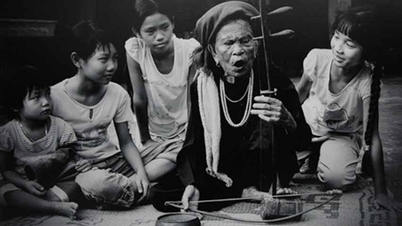
The Hmong people call the khene (Krềnh) has been intimately connected with their spiritual life for generations, commonly used in festivals, New Year celebrations, welcoming guests, and congratulatory occasions. This traditional instrument is often combined with vigorous and graceful dances, expressing the people's desire for community cohesion and their spirit of hard work.
The registration of heritage sites plays an extremely important role in preserving and promoting the unique and independent cultural values of the Vietnamese nation, while also expanding the potential for exploiting sustainable local cultural tourism models in the northern mountainous provinces.
In memory of Helen Keller
June 1, 1968 marks the death of writer and social activist Helen Adams Keller. Born on June 27, 1880, in the United States, she suffered the misfortune of being blind, deaf, and mute from the age of 19 months due to a serious illness.
Overcoming adversity, she learned languages, typed, and graduated from college, becoming the first blind and deaf person in America to earn a Bachelor of Arts degree. She has traveled the world to inspire and help others in similar circumstances.
She left behind famous works such as "The History of My Life" (1902) along with profound humanistic ideas: "Disability is not the ultimate misfortune of man... It is the responsibility of the community to help him do his best." She was honored to be included in Time magazine's list of 100 influential figures of the 20th century.
CNN, the media company, made its first public appearance in the United States.
On June 1, 1980, the global broadcasting industry witnessed a major turning point when CNN (Cable News Network) officially launched in the United States. This was the world's first cable television channel to broadcast news programs continuously 24 hours a day.
The emergence of CNN profoundly changed the way the public accessed information. This model disrupted the fixed-time news broadcasts of traditional television stations.
With its extensive network of reporters, CNN quickly became a powerful media icon. The television channel fostered global information connectivity across politics, economics, culture, and tourism, bringing nations closer together.
In memory of the poet Andrei Voznesensky
On June 1, 2010, the renowned Russian poet Andrei Voznesensky passed away in Moscow at the age of 77. Born on May 12, 1933, he graduated from the Moscow University of Architecture but chose a literary career and quickly gained the affection of millions of readers thanks to his works that appeared regularly in newspapers from 1958 onwards.
His epic poem "Antimiry," written in 1965, was adapted into a world-renowned play at the Taganka Theatre. He is considered one of the greatest Russian poets of the 20th century, receiving numerous prestigious Soviet awards.
For the Vietnamese public, he is famous for his poem, which was set to music as the timeless song "A Million Roses". This musical piece has long been translated into Vietnamese and has become a familiar song closely associated with the spiritual lives of many generations of listeners.
Source: https://baovanhoa.vn/doi-song/ngay-quoc-te-thieu-nhi-16-233179.html



































































































Comment (0)