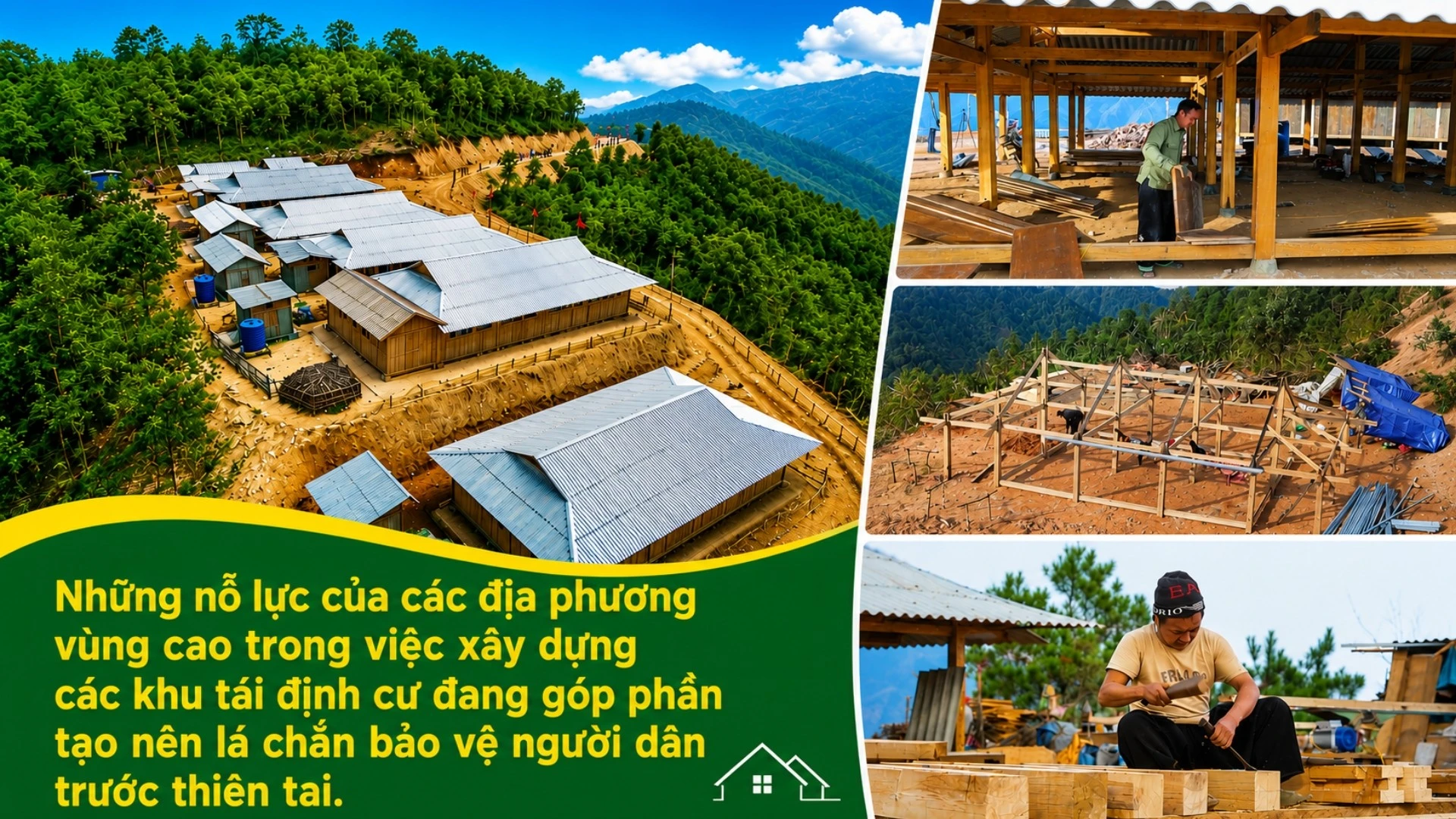
Having lived in constant fear of landslides every rainy season, the family of Mr. Thào A Lềnh in Sá Nhù village, Tà Xi Láng commune, now feels more secure thanks to government support in relocating from the dangerous area to build a new, sturdy house. For the people here, a safe roof over their heads is not just a place to live, but also a foundation for stable living and economic development.
Mr. Thào A Lềnh shared: “Previously, our family lived near a stream, so we were very worried every time the rainy season came. Since receiving support to build a house in a safer place, our family no longer feels as anxious as before.”
Ta Xi Lang is a mountainous area with steep slopes, posing a high risk of landslides during the rainy season. However, thanks to proactive disaster prevention measures, the locality has avoided major losses of life and property for many years. Households in particularly dangerous areas have been surveyed, encouraged to relocate, and gradually moved to safer areas.
Mr. Mua A Sung, Vice Chairman of the People's Committee of Ta Xi Lang commune, said: "The commune regularly reviews households in areas at risk of landslides, understands the concerns and aspirations of the people to develop appropriate relocation plans. For cases requiring urgent relocation, the local authorities focus on disseminating information and persuading people to comply, ensuring that no one remains in dangerous areas when natural disasters occur."
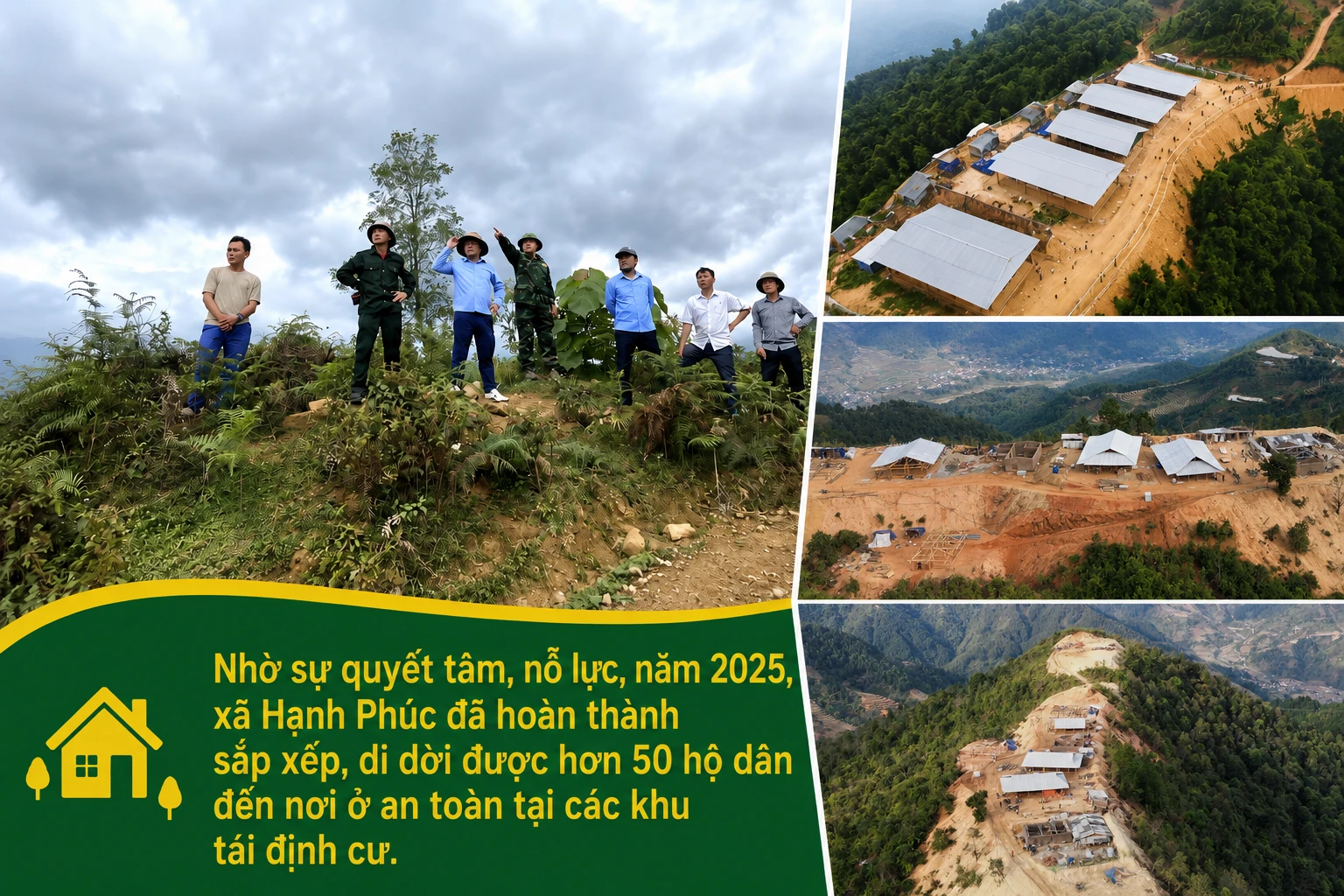
The commune of Hạnh Phúc also has a steep terrain and weak soil, causing many areas to frequently face the risk of landslides and flash floods whenever there is prolonged heavy rain. By the end of 2025, the locality had completed the relocation of 51 households in the villages of Sán Trá, Kháo Chu, Tà Xùa, Tà Chử, Bản Công, and Lừu 1. Of these, 33 households were integrated into existing residential areas, and 18 households were relocated to the concentrated resettlement area in Sán Trá village.
The new resettlement areas are relatively well-invested in terms of electricity, roads, water supply, drainage systems, and community facilities. The gradual allocation of residential and garden land, linked to agricultural land, also creates conditions for people to stabilize their livelihoods after moving to new locations. In the coming time, the locality plans to invest in resettlement areas in Khao De village and the Hang Tho and Suoi Giao areas with a total budget of approximately 20 billion VND, meeting the need for safe housing for over 100 households still living in dangerous areas.

Resettlement areas are planned with integrated infrastructure including electricity, roads, water supply, and land for production. The goal is to ensure safe housing, create conditions for people to stabilize their lives in the long term, and minimize damage caused by natural disasters.
Púng Luông commune currently has over 50 households in high-risk landslide areas. During storms and heavy rains, the risk of landslides is ever-present, directly threatening the lives of residents. Whenever an incident occurs, local emergency response teams immediately arrive and urgently assist residents in relocating their belongings to safe places. However, on-site remediation is only a temporary solution. To ensure the safety of households in high-risk areas, the local government is reviewing and searching for suitable land to resettle residents, ensuring safe and stable housing.
Mr. Le Xuan Dung, Head of the Economic Department of Pung Luong Commune, said: “The local government regularly directs specialized units to review and compile statistics on households living in areas at risk of landslides. At the same time, in the plan for implementing the National Target Program, the commune has allocated two resettlement projects to relocate households in landslide-prone areas, to be implemented this year and continue in the following years.”
The efforts of local authorities in mountainous areas are contributing to creating a "shield" to protect people from natural disasters. However, in the context of increasingly evident climate change and more unpredictable natural disasters, the requirement is not only to respond when incidents occur but also to proactively prevent them early and from afar.
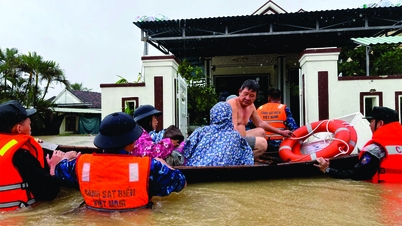
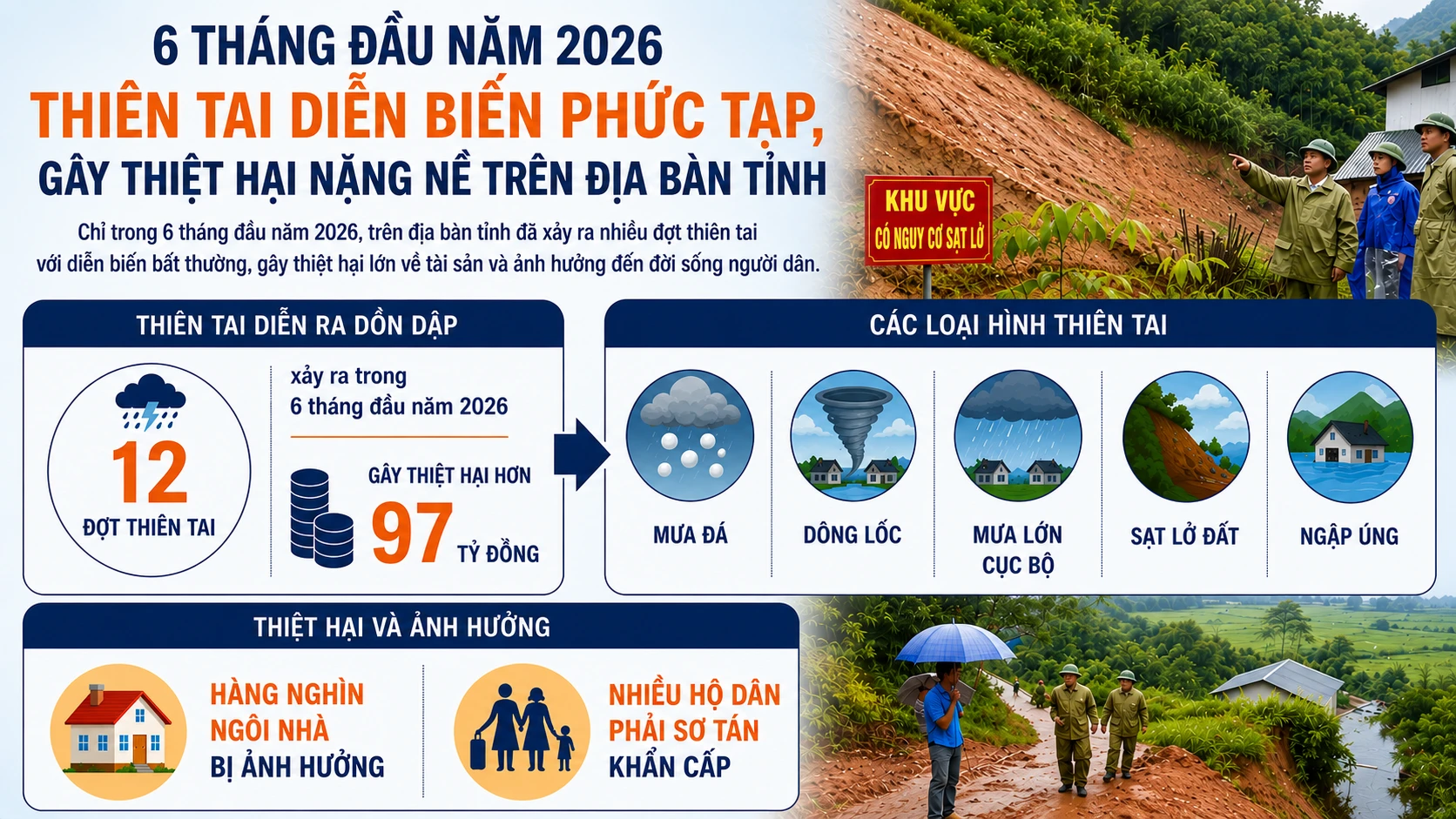
In just the first six months of 2026, the province experienced 12 natural disasters including hailstorms, thunderstorms, localized heavy rainfall, landslides, and flooding, causing damage exceeding 97 billion VND. Thousands of houses were affected, and many households had to be urgently evacuated to ensure their safety.
In light of this situation, the Standing Committee of the Lao Cai Provincial Party Committee issued Directive No. 30 on strengthening the Party's leadership in disaster prevention, response, and mitigation in the province. This directive emphasizes the need to shift strongly from passive response to proactive prevention; prioritizing the protection of people's lives as the highest goal.



Accordingly, localities will continue to review residential areas along rivers, streams, and high slopes; update the list of households in dangerous areas to develop appropriate evacuation and relocation plans. Along with this, they will improve the quality of forecasting and early warning; apply technology in monitoring and supervising natural disasters; invest in addressing vulnerable points; and prioritize resources for relocating residents in high-risk areas.
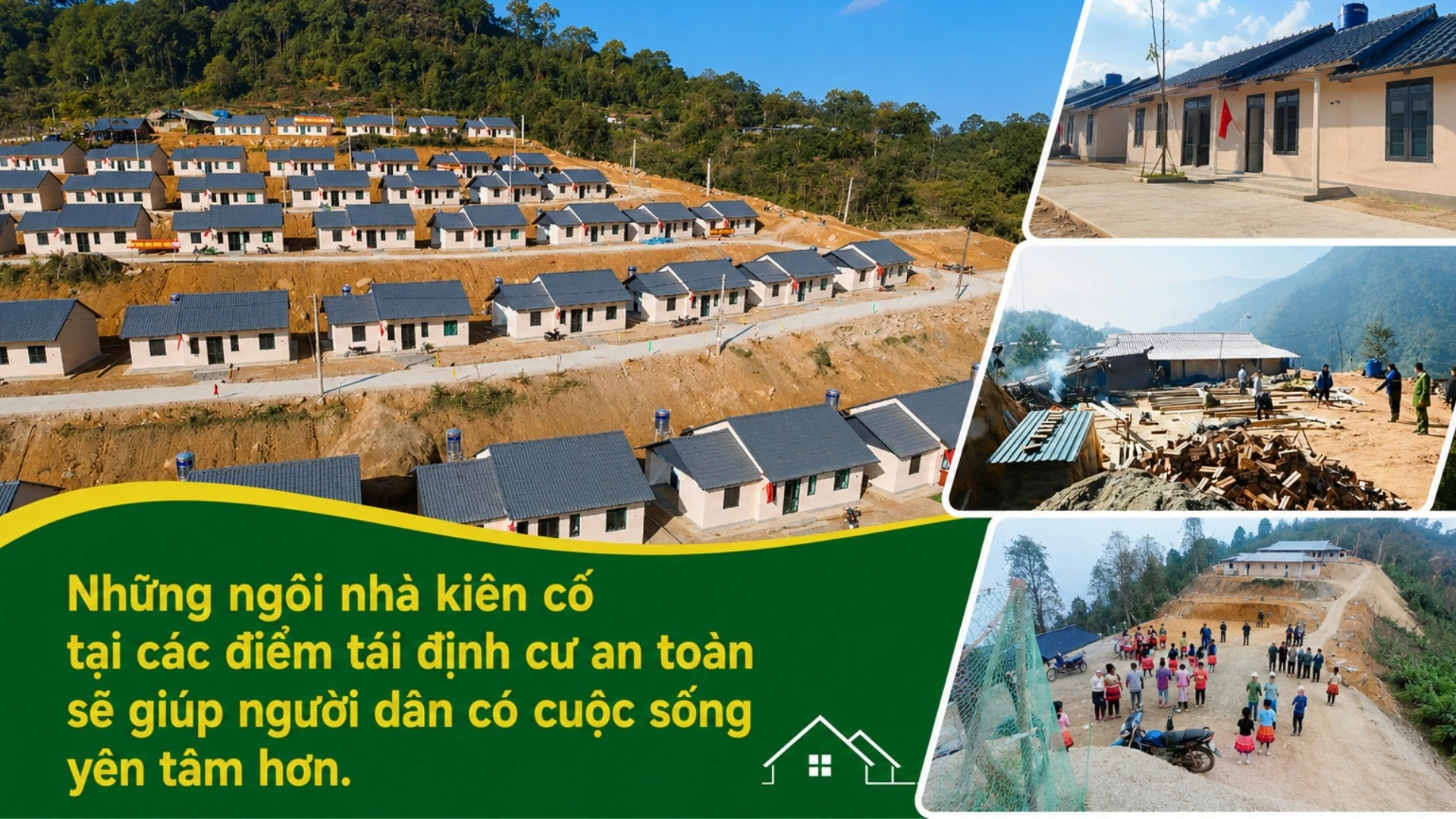
When people live in safer places, have access to earlier warning information, and are adequately prepared with response plans, damage from natural disasters will continue to decrease. More importantly, this provides a foundation for people in mountainous areas to confidently develop their economy and build stable and sustainable lives in their homeland.
Source: https://baolaocai.vn/bao-ve-nguoi-dan-truoc-thien-tai-post902541.html




![[Image] A look back at the capital's preparations for the century-long master plan.](https://vphoto.vietnam.vn/thumb/1200x675/vietnam/resource/IMAGE/2026/06/29/1782750453122_quy-hoach-100-nam-minh-duy-1-2118-jpg.webp)
![[Photo] General Secretary and President To Lam works with the Party Committee of the Government on the work of preventing and combating storms, floods, extreme natural disasters and climate change.](https://vphoto.vietnam.vn/thumb/1200x675/vietnam/resource/IMAGE/2026/06/29/1782729441945_a1-bnd-0385-9454-jpg.webp)

![[Photo] The herbal incense of the Dao Coc San people](https://vphoto.vietnam.vn/thumb/402x226/vietnam/resource/IMAGE/2026/06/30/1782784069551_30-6-nau-ruou-jpg.webp)