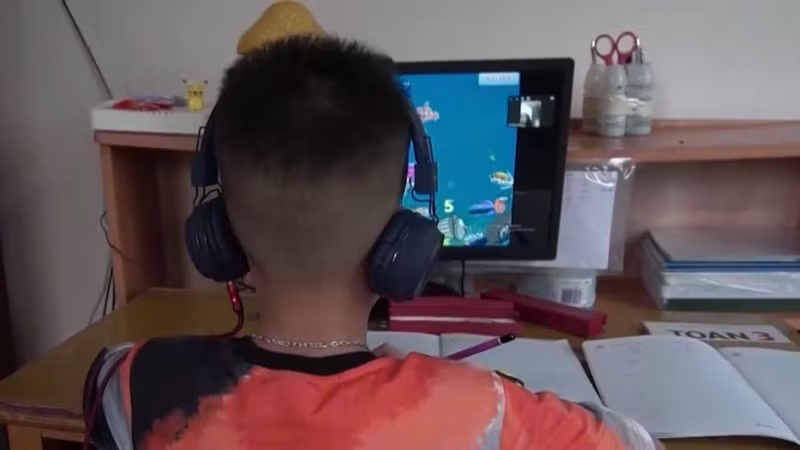
The majority of children lack the skills to protect themselves in the online environment.
When cyberspace becomes a "double-edged sword" for children
Vietnam is one of the world's leading countries in terms of internet and social media usage rates. According to the 2025 annual survey report on Vietnamese youth by the Institute for Youth Research (Central Committee of the Youth Union), nearly 17% of young people in Vietnam use the internet and social media for 8 hours or more each day.
A recent report by the People's Committee of Ho Chi Minh City also indicated that up to 87% of children in Ho Chi Minh City aged 12-17 access the internet for an average of 5-7 hours per day. This significantly impacts the development of children's personalities and contributes to an increase in violent crimes and abuse.
In Vietnam, it's no longer uncommon for children to access and use mobile phones from a very young age. Initially, phones were considered tools to support learning and entertainment, but now, many children show signs of phone abuse and addiction. This is especially true during summer vacation, when children have more time for recreation and entertainment, while parents remain busy with work. Allowing children to use the internet has become one of the methods many families choose to manage their children's internet usage.

The percentage of teenagers in our country who use the internet and social media for 8 hours or more per day is very high.
Ms. NTH (from Ba Dinh, Hanoi ) has a son who is in 7th grade this year. She shared that after the end-of-semester exams, she allowed her son to use his phone again. Her son even became so engrossed in playing video games that he didn't care about eating or sleeping. When reminded to stop, he became irritable and angry.
“Previously, my child used to play on the phone too much and developed tic disorders, requiring treatment. I confiscated the phone and banned its use for a while. However, during summer vacation, if I don't let my child use the phone, they will cause trouble if left alone at home. My child often uses social media to chat with friends and play online games. Seeing them playing so much, I asked them to stop, but they reacted very angrily and aggressively. I am very worried about this situation,” Ms. H. shared.
One of the most obvious negative impacts is children's easy access to inappropriate content. The internet is full of diverse information, including violent, pornographic, or inflammatory and misleading content. Because children lack the ability to distinguish right from wrong, they are easily influenced by this content. Frequent exposure can distort their perceptions, form misguided thoughts, and affect their psychological development.

Dr. Nguyen Van Dung, former Deputy Director of the Institute of Mental Health, Bach Mai Hospital.
You may also like

A new path for the youth of Gia Lai.TPO - The First Congress of the Vietnam Youth Union of Gia Lai Province, for the term 2026-2029, is a significant milestone for the youth of the entire province after the merger. The Congress not only assesses the results of this special transitional period but also establishes new directions, goals, and approaches for the Union in a broader and more diverse development space. 
Messi set a new record at the 2026 World Cup.Lionel Messi continued to be the center of attention, finishing the group stage with 6 goals, leading the race for the Golden Boot and extending his World Cup scoring record to 19 goals. Dr. Nguyen Van Dung, former Deputy Director of the Institute of Mental Health, Bach Mai Hospital, analyzed: "The internet can change children's cognitive processes, altering their emotions and behaviors. Young children are always exploring and discovering, so when they encounter harmful information, they may imitate wrong behaviors such as illegal racing or using e-cigarettes. A typical risk is that children can be lured into illegal activities."
Alarmingly, many children are not only affected by behavior but also suffer psychological abuse in the online environment. In fact, many bullying incidents occur daily; especially with the development of science and technology, cyberbullying on social media is becoming increasingly common.
Insults, isolation, and threats in online groups, comments, or chat platforms can cause children to experience anxiety, insomnia, and prolonged depression. These traumas often occur silently, and many children are afraid to share them with their families. Meanwhile, many parents still haven't fully recognized the extent of the dangers of the digital environment for their children. Experts say that for children, cyberbullying can leave profound psychological scars.
Furthermore, the online environment can lead to children becoming dependent on electronic devices. Many children spend too much time on phones, tablets, or computers playing games, watching videos, or browsing social media. This not only affects their physical health (such as reduced eyesight and sleep disorders) but also impairs their social communication skills. Children participate less in outdoor activities and have less direct interaction with family and friends, leading to a risk of isolation and a lack of essential life skills.
Another worrying issue is the risk of online fraud or abuse. Malicious actors can impersonate friends or acquaintances to approach children, trick them into providing personal information, or engage in dangerous activities.
According to statistics from the Ministry of Public Security, in the period 2021-2025, the whole country handled more than 10,000 cases of child abuse, of which nearly 20% were related to cyberspace. In the first few months of 2026 alone, many incidents related to school violence, cyberbullying, and child seduction on digital platforms continued to cause public concern.
Protecting children online is a challenge that requires the involvement of families, schools, and society as a whole.
To protect and promote the healthy and positive development of children in the online environment, the Prime Minister signed Decision No. 468/QD-TTg dated March 23, 2026, approving the Program "Protecting and Supporting Children's Development in the Online Environment giai đoạn 2026-2030".
The program aims for a "dual objective": to both strengthen child protection and support and promote their positive development, enhance their digital skills in the context of national digital transformation, and contribute to the formation of a new generation of "digital citizens" in Vietnam.
Although the legal framework has been continuously improved over time, the application of science and technology and digital transformation in cybersecurity management has been promoted, creating conditions for nationwide implementation.
However, many challenges remain, such as: the rapid development of the Internet, the large number of users, and the disparities between regions; the emergence of new technologies and applications that outpace management efforts, increasing sophisticated risks; and a shortage of specialized personnel.

Protecting children online requires a coordinated effort from authorities, schools, and families.

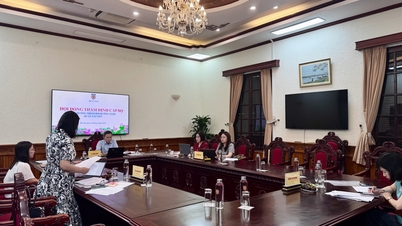
Vietnam encourages US businesses to expand investment in high technology.On the morning of June 26th, at the Government Headquarters, Deputy Prime Minister Ho Quoc Dung received Mr. Jeff Place, Supply Chain Director of Coherent Group (USA). During the meeting, the Deputy Prime Minister affirmed that Vietnam encourages US businesses to expand investment, especially in high-tech, innovation, and semiconductor industries. The relevant authorities need coordinated and synchronized participation from the central to local levels. The core of this effort should be the police force, tasked with preventing and combating high-tech and information-communication crimes; contributing to preventing the risk of harmful websites and applications with inappropriate content reaching children in cyberspace.
However, to protect children's safety in a vast digital environment like the internet, family management and control remain paramount. Parents need to work with their children to select appropriate content, not simply shifting responsibility to society or school, forgetting that each child's growth, cognitive development, and thinking skills initially stem from the upbringing they receive from their family.
Dr. Nguyen Van Dung emphasized: "Parents must know what their children are doing and playing when using phones in order to control their access to online content. Schools need to control computer-based learning programs and provide specific lectures to children about the negative aspects of the Internet."
Psychologist Dr. Le Thi Linh Trang also shared: "Children are a vulnerable group and therefore need the support of the adults around them. Besides striving to address and eliminate negative behaviors and actions, we also need to continuously promote and spread more positive things to create a good influence. The more positive values we create, the more harmful things will naturally be eliminated."
With the healthy development of children at the center, protecting children in cyberspace is a top priority, requiring inseparable coordination between agencies, departments, and each family. It is necessary to support and help children develop a correct understanding and use the internet rationally and practically, so that virtual stories do not cause real harm to children.
HA NHUNG - TRANG HA
Source: https://nhandan.vn/bao-ve-tre-em-truoc-me-tran-internet-post971646.html
































































































![[Infographic] Details of 6 toll stations on the North-South Expressway through Ha Tinh](https://vphoto.vietnam.vn/thumb/402x226/vietnam/resource/IMAGE/2026/06/29/1782685020813_fb_anh-dai-dien-infographic-khanh-phuong-1-png.webp)