


In this context, the national industrial promotion program has promptly played a crucial role as a "support system," not only providing financial assistance but, more importantly, creating momentum for rural industrial establishments to innovate their thinking, boldly invest in technology, improve product quality, and enhance their adaptability to the market.
Effectiveness from practice
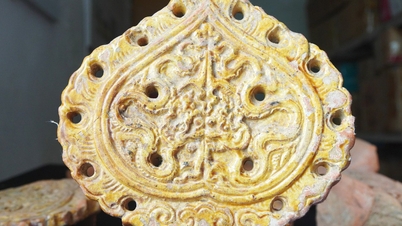
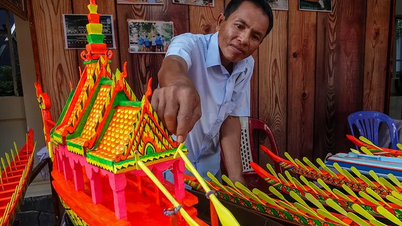
Bo Bat pottery is a traditional craft village in Ninh Binh province , once famous for its distinctive white pottery, but it had declined for a long time. In recent years, the Bo Bat pottery craft has gradually been restored thanks to the dedication of Mr. Pham Van Vang, a native who spent many years researching, learning the craft, and restoring ancient pottery techniques. With the desire to preserve the traditional craft, he opened a production workshop and built the Bo Bat pottery brand in the locality. With funding from the industrial promotion program, Ninh Binh province provided land, invested in a workshop, and facilitated the establishment of the Bo Bat Pottery Preservation and Development Company Limited. The company's products have been recognized as typical rural industrial products, contributing to the increasing recognition of Bo Bat pottery.
Not only Bo Bat pottery, but in fact, many rural industrial establishments in other localities have also received timely support from the industrial promotion program, gradually overcoming difficulties, investing in technological innovation, and improving production capacity. According to a report by the Department of Innovation, Green Transformation and Industrial Promotion ( Ministry of Industry and Trade ), after 5 years of implementing the national industrial promotion program under Decision No. 1881/QD-TTg of the Prime Minister, the total approved industrial promotion budget nationwide reached 1,436 billion VND, of which national industrial promotion funds accounted for 36.6%, and the remainder was resources from localities. Notably, the total matching capital from businesses and rural industrial establishments reached nearly 1,525 billion VND, showing the widespread effectiveness and ability to mobilize social resources of the program; on average, every VND of state budget attracted more than one VND of investment capital from the production sector.
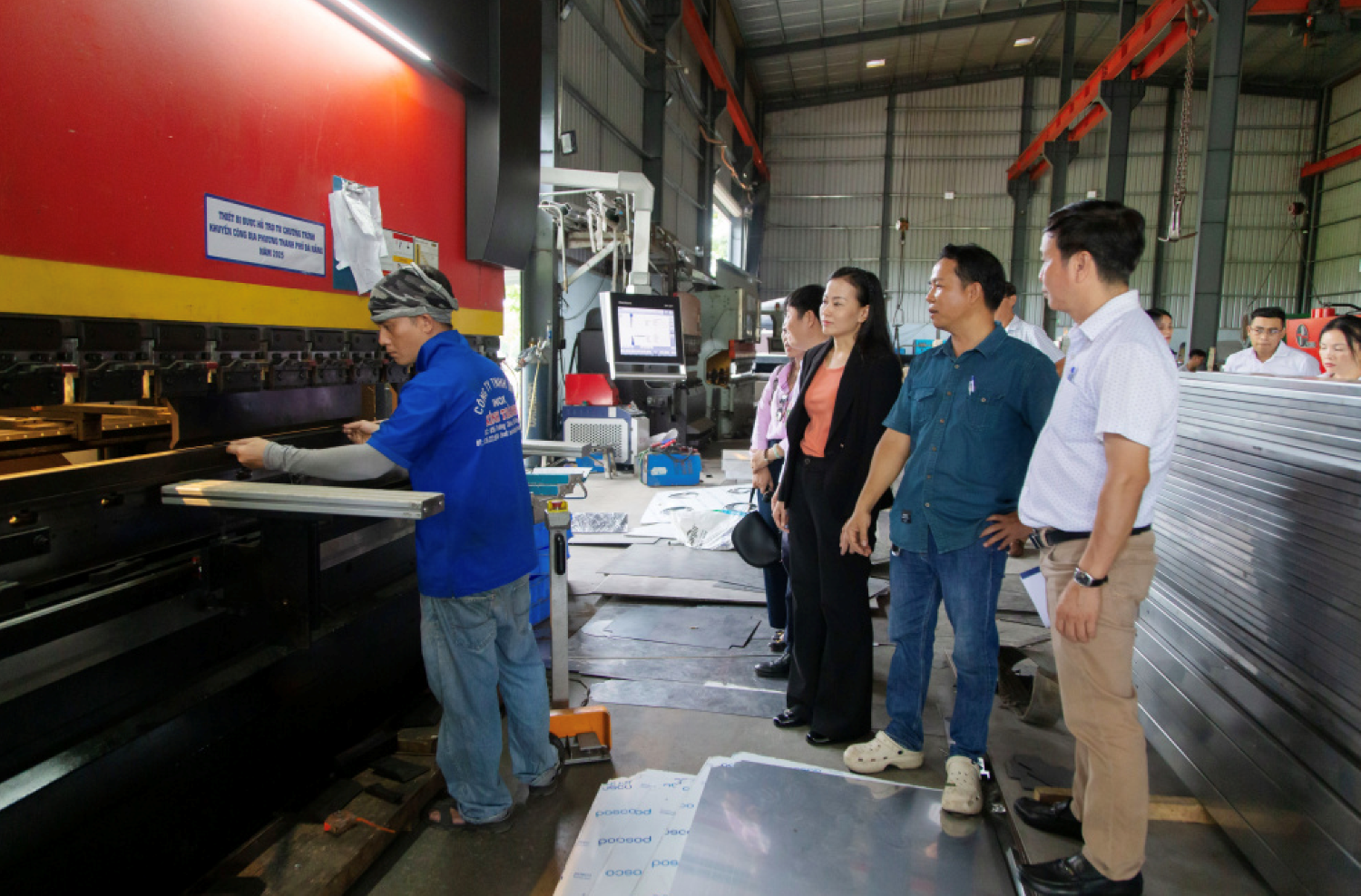
Beyond financial support, the program's most significant contribution lies in its support for technological innovation and production equipment – a core focus of industrial promotion activities. Through technology transfer, the application of advanced machinery and equipment, and the development of technical demonstration models, many rural industrial establishments have undergone significant transformation. Between 2021 and 2025, industrial promotion supported 883 establishments in accessing new technologies and establishing 52 demonstration models for new product manufacturing. As a result, labor productivity has increased, manual production costs have decreased, and product quality and consistency have improved, enabling establishments to better meet market demands and gradually participate more deeply in the supply chain.
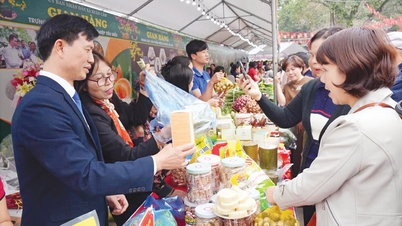
In parallel, trade fairs and exhibitions, the selection of outstanding rural industrial products, and support for building showrooms and promoting products not only serve to promote trade but also contribute to helping businesses gradually build brands and expand distribution channels. At the same time, training, consulting, and support for digital transformation for rural industrial enterprises are also emphasized. During the 2021-2025 period, more than 1,500 businesses participated in training courses on business management and the application of advanced management tools such as 5S, Kaizen, ISO, cleaner production, online marketing, and digital sales platforms. According to Ms. Nguyen Thi Lam Giang, Director of the Department of Innovation, Green Transformation and Industrial Promotion, rural industrial enterprises and establishments are important components in the socio-economic development of the locality. Over the past period, industrial promotion policies have proven effective in accompanying and supporting the business community in investing in production development with fundamental support, helping businesses change their working methods and improve management capacity—a key factor for sustainable development.
Do it right to take industrial promotion further.
Despite positive results, practical implementation reveals several limitations in the industrial promotion program that need to be addressed. Support resources are limited, and the funding allocated to individual projects is insufficient to create strong appeal, especially for large-scale technology innovation projects. Furthermore, the fact that industrial promotion support is subject to corporate income tax reduces the effectiveness of the policy for small businesses with limited financial resources.
The organizational structure for industrial promotion at the grassroots level is inadequate and inconsistent. Currently, there are only 412 officials directly involved in industrial promotion work nationwide, averaging about 7 people per center. In many localities, officials at the district and commune levels mainly work on a part-time basis and lack the opportunity to closely monitor the actual needs of production facilities.
2026 marks the first year of implementing the industrial promotion plan for the 2026-2030 period, with many important tasks identified. Accordingly, industrial promotion activities will be implemented with a focus on the advantages of each locality and in a coordinated manner with supporting policies; emphasizing cleaner production, digital transformation, sustainable development, and the circular economy. At the same time, efforts will continue to be made to promote the selection and support of outstanding rural industrial products, encouraging businesses to invest in technology and improve management capacity to increase value and expand markets.
Opinions also suggest that, in order for industrial promotion to truly play its role as a "support base" for rural industries, it is necessary to quickly complete the legal framework, adjust the financial mechanisms and support levels to suit practical realities; and at the same time, study tax policies on industrial promotion support to increase its attractiveness to businesses. In addition, investing in improving the quality of industrial promotion staff should be considered a key solution, along with expanding industrial promotion activities to new areas such as digital transformation, green production, and energy saving.
When organized and implemented effectively, industrial promotion is not only a policy of immediate support but also an important tool for guiding the in-depth development of rural industries, contributing to the achievement of the country's sustainable socio-economic development goals.
Source: https://baolangson.vn/be-do-cho-cong-nghiep-nong-thon-5079024.html


















![[Photo] Head of the Central Propaganda and Mass Mobilization Department visits and congratulates the Ministry of Health and the Military Traditional Medicine Institute.](https://vphoto.vietnam.vn/thumb/1200x675/vietnam/resource/IMAGE/2026/02/24/1771938483290_img-2682-3562-jpg.webp)
























![[Image] National Conference on studying, understanding, and implementing Resolutions No. 79 and No. 80 of the Politburo](https://vphoto.vietnam.vn/thumb/402x226/vietnam/resource/IMAGE/2026/02/25/1771990845625_anh-man-hinh-2026-02-25-luc-10-40-34.png)


















Comment (0)