


Resolution No. 70-NQ/TW dated August 20, 2025, of the Politburo on ensuring national energy security until 2030, with a vision to 2045, affirms: “Ensuring robust national energy security is the foundation and an important prerequisite for national development, and an important part of national security. Energy development is given the highest priority to meet the requirements of continuous growth exceeding 10% in the coming period, and to achieve the two centenary goals of the country.”
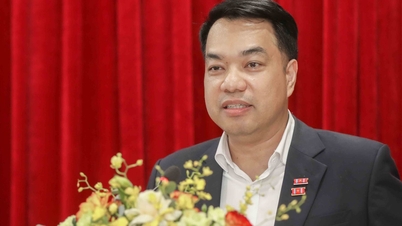
According to Le Ngoc Son, Chairman of the Vietnam National Industrial Corporation ( Petrovietnam ), Vietnam's energy demand will continue to increase sharply, putting immense pressure on investment in power generation development. Calculations show that to meet a GDP growth of approximately 10%, electricity demand must increase by 12-15% annually, equivalent to adding 7,000-8,000 MW of new capacity.
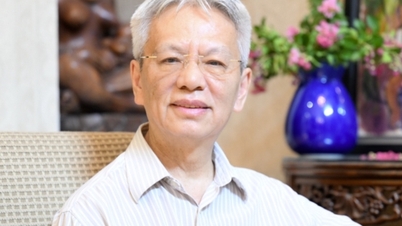
Sharing this view, Dr. Nguyen Dinh Hoa from the Vietnam and World Economics Institute predicts that to achieve double-digit economic growth (assuming 10%), total energy consumption needs to increase by at least 8%, but high energy consumption also means an increased risk of greenhouse gas emissions.
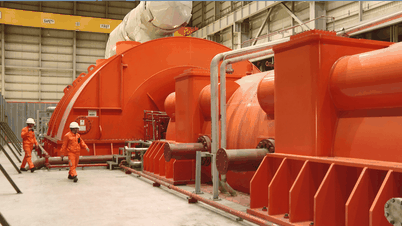
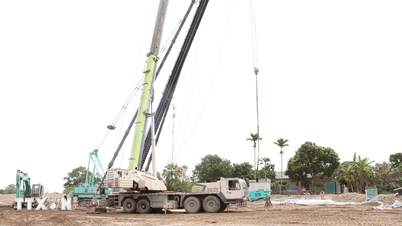
To realize the goal of "energy leading the way," meeting the requirements of double-digit economic growth while reducing greenhouse gas emissions, Petrovietnam is focusing on investing in LNG power plants. The Nhon Trach 3&4 project - Vietnam's first imported LNG power plant - has come into operation, marking an important step forward in the energy transition.
According to Petrovietnam Chairman Le Ngoc Son, LNG power plants should be planned with a scale of 3,000 - 5,000 MW, instead of individual projects of around 1,500 MW, in order to reduce LNG terminal infrastructure costs by 20 - 30%, and save about 10% on plant construction costs through the application of a standardized model. In addition, LNG plants can utilize the heat from the gasification process to serve data centers, increasing the overall investment efficiency.
Furthermore, as a pioneer in energy transition and ensuring national energy security, and with its unique advantages in the energy value chain, Petrovietnam is also focusing on developing large-scale eco-industrial and energy centers. Specifically, Petrovietnam and its member units have been researching and proposing a model for an eco-industrial and energy center in Vung Ang ( Ha Tinh province ) with three pillars: Energy (with LNG gas-fired power as the core), industry, and logistics and technical support services.
Petrovietnam also proposed the construction of the Petrovietnam Eco-Energy Industrial Center in O Mon Ward, Can Tho City. According to Mr. Nguyen Van Tu, Deputy Director of the Vietnam Petroleum Institute, this center model is a strategic and comprehensive solution for Petrovietnam to contribute to ensuring national energy and food security, fulfilling the commitment to reduce net greenhouse gas emissions to zero by 2050, and contributing to the economic development of Can Tho City and the Mekong Delta.
This is a new development model, superior to traditional industrial parks or economic zones, shaped by four core outstanding characteristics: deep integration and industrial symbiosis, creating a circular ecosystem, optimizing the entire value chain; leading high technology, pioneering the application of biorefinery (integrating processes to convert biomass into high-value products including biofuels, chemicals, electricity and heat), clean fuels such as hydrogen and green ammonia; CO2 recovery, utilization and storage (CCUS); creating momentum for economic growth and sufficient competitiveness in the region.
Along with the proposal for an Eco-Energy Industrial Center, Petrovietnam is also focusing on promoting research and development of offshore wind power to take advantage of Vietnam's offshore wind potential, which could reach 600-1,000 GW, while the current total system capacity is only about 84-85 GW. Petrovietnam is currently proposing to the Ministry of Industry and Trade to finalize the policy framework for this sector.
In his comments on the draft Law on Electricity (amended), Dr. Hoang Xuan Quoc, Deputy Head of the Advisory and Review Board of the Vietnam Petroleum Association, pointed out that offshore wind power survey activities mainly include wind measurement, wave measurement, and seabed geological surveys, which are no more complex than offshore oil and gas exploration and exploitation activities. However, in reality, current regulations related to surveys make implementation difficult, potentially increasing costs and risks for businesses, thereby affecting the progress of project development.
Therefore, the logical solution is for the State to consider offshore wind power as a national resource. Based on that, a state agency could conduct initial surveys, preliminarily assess the wind potential, and then divide the area into blocks to organize bidding for investor selection, suggested Dr. Hoang Xuan Quoc.
In particular, to realize the goal of reducing greenhouse gas emissions while increasing energy consumption for double-digit growth, Vietnam needs mandatory regulations and sanctions on energy saving and efficiency, rather than just incentives, to align with the government 's commitments to the international community to achieve net emissions of "zero" by 2050, Dr. Nguyen Dinh Hoa pointed out.
Source: https://baotintuc.vn/kinh-te/be-do-cho-tang-truong-2-con-so-va-phat-trien-xanh-20260517144543454.htm




































































Comment (0)