


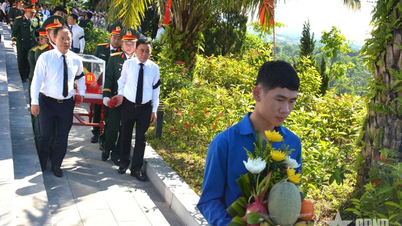
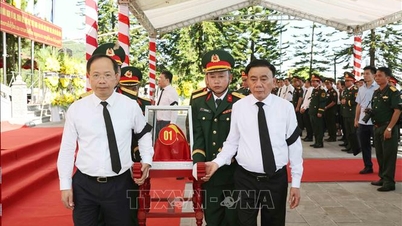
According to the Ninh Binh Provincial Steering Committee 515, a survey of 365 martyrs' cemeteries in the province revealed that there are currently over 7,900 martyrs' graves whose information has not been identified and require DNA testing. Many cemeteries have a large number of graves requiring sampling, such as the Yen Mo Martyrs' Cemetery (846 graves) and the Gia Vien Cemetery (622 graves).
In reality, the remains of fallen soldiers, buried for many years (mostly those who died during the resistance against French colonialism), have been affected by climatic and soil conditions. Some graves have been moved and reburied multiple times, making it difficult to determine their historical location for repatriation. Information on the graves is incomplete, inconsistent, and lacking in detail. Based on these characteristics, the Provincial Steering Committee 515 selected Yen Phuong Martyrs' Cemetery in Phong Doanh commune, with 165 graves of fallen soldiers, including 7 graves whose information has not yet been identified, to collect samples for identification before implementing the process on a larger scale throughout the province.

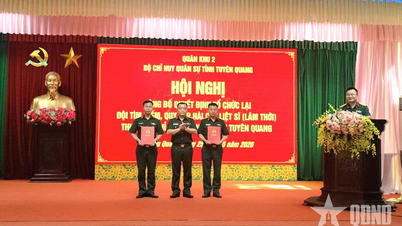
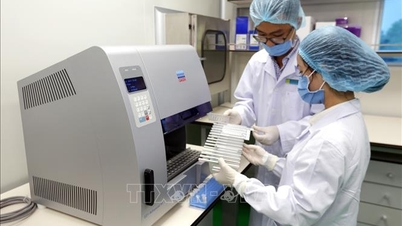
The Provincial Military Command - the Standing Agency of the Provincial Steering Committee 515 - established a sampling team and collected samples from seven unidentified martyrs' graves at Yen Phuong Martyrs' Cemetery for DNA testing. The sampling team fully updated information related to the martyrs' graves, excavation locations, sampling process, sealing, preservation, and handover of samples. Data was meticulously reviewed and compared between paper records, field observations, and electronic data, contributing to improved management, storage, and future identification of martyrs' remains.
Representatives from Phong Doanh commune People's Committee shared that, in order to successfully collect samples and conduct DNA testing of the remains of fallen soldiers, it is essential to prioritize propaganda and public relations work; create consensus among the people; and carefully prepare each task, location, and situation, avoiding complacency or negligence in all stages of the process.
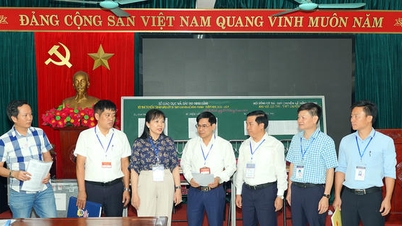
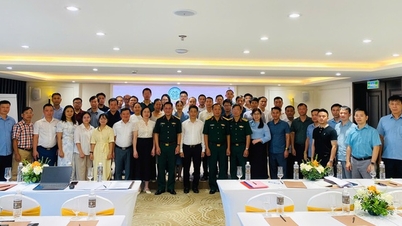
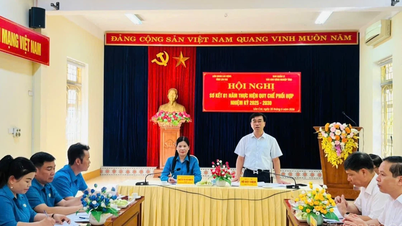
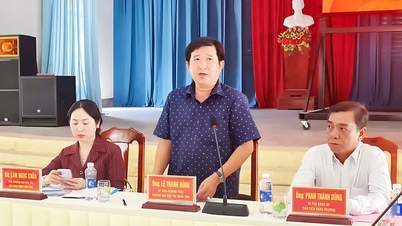
At the conference, representatives from communes and specialized units shared their experiences in the sampling process, highlighting the advantages and difficulties, and making recommendations and proposals for inter-sectoral coordination throughout the entire sampling and identification process of fallen soldiers in the area.

According to Colonel Vu Trong Thoan, Political Commissar of the Provincial Military Command and Deputy Head of the Standing Committee of the Provincial Steering Committee 515, based on the results of the preliminary work at Yen Phuong Martyrs' Cemetery, the Provincial Steering Committee 515 requests localities to accelerate the progress of collecting samples of martyrs' remains throughout the province, striving to complete the set goal as soon as possible, ensuring that 100% of samples are collected according to the correct technical procedures, with complete and accurate records, and without professional errors or sample loss.
To successfully complete the tasks of collecting samples, handing over samples, and digitizing information on the remains of fallen soldiers, Party committees and authorities at all levels must coordinate closely with specialized agencies. The forces involved must cooperate closely, assigning specific tasks, clearly defining responsibilities, and specifying who is responsible. In particular, localities and relevant agencies need to conduct thorough surveys, review and cross-reference records and information on graves, complete grave site records, establish identification codes, and prepare all necessary conditions. Localities and relevant agencies should promote the application of information technology and digital transformation in the management of records and data, and monitor the entire process of sample collection, preservation, transportation, handover, and DNA testing of the remains of fallen soldiers.
Source: https://baotintuc.vn/thoi-su/day-nhanh-toc-do-tra-lai-ten-cho-cac-liet-si-20260525152647720.htm
![[Image] Close-up view of the interchange connecting the two expressways and Long Thanh Airport.](https://vphoto.vietnam.vn/thumb/1200x675/vietnam/resource/IMAGE/2026/05/25/1779703378210_ndo_br_z7863716673926-224453a31600126cce10622af6290afd-4549-jpg.webp)

![[Image] Hanoi's urban life under the challenge of a "scorching hot" environment](https://vphoto.vietnam.vn/thumb/1200x675/vietnam/resource/IMAGE/2026/05/25/1779706979265_nang-nong-t5-2026-minh-duy-7-4636-jpg.webp)

































































Comment (0)