

Rabies is an acute viral infection of the central nervous system, transmitted from animals to humans through secretions, usually saliva, containing the rabies virus.
This article was professionally reviewed by Dr. Le Minh Lan Phuong, Head of the Outpatient Department, Children's Hospital 1 (Ho Chi Minh City).
Pathogen
The causative agent is the rabies virus (Rhabdovirus), belonging to the Rhabdoviridae family, Lyssavirus genus.
Source of infection
- Natural reservoirs of rabies virus:
+ Warm-blooded mammals, especially wild animals such as coyotes, wolves, jackals, and domestic dogs (Candae).
Additionally, cats, ferrets, civets, and other mammals can also carry the rabies virus.
- Sources of rabies transmission:
+ Wild mammals.
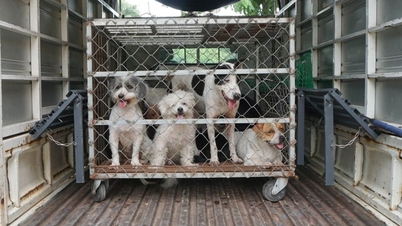
+ Animals that live near humans are most commonly dogs, followed by cats.
+ Theoretically, transmission from an infected person to a healthy person could occur if the infected person's saliva contains the rabies virus. In reality, there are no documented cases of such transmission, except for corneal transplants from a person who died of rabies to a recipient.
Mode of transmission
- The disease enters the body through the saliva secreted by infected animals and through bites, licks, scratches on broken skin (or through intact mucous membranes).
From there, it travels along the nerve to the ganglia and the central nervous system.
- Once it reaches the central nervous system, the virus reproduces very quickly and then travels along the nerves to the salivary glands.
At this stage, the nervous system has not been significantly damaged, so the animal appears normal on the outside, but its saliva already contains the rabies virus.
- Subsequently, the rabies virus gradually destroys nerve cells, leading to the typical clinical symptoms of rabies.
- Rabies is transmitted from animals to humans through secretions, usually saliva, that are infected with the rabies virus.
- Most cases of rabies exposure occur through bites or licks from animals infected with rabies; sometimes infection can occur through contact such as inhaling aerosols.
Disease progression
- Incubation period:
+ In humans, it lasts 2-8 weeks, but can be as short as 10 days or as long as one or two years.
The incubation period depends on the number of viruses that enter the body, the severity of the wound, and the distance from the wound to the brain.
+ Severe wounds, especially those close to the central nervous system, have a shorter incubation period.
- Pre-symptom phase:
Usually 1-4 days.
+ Symptoms include feelings of fear, headache, fever, fatigue, discomfort, numbness and pain at the wound site where the virus enters.
- Encephalitis phase:
+ Symptoms include insomnia and increased irritability, such as sensitivity to light, noise, and even gentle breezes.
+ In addition, there may be autonomic nervous system disorders such as dilated pupils, increased salivation, sweating, and hypotension.
+ Sometimes ejaculation occurs spontaneously.
- The illness lasts 2-6 days, sometimes longer, and the patient dies from respiratory muscle paralysis.
- Once rabies symptoms appear, both animals and humans will die.
Diagnose
- Diagnosis is based on clinical symptoms, especially hydrophobia, aerophobia, and photophobia, along with related epidemiological factors.
- Definitive diagnosis:
+ By direct immunofluorescence antibody (IFA) assay from brain tissue or virus isolates in mice or cell cultures.
+ Diagnosis can be based on immunofluorescence assay results of frozen skin sections taken from the patient's nape hair, or serological diagnosis using neutralization reactions in mice or cell cultures.
+ Rabies virus RNA can be detected using PCR or RT-PCR reactions.
Prevention and control measures
People who have been bitten by dogs or cats must strictly follow these instructions:
- Wound treatment:
Immediately wash the wound thoroughly with strong soapy water.
+ Afterwards, rinse with saline solution and apply an antiseptic such as alcohol or iodine to reduce the amount of virus at the bite site.
+ Only stitch the wound if more than 5 days have passed since the bite.
+ Administer tetanus vaccine and treat infection if necessary.
- Protection through specific immunity:
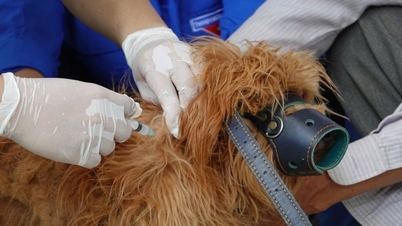
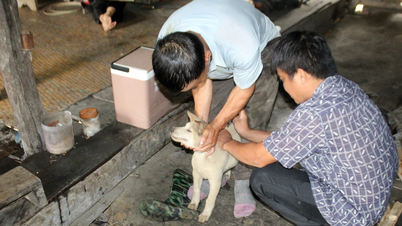
+ Administer rabies cell-based vaccine or use both vaccine and anti-rabies serum (ARS) for prophylactic treatment, depending on the animal's condition, the bite wound, and the rabies situation in the area.
+ Avoid overuse of vaccines and immunosuppressive therapy.
Patients bitten by or exposed to animals should seek medical attention as soon as possible to receive prophylactic treatment with rabies vaccine or anti-rabies vaccine.
+ Get vaccinated early, within the first 72 hours after being bitten by an animal.
The effectiveness of prophylactic treatment depends on many factors such as the type of vaccine, injection technique, storage of biological products, and the patient's immune response.
America and Italy
Source link



![[Photo] General Secretary and President To Lam presides over the meeting to approve the draft report on the results of the second inspection by the Politburo of the Standing Committee of the Hanoi City Party Committee.](https://vphoto.vietnam.vn/thumb/1200x675/vietnam/resource/IMAGE/2026/05/26/1779789811432_a2-bnd-4430-9620-jpg.webp)









































































































Comment (0)