

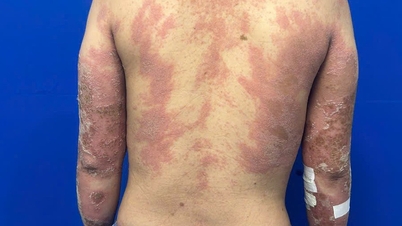
Ho Chi Minh City – Ms. Hien, 33 years old, developed a few red spots on her abdomen, which then spread into patches all over her body, becoming scaly and rough. Doctors diagnosed her with the rare condition of follicular pityriasis rosea.
The red spots appeared most frequently on her abdomen, chest, back, neck, and arms, causing Ms. Hien anxiety and a loss of self-confidence, forcing her to wear long clothes to cover her body. She went to another hospital for examination and was diagnosed with pityriasis rosea. After several weeks of treatment without improvement, the rash became denser, forming large patches of scaly, reddish skin, causing dryness and intense itching.
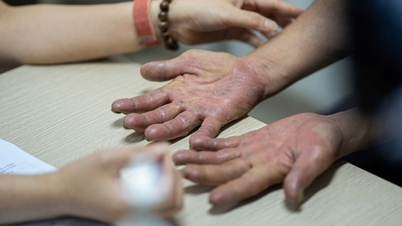
On March 19th, Dr. Nguyen Thi Kim Dung, a specialist in Dermatology and Cosmetic Dermatology at Tam Anh General Hospital in Ho Chi Minh City, stated that symptoms of severe red, scaly skin are easily misdiagnosed as psoriasis. However, during clinical examination, doctors observe several distinctive features such as reddish-orange lesions with thin scales; increased keratinization of hair follicles; interspersed islands of healthy skin between the affected areas; these lesions are distributed on the back, shoulders, abdomen, chest, arms, and scattered sparsely on the thighs; and there are no psoriatic-like nail lesions...
The patient was instructed to have a tissue sample taken from the rash area for biopsy. The results showed that Ms. Hien had the rare condition Pityriasis rubra pilaris (PRP). According to Dr. Dung, the incidence of this disease in the population has not been fully statistically recorded. A report from the British Association of Dermatologists indicates an incidence of approximately 1 in 400,000 people.
The doctor prescribed oral vitamin A derivatives (retinoids) to reduce inflammation and follicular keratosis, along with a full-body moisturizer and a change in shower gel to a gentler one for Ms. Hien. The medication usually takes 3-6 months to show results. However, after two months of treatment, Ms. Hien's condition improved by about 95%, with only a few hyperpigmented patches remaining that will naturally return to their normal color over time.
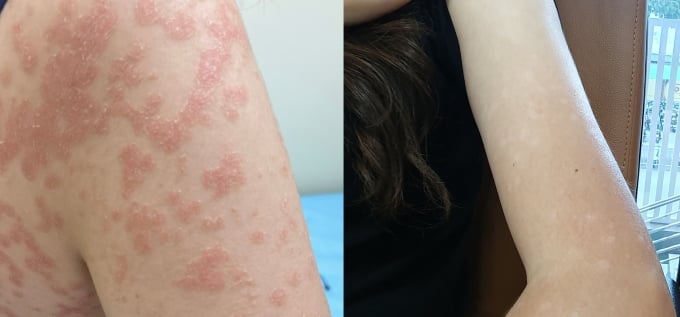
Ms. Hien's hand before and after treatment. Photo: Hoang Lien Son

Dr. Ly Thien Phuc, a dermatologist specializing in cosmetic dermatology, said that pityriasis rosea can occur in both men and women of all ages, but mainly affects those aged 5-10 or 51-60. The mechanism of the disease is unclear, but it may be hereditary (if caused by a dominant gene, it will start in childhood) or acquired after infection, UV exposure, medication use, or vaccination...
The disease is commonly acquired in adults, and the prognosis is good with proper diagnosis and timely treatment. The disease may stabilize, gradually subside, and resolve spontaneously after three years. If it is hereditary, treatment is more difficult, and the disease may persist for life.
The symptoms of pityriasis rosea are easily confused with common dermatological conditions such as psoriasis or Gibert's pityriasis rosea. Misdiagnosis can lead to incorrect treatment, potentially causing serious complications such as bacterial or fungal infections, generalized skin redness, dehydration, heatstroke, and metabolic disorders, according to Dr. Phuc.
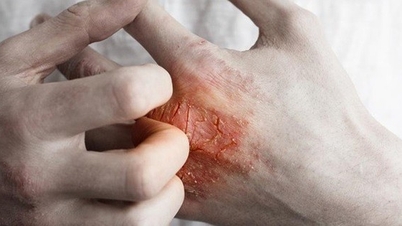
The prolonged condition of red, scaly skin also affects the patient's psychology, impacting their quality of life, appearance, and social interactions. Self-treatment with folk remedies such as applying plant leaves, bathing in lime water, or traditional medicines can worsen the condition, lead to secondary infections, and increase treatment costs.
Dr. Dung stated that the medication for this disease is highly effective but also causes some side effects such as increased liver enzymes, high blood lipids, dry skin, dry mucous membranes, and should not be used by pregnant or breastfeeding women. Patients need regular follow-up appointments and blood tests to monitor and control side effects and adjust medication dosages accordingly.

Doctors advise that when people experience unusual skin symptoms, especially when lesions spread over a large area such as erythema, scaling, and intense itching, they should go to medical facilities with dermatology specialists for examination and appropriate treatment.
Anh Thu
| Readers can submit questions about dermatological diseases here for doctors to answer. |
Source link





























































![[Video] Sunset at Lap An Lagoon – Where the sun sets over the fishing nets](https://vphoto.vietnam.vn/thumb/1200x675/vietnam/resource/IMAGE/2026/05/31/1780192137701_beach-landscape-sea-water-nature-grass-745871-pxhere-com.jpeg)











































Comment (0)