

The border commune of Bản Lầu in Mường Khương district has long been known as the "banana and pineapple hub" of Lào Cai province. From pineapple and banana cultivation, increasingly wealthy Hmong people have emerged in this land devastated by the border war 46 years ago. The extraordinary general meeting of Vietcombank shareholders elected Mr. Lê Quang Vinh - Deputy General Director in charge of the Executive Board - as a member of the Board of Directors for the 2023-2028 term, while simultaneously dismissing Mr. Nguyễn Mỹ Hào, who retired on November 1, 2024. With these decisions, the Vietcombank Board of Directors currently has 9 members. Currently, many Cơ Ho ethnic women in Lâm Đồng province have learned to take advantage of local resources, boldly investing in organic coffee production using a closed-loop process, promoting the Tây Nguyên coffee brand to domestic and international customers, bringing high income to their families. (Summary of news from the Ethnic and Development Newspaper.) The morning news bulletin on March 8th includes the following noteworthy information: Dak Lak's coffee knowledge recognized as a National Intangible Cultural Heritage; the prosperity of traditional craft villages in Ca Mau; the season of "catching" students in Po To; and other current events in ethnic minority and mountainous regions. Ban Lau border commune in Muong Khuong district has long been known as the "banana and pineapple hub" of Lao Cai province. From pineapple and banana cultivation, increasingly wealthy Mong people are emerging in this land devastated by the border war 46 years ago. After enduring many hardships and difficulties, for the past 10 years, Ms. Lung Thi Thuy and her husband, of the Phu La ethnic group in Coc Sam 2 village, Phong Nien commune, Bao Thang district, Lao Cai province, have remained dedicated to growing custard apples. Their efforts have paid off, with each harvest bringing sweet fruits to Ms. Thuy's family. On March 7th, 2025, Binh Duong province inaugurated the Biwase Tour of Vietnam. This is the first women's cycling race in Vietnam, part of the 15th annual Binh Duong International Women's Cycling Tournament, competing for the Biwase Cup, and included in the international competition system. "Every inch of land is worth its weight in gold," yet two impoverished Van Kieu households, those of Mr. Ho Van Lat and Mr. Ho Van Chun in Huong Hoa district (Quang Tri province), have donated nearly 1,000 square meters of land to expand a school. This noble gesture by the two households is contributing to spreading kindness to the local community... This is a summary of news from the Ethnic and Development Newspaper. This afternoon's news on March 7th includes the following noteworthy information: The 100-Year Journey of Salt Production - A Lifetime. Visiting Si Ma Cai to admire white pear blossoms. The beauty of ancient Thai villages amidst the vast forests of Nghe An province. Along with other current news from ethnic minority and mountainous regions: The extraordinary general meeting of Vietcombank shareholders elected Mr. Le Quang Vinh - Deputy General Director in charge of the Executive Board - as an additional member of the Board of Directors for the term 2023-2028, and simultaneously dismissed Mr. Nguyen My Hao, who retired on November 1, 2024. With these decisions, the Vietcombank Board of Directors currently still has 9 members. Within the framework of the Vietnam Salt Industry Festival – Bac Lieu 2025, on the afternoon of March 7, the Ministry of Agriculture and Environment (MARD) coordinated with the People's Committee of Bac Lieu province to organize a conference to review the implementation of Government Decree No. 40/2017/ND-CP on the management of salt production and business. On the afternoon of March 7, in Hanoi, the Customs Department organized a conference to announce the Decision stipulating the functions, tasks, powers, and organizational structure of the Customs Department and its internal organizations; Announcement of Decisions on personnel matters of the Customs Department. Deputy Minister of Finance Nguyen Duc Chi attended and delivered a speech at the Conference. On the afternoon of March 7th, in Hanoi, General Secretary To Lam and the Central Working Group worked with the Central Policy and Strategy Committee on the development of the private economy. Summary of the Ethnic Minorities and Development Newspaper. This afternoon's news bulletin on March 7th includes the following noteworthy information: The 100-Year Journey of Salt Production - A Lifetime. Visiting Si Ma Cai to admire white pear blossoms. The beauty of ancient Thai villages amidst the vast forests of Nghe An. Along with other current events in the ethnic minority and mountainous regions.
In the early 1990s, Thào Dìn was one of 34 Hmong households in the mountainous Dìn Chin commune, Mường Khương district, who moved to live in the border village of Cốc Phương in Bản Lầu commune. At that time, the name Cốc Phương was unfamiliar even to people in the district, because the village was far from the center, had poor transportation, and was located right next to the border, isolated from the outside world. When they first settled in Cốc Phương, he and many others had to cross the border to work for labor in exchange for rice to feed their families; the work there was picking pineapples for hire.
“During the day, I went to work, and at night, I kept thinking, 'They're only separated from me by a stream, their hills and mountains are no different from mine, yet they've become rich from pineapples to bananas, while my people have remained poor for years and have to work as laborers…' I worked while observing and learning pineapple cultivation techniques, especially how to mix biological pesticides to stimulate the pineapples to grow large, uniform, and beautiful. When I was confident that I could also grow pineapples like them, I saved up my wages to buy pineapple seedlings,” Mr. Din confided.
For his first pineapple crop (late 1994), Mr. Din bought over 10,000 pineapple seedlings and mobilized his wife, children, and siblings to carry them up the hill to plant. Once the pineapples took root, he hired villagers to weed and fertilize them according to the procedures he had learned. More than a year later, when the pineapples ripened, the whole family rejoiced. But when harvest time came, another obstacle arose: at that time, the only way from the commune center to Coc Phuong was a dirt road, and trucks couldn't reach the hill to buy the pineapples. So he had to hire people to carry heavy loads of pineapples several kilometers to sell them. After deducting investment costs and labor, he didn't make much profit.
For the second season, he saved up all his money and borrowed more to plant another 10,000 pineapple plants, but it seemed fate wanted to test him. Just as he harvested 10 tons of pineapples, it rained continuously, causing most of the ripe pineapples to rot. That season, Thào Dìn lost more than 10 million dong.
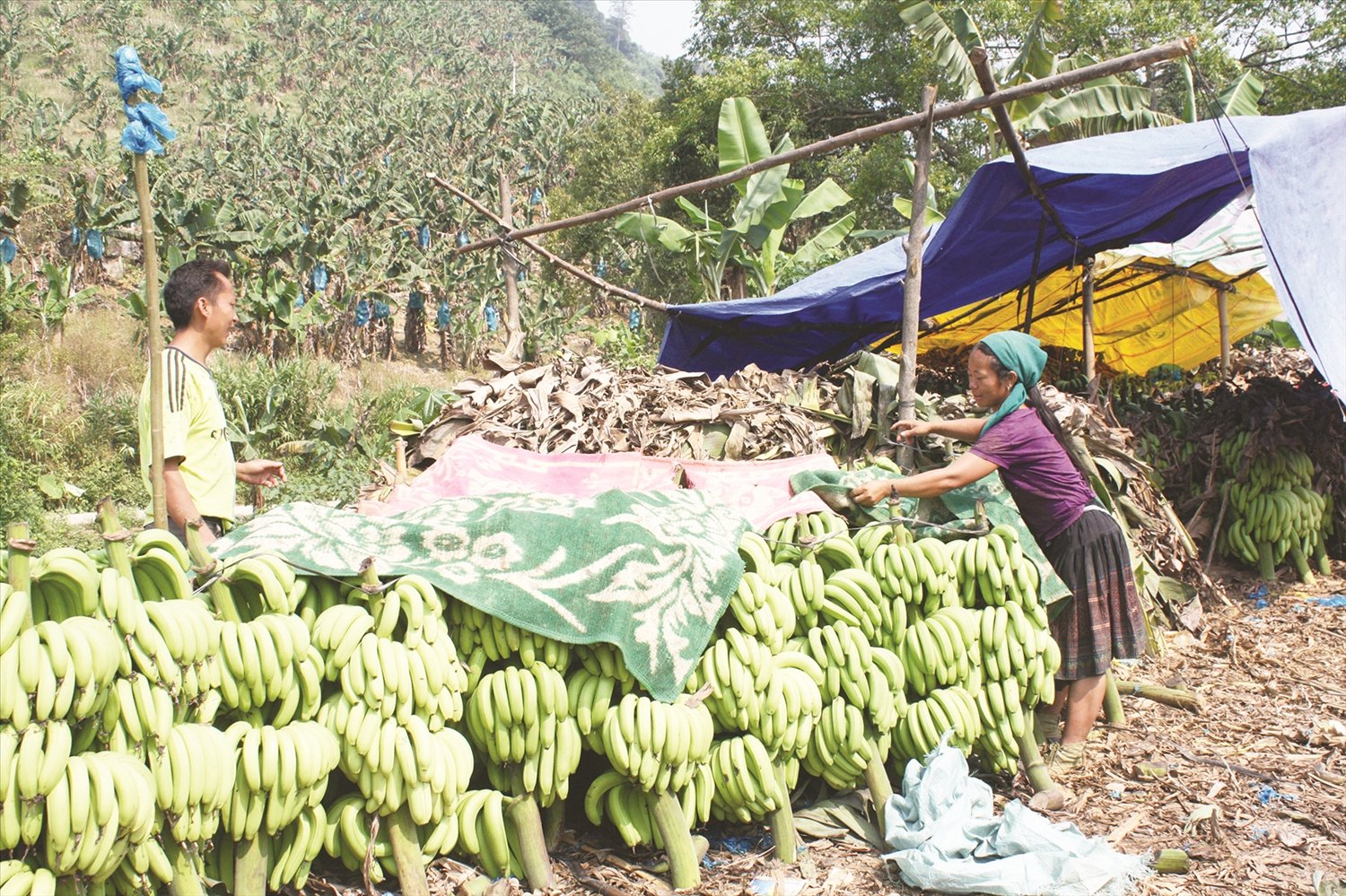
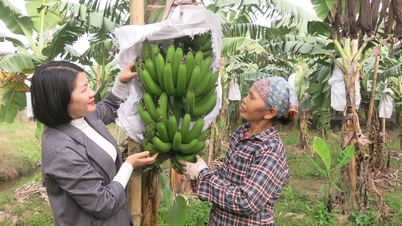
When faced with difficulties, Thào Dìn redoubles his efforts five or ten times over. The following year, he discussed with his wife the possibility of borrowing more money from the bank to buy 30,000 pineapple seedlings. This season, Thào Dìn carefully calculated the planting time to ensure the pineapples ripened at the right time and avoided unfavorable weather. The pineapple harvest was bountiful and the prices were good, allowing him to pay off all his debts and have money to invest in expanding his cultivation area. After pineapples, Thào Dìn also learned the technique of growing bananas using tissue culture and successfully applied it to the land along the Cốc Phương and Na Lốc streams. Now, Mr. Dìn's family has one of the largest areas of banana and pineapple cultivation in the commune, earning several hundred million dong annually.
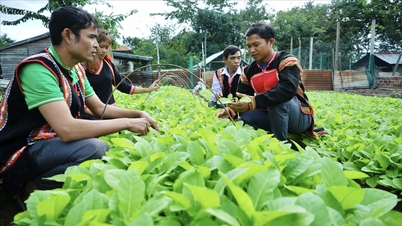
Following the example of Thào Dìn, the Hmong people in Cốc Phương replaced corn with pineapple cultivation, resulting in significantly higher incomes, pushing back poverty, and improving their living standards. Building on the success of pineapples, the Hmong here also cultivate bananas using tissue culture for export. Bananas are grown in the lowlands along the streams, while pineapples are planted on the high mountains; the green of prosperity and abundance covers the once barren land.
Starting from Coc Phuong, now all the villages in Ban Lau grow pineapples and bananas, becoming a specialized commodity production area with over 1,500 hectares. Each year, this brings in tens of billions of dong for the local people.
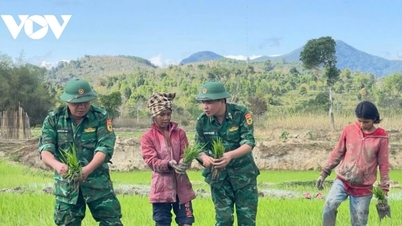
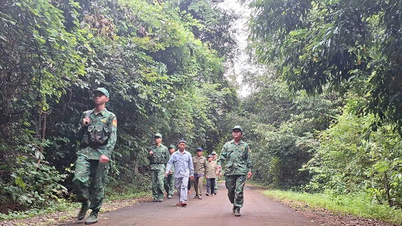
Starting from Coc Phuong, now all the villages in Ban Lau cultivate pineapples and bananas, becoming a specialized commodity production area with over 1,500 hectares. Bringing in tens of billions of dong annually, Coc Phuong now has no poor households, and 70% of households are well-off or wealthy. This prosperous border region allows the people to feel secure working alongside the Border Guard to protect the border markers.
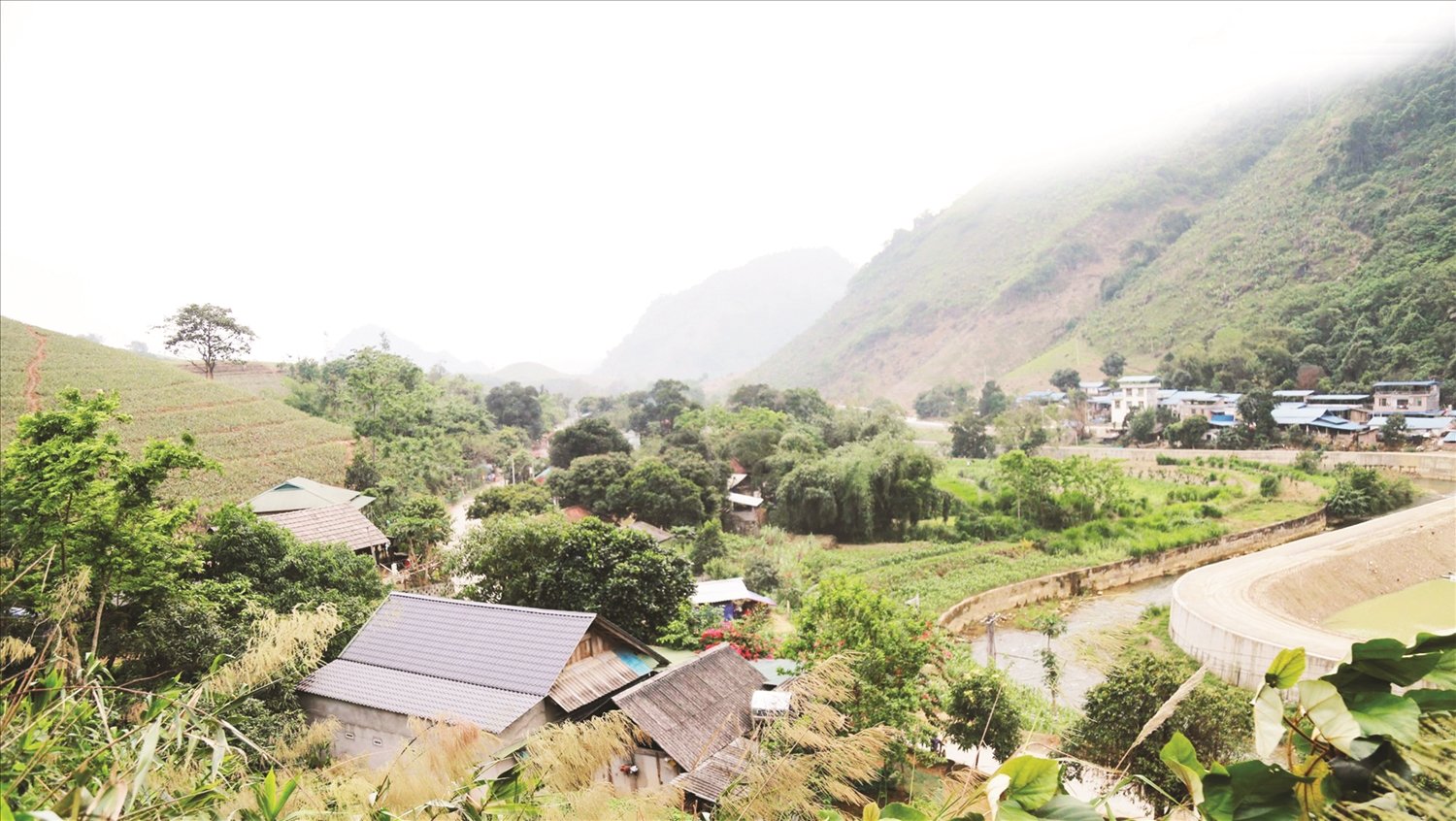
Visiting Ban Lau today, it's easy to spot well-built houses with modern designs, no less impressive than those in the lowlands. Provincial Road 154 – the road connecting National Highway 4D from Lao Cai to Muong Khuong and leading to the villages of Pac Bo, Na Loc, Coc Phuong, etc. – has been paved with asphalt by the government with an investment of tens of billions of dong and was inaugurated a few months before the Lunar New Year of the Year of the Snake, making travel and trade for the local people increasingly convenient.
It is known that in 2024, the entire commune had 848 hectares of pineapples in production, with a yield of 26 tons/ha, reaching a total output of over 22,000 tons of fruit. This was sold to the Muong Khuong Export Fruit and Vegetable Processing Factory and to provinces such as Bac Giang, Ninh Binh, Thanh Hoa, and Quang Ninh, bringing in over 132 billion VND for the people. Thanks to this, most houses have been built solidly, many are 2-3 stories high, with full modern amenities, children receive a complete education, and there are no social vices. The people are settled and developing production with peace of mind, working together with the Border Guard to firmly protect national sovereignty and border security...
Source: https://baodantoc.vn/bien-cuong-xanh-mau-no-am-1741233745919.htm



![[Image] National Assembly discusses the implementation of the socio-economic development plan.](https://vphoto.vietnam.vn/thumb/1200x675/vietnam/resource/IMAGE/2026/04/20/1776696707422_ndo_br_img-20260420-185419-jpg.webp)
![[Photo] General Secretary and President To Lam meets with National Assembly delegates from ethnic minorities.](https://vphoto.vietnam.vn/thumb/1200x675/vietnam/resource/IMAGE/2026/04/20/1776696701056_a1-bnd-8331-3342-jpg.webp)








































































Comment (0)