With plenty of fish, the fishermen are delighted.
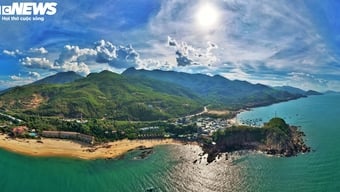
Even when the sea around Mui Ne was still covered in a thin layer of mist, the Bai Truoc beach (Ward 7, Mui Ne) was already bustling like an early morning market. The rumbling sound of boat engines echoed ashore, like the heartbeat of the sea. The steady lapping of waves mingled with the shouts of people calling out to each other, the sound of plastic baskets dragged across the sand, and the clatter of styrofoam containers colliding, creating a familiar and characteristic sound of the anchovy fishing season.
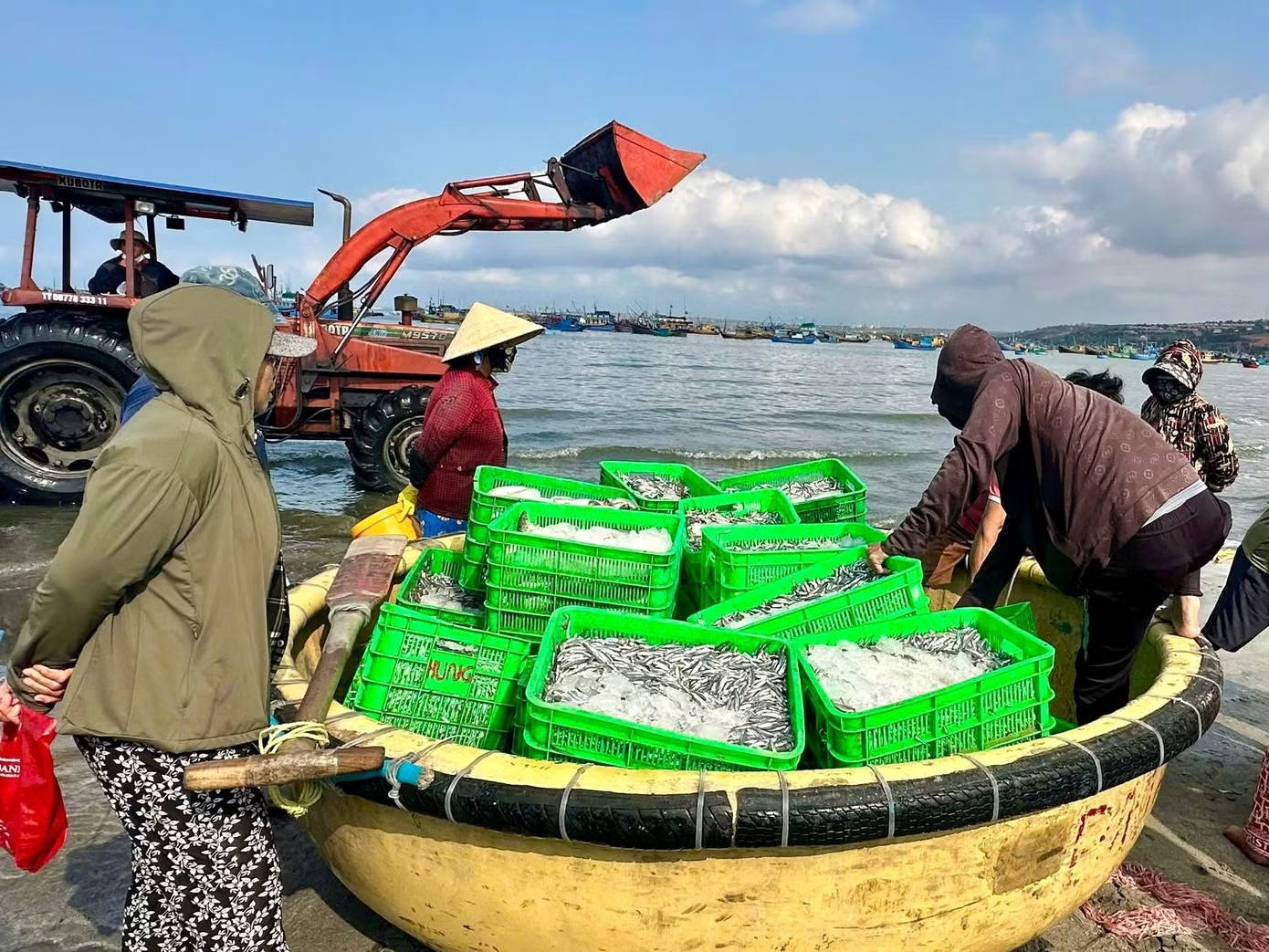
Without needing any prompting, the seasonal workers formed groups along the shore, their eyes fixed on the distance, waiting for the fishing boats to approach from the open sea. One man, with his trousers rolled up and an iron hook in hand, shouted as soon as he saw a boat appear: "The fish are coming in!" That shout was like a signal. In just a few seconds, the entire beach lit up, everyone jumped to their feet and rushed to the water's edge.
Feet splashing in the cold morning water. Strong arms grasping baskets of fish, lifting them, passing them from hand to hand, and quickly bringing them ashore like a well-oiled assembly line that had been operating smoothly for many fishing seasons before.
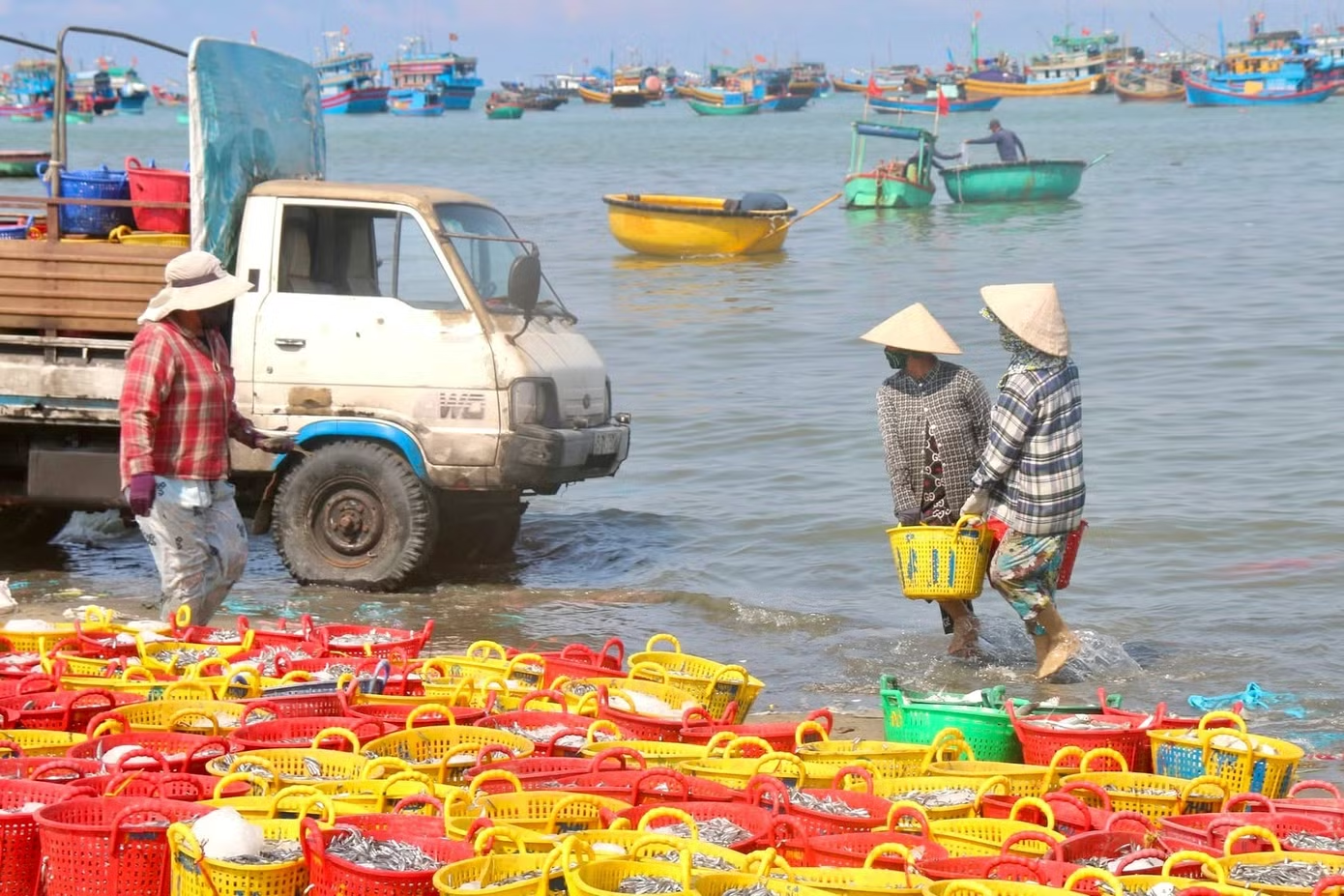
Inside the basket boat, anchovies covered everything in white. From a distance, they looked like a layer of silver. The small, translucent fish shimmered in the early morning sun, sparkling like grains of sea salt. The pungent smell of fresh fish rose, mingling with the sea breeze to create a unique "flavor" found only in coastal areas. On the shore, trucks were already parked and lined up. People weighed the fish, recorded the transactions, and poured them into styrofoam containers. The atmosphere on the beach was hectic but cheerful. Many people had sweat on their foreheads, but everyone was smiling because the "bounty of the sea" had arrived.
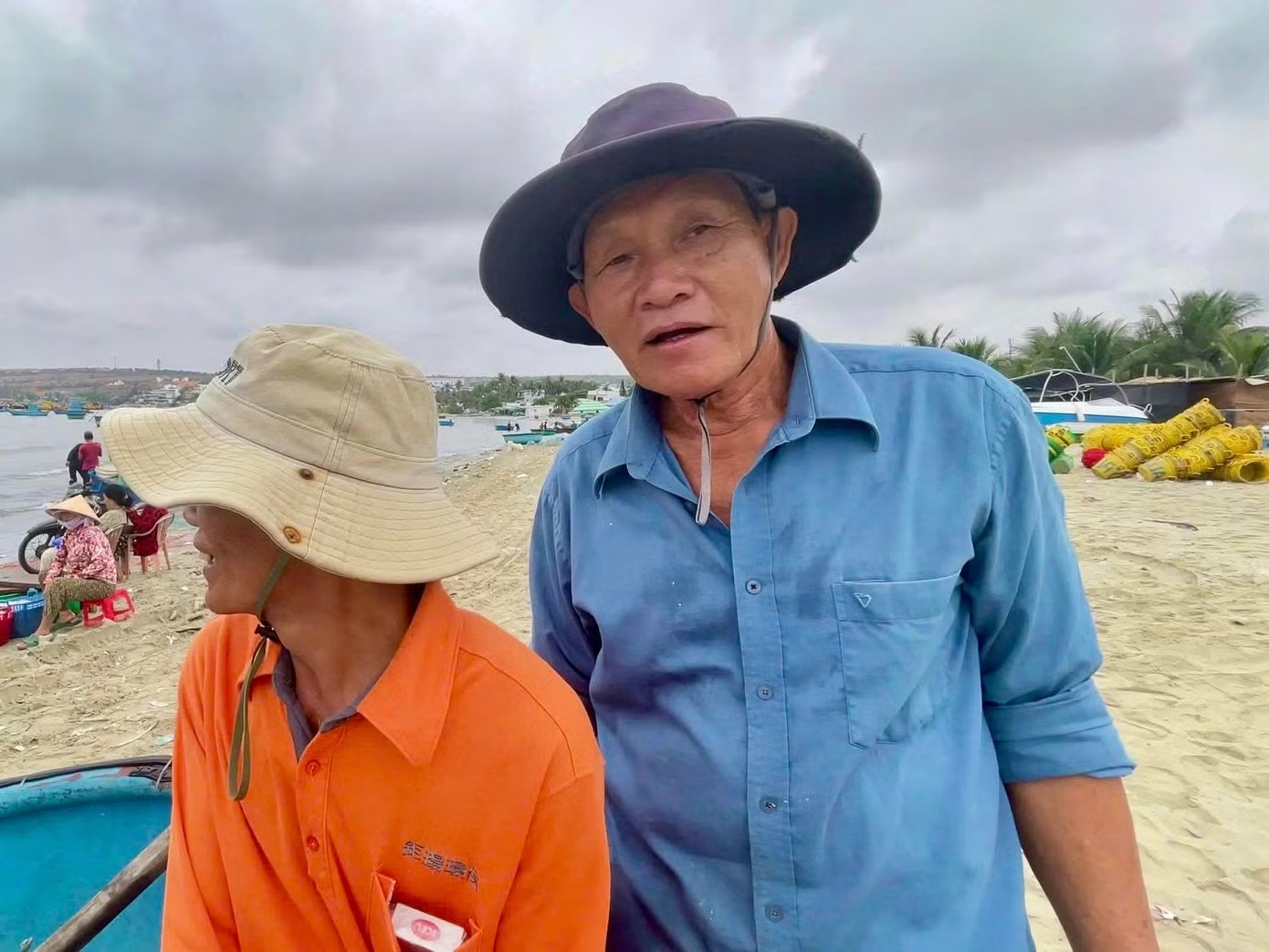
At the fish market, Mr. Tran Van Tam (a resident of Mui Ne ward, with over 20 years of experience at sea) stood next to a boat that had just docked. His face was tanned by the sun, but his eyes shone brightly. Mr. Tam said that this year the anchovies are abundant, the yield is stable, and many boats are full after only a few hours at sea. "Some trips are so busy that the boat is full of fish before noon. Each boat carrying several tons is normal. Everyone is very happy," Mr. Tam said, his hands still busily helping his family members unload the fish ashore.
According to Mr. Tam, the price of anchovies at the beginning of the season exceeded 30,000 VND/kg, but in recent days it has dropped to around 25,000-27,000 VND/kg. Even so, the strong increase in production means fishermen's incomes are still "comfortable." "It's a shame the price has dropped, but at least there's plenty of fish. The only fear when going out to sea is coming back empty-handed. As long as the boat is full of fish, we can still make a living," Mr. Tam said with a smile.


The race to get fresh fish
Fishermen in the Mui Ne coastal area call these continuous waves of anchovies "sea surges." The word "surge" sounds strange, but for seafarers, it's a sign of a favorable fishing season. "Surge" means a dense, prolonged influx of fish, giving fishermen a chance to catch them every day they go out to sea.
Ms. My (a woman who has been a fish buyer for many years at Bai Truoc beach) explained: "The 'long' season is when the fish come in continuously. This year, the 'long' season is a bit late, but when it arrives, the fish are plentiful. Some boats catch 12-15 tons per day, while others catch at least 1-2 tons. The price of fish is currently lower than at the beginning of the season, fluctuating around 19,000-22,000 VND/kg depending on the type, but thanks to the high yield, the fishermen are still making a profit. 'In the past few days, each crew member has shared from a few million to tens of millions of VND. Getting that much at the beginning of the southern fishing season is something to be happy about,' she said."
The anchovy season usually appears after the Lunar New Year. However, this year, the second lunar month passed without the sea becoming calm. Many people were worried about a poor harvest. When the fish unexpectedly appeared, the fishing port felt relieved. "This season lasted longer than usual. Everyone breathed a sigh of relief. Every boat that went out caught fish; no one went empty-handed," said Ms. My.
Not only are the fishermen busy, but traders in Mui Ne are also equally hectic these days. Ms. Nguyen Thi Bay (a trader buying fish at Bai Truoc beach) is constantly making phone calls, taking notes, and directing her workers. “The fish are coming in continuously, so we have to buy quickly, weigh quickly, and transport them quickly. Every day I buy from several tens of tons to hundreds of tons to take to the steaming, drying, or fish sauce making facilities. Without hiring extra people, we wouldn't be able to keep up,” Ms. Bay said. Then, pointing to the trucks parked near the edge of the beach, she added: “The trucks are waiting; as soon as the fish is loaded, we're ready to go. A little delay and the fish will lose color and price.”
Sweat for cash
In a corner of the beach, Mr. Huynh Van An (a resident of Mui Ne ward) is straining his shoulders, carrying baskets of fish onto a vehicle. Each basket weighs about 15kg. He walks quickly, puts one basket down, and turns to pick up another. The repeated action soaks his shirt. "The anchovy season is the best time of year for freelance workers to earn money. On days when many boats come in, we work continuously and can earn almost half a million dong a day. Normally, it's 300,000-500,000 dong. It's hard work, but the money comes in immediately," Mr. An said.
Not only men, but many women also participate in carrying, sorting, and pouring fish into styrofoam containers. The work doesn't require a contract or specific skills, just physical strength and agility. The anchovy season thus becomes a "peak season" for the entire fishing village. "If I can't carry much, I help sort and gather the fish. Each day I earn a few hundred thousand dong, enough to cover some of my living expenses," shared Ms. Le Thi Kim Hang.



According to Ms. Hang, sweat drips onto the sand, but the workers here still smile. Because they don't work for mere pleasure, but for a living. And anchovies are the money the sea gives them.
These days, anchovy steaming facilities in Mui Ne are operating at full capacity, the heat mingling with the sea breeze to create a distinctive aroma. After steaming, the fish are either dried or transported to fish sauce production facilities, creating a bustling traditional industry whenever the fish arrive. "The secret to preserving the flavor is selecting uniformly sized fish, thoroughly cleaning them, and steaming them in filtered seawater without adding any chemicals. The fish are steamed for 10-15 minutes to cook them through and retain their color, then sun-dried for 3-5 hours to achieve a fragrant aroma," said Mr. Dang Van Loc (owner of anchovy steaming facility in Mui Ne).
Fishermen in Mui Ne say there are many types of anchovies: white anchovies, black-striped anchovies, pepper-striped anchovies, red anchovies, and small anchovies… Despite their small size, anchovies are rich in nutrients and are an important raw material for the seafood processing industry, especially for making dried fish and fish sauce.
Source: https://tienphong.vn/bien-mo-loc-ca-com-trang-bo-post1848940.tpo
![[Photo] Opening Ceremony of the 13th National Congress of the Ho Chi Minh Communist Youth Union](https://vphoto.vietnam.vn/thumb/1200x675/vietnam/resource/IMAGE/2026/06/24/1782286753905_ndo_br_1-8510-jpg.webp)
![[Photo] The 13th National Congress of the Youth Union conducts personnel work.](https://vphoto.vietnam.vn/thumb/1200x675/vietnam/resource/IMAGE/2026/06/24/1782299943080_ndo_br_1-6868-jpg.webp)
![[Photo] General Secretary and President To Lam attends the Central Public Security Party Committee Conference](https://vphoto.vietnam.vn/thumb/1200x675/vietnam/resource/IMAGE/2026/06/24/1782302063612_a1-bnd-9302-9166-jpg.webp)