


Looking at the map, Nha Phu Lagoon is a coastal area starting from Luong Son (about 15km from Nha Trang city), curving around the entire Hon Heo peninsula. Located between the two large bays of Nha Trang and Van Phong, Nha Phu Lagoon covers an area of approximately 1,500 hectares, of which mangrove forests occupy about 40 hectares. There are many large and small islands here with famous tourist attractions such as Hon Da Bac, Hon Lao - Monkey Island, Hoa Lan Stream, Six Senses Ninh Van Bay Resort, etc.
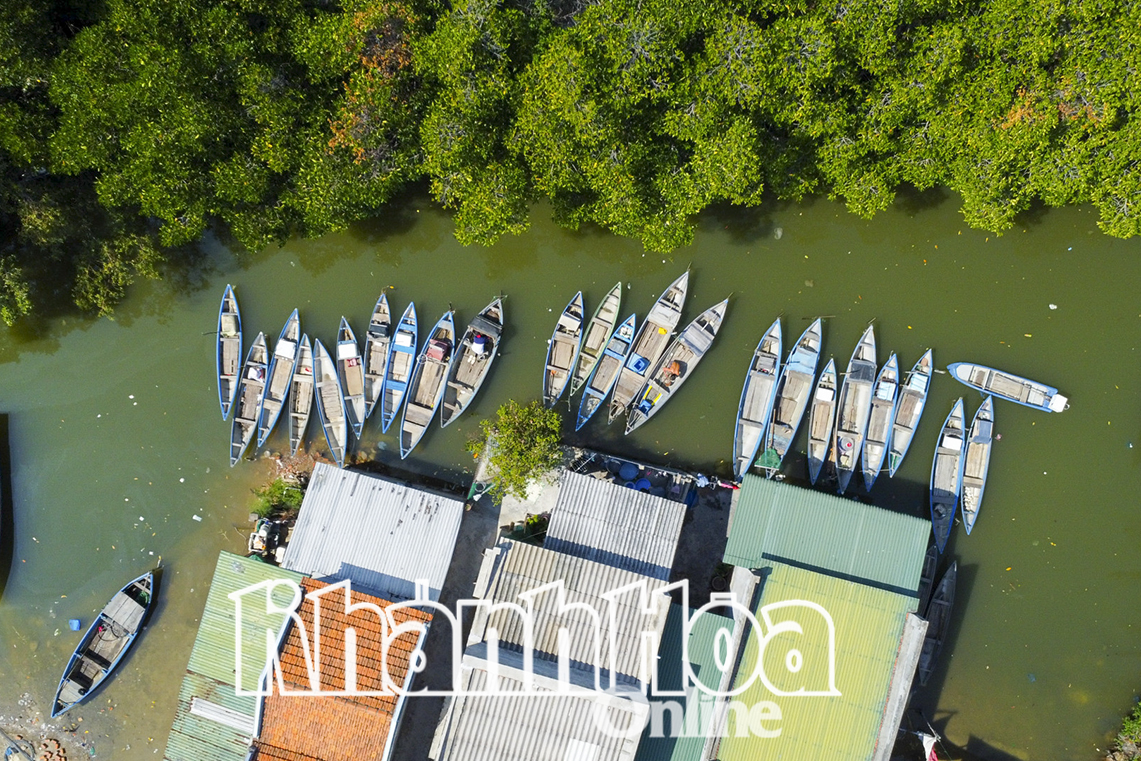 |
| The villagers mainly use motorboats for transportation. Photo: HOANG DUC |
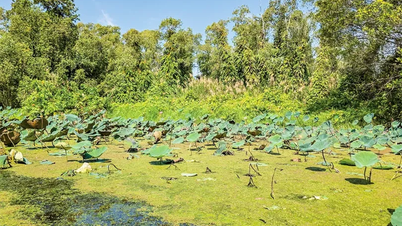
If you travel north from Nha Trang City along National Highway 1, passing through Luong Son, you will see the Nha Phu lagoon area with its dense green mangrove forests along the highway. Turning off at any of the villages, such as Luong Son, Cat Loi, Tan Thanh, Ngoc Diem, Tam Ich, Ha Lien… will lead you to Nha Phu lagoon, where you can see the peaceful scenery of a fishing village, markets selling freshly caught fish, seafood processing… or enjoy typical fishing village dishes of Khanh Hoa such as: Banh Can (rice pancake), fish noodle soup, jellyfish noodle soup…
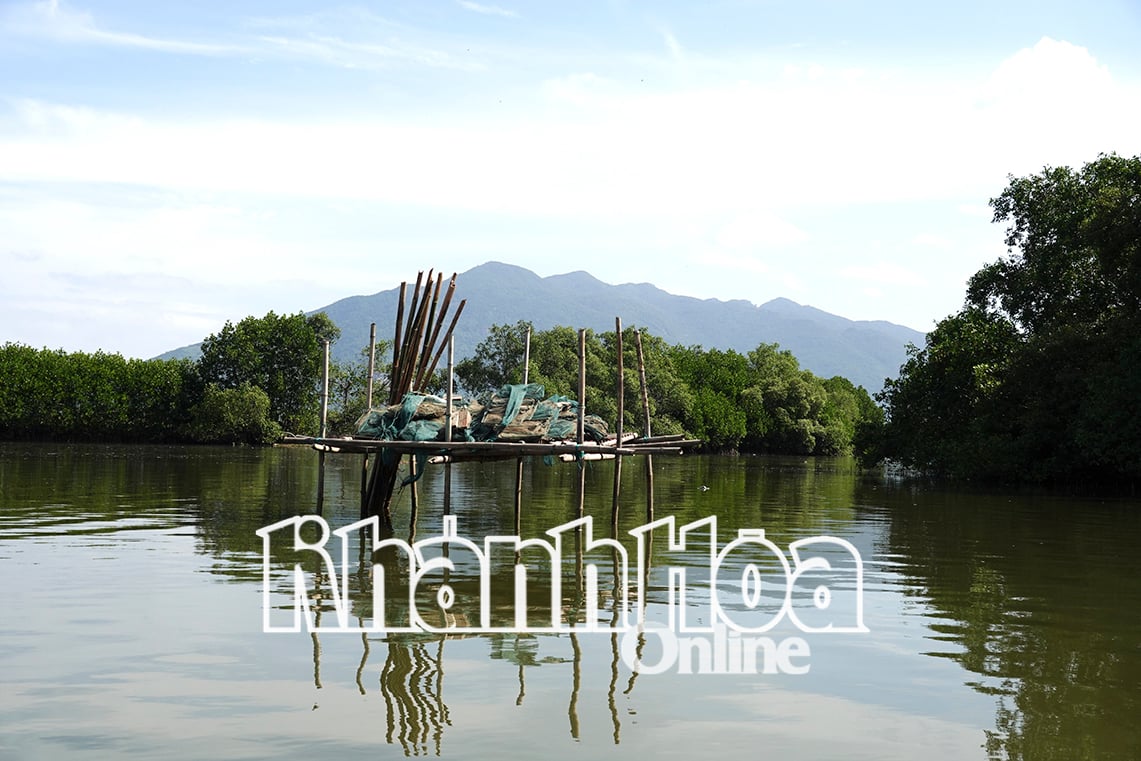 |
| A view of Nha Phu lagoon. |
One day in early March, we visited Ha Lien village in Ninh Ha ward (Ninh Hoa town), a unique village because, viewed from above, it looks like an oasis standing out amidst the aquaculture areas of Nha Phu lagoon. From the turnoff to Ninh Ha, we followed the Ben Do road and came to a fork in the road with a sign indicating a left turn to Ha Lien. The communal house is right at the beginning of the village, followed by Hue Lien pagoda and the market... The village paths are paved with cement and, notably, covered with corrugated iron roofs. Like many roads leading to the sea in fishing villages, however, what is special here is that you will see a dense area of green mangroves in the creeks, perhaps on the other side are fields or ponds… We hired a boat to go out to sea from this creek.
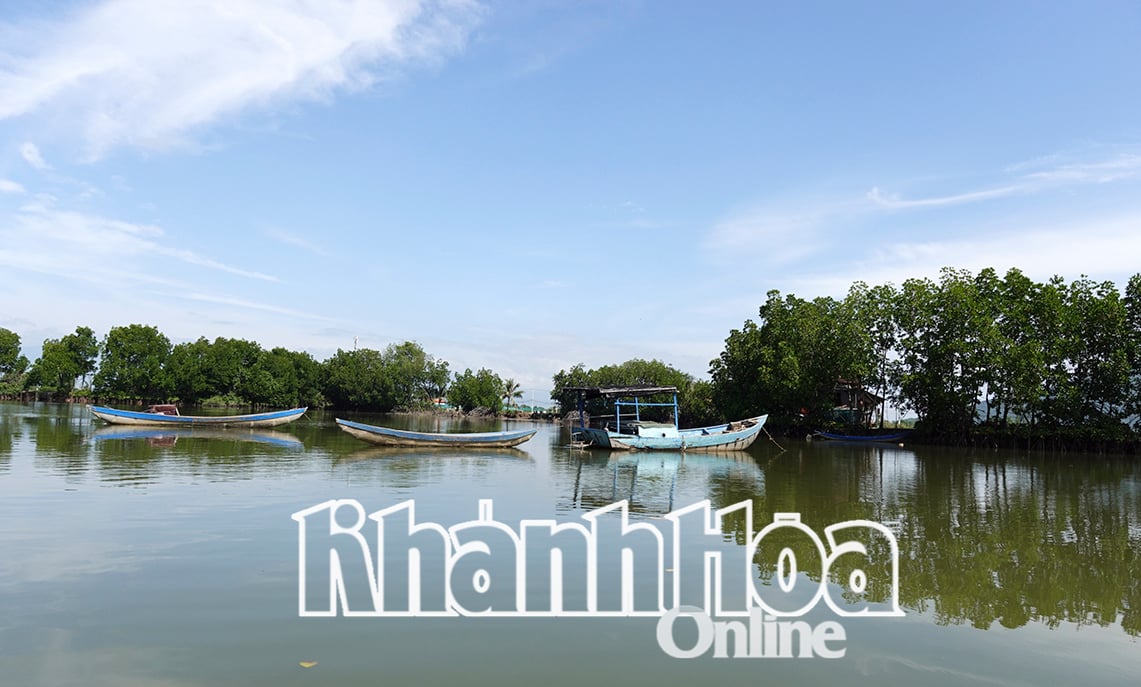 |
What was fascinating for us was that Ninh Hoa felt like we were traveling in some riverine area of the Mekong Delta, except that our hometown is surrounded by mountains. That day, we only explored a small corner of Nha Phu Lagoon, but we were overwhelmed by its beauty. Mangrove trees grew in dense, green clumps; you could see them in every direction. Several boats leisurely glided back and forth on the lagoon, people casting nets and catching fish and shrimp… Here and there were squares of fishing nets. Over there was Hon Quai Island stretching out. In the distance was Phu Huu Mountain. To our left was the Hon Heo mountain range, its slopes undulating and rolling.
After a round trip around the lagoon, on the way back, the boatwoman took us on another loop along the canal that runs around the village. The gentle sound of the oars, the calls of the bitterns, and the surrounding mangrove trees further enhanced the feeling of being on a river tour in Ca Mau .
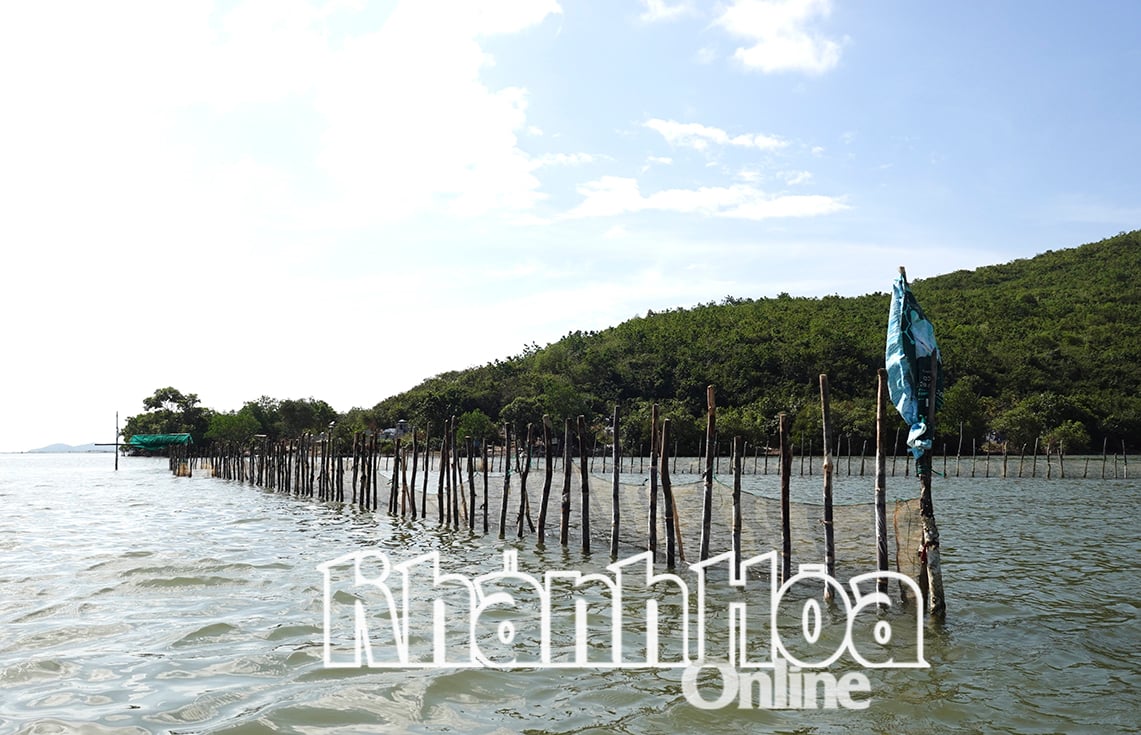 |
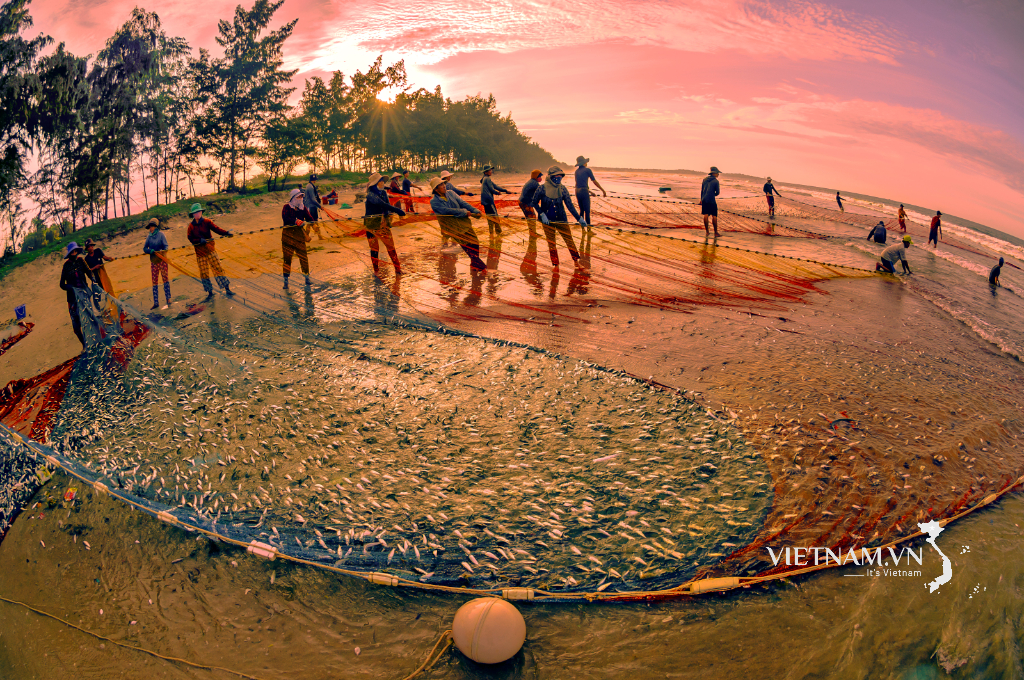
Sitting on the porch of a house, we listened to stories about the lives of the local people, whose main economic activity is fishing for fish and shrimp. Depending on the season and the ebb and flow of the tides, when the water recedes, a sandbar emerges on the lagoon, and the villagers row their boats out to net fish, catch snails, and oysters… Like this season, from late at night, people carry lamps and go out to the sandbar in their boats, returning at 5 am. In May and June, they go out during the day, for example, around 12 or 1 pm when the water starts to recede… If you come here at the right time when the whole village is out fishing, you will see many people on the sandbar catching crabs and snails… Many film crews have come here to film this scene…
Returning to the coastal city of Nha Trang, the peaceful beauty of Nha Phu Lagoon and the genuine, simple nature of the local people left us with a promise to visit this place many more times…
DAO THI THANH TUYEN
Source: https://baokhanhhoa.vn/du-lich/202503/binh-yen-tren-dam-nha-phu-f3c0000/
![[Photo] Procession of a giant "pig" weighing over 200kg at the La Phu Village Festival](https://vphoto.vietnam.vn/thumb/1200x675/vietnam/resource/IMAGE/2026/03/02/1772444501339_anh-man-hinh-2026-03-02-luc-16-40-20.png)

![[Image] Current situation of houses precariously balanced due to road leveling in Dong Nai.](https://vphoto.vietnam.vn/thumb/1200x675/vietnam/resource/IMAGE/2026/03/02/1772455749144_ndo_br_z7579763955585-6e80a60471e75768fa835d035eba45ea-6979-jpg.webp)
























































Comment (0)