

Prepare thoroughly before marching.
During the Spring Offensive of 1975, the Armored Forces participated with the largest number of tanks and armored vehicles up to that point, with a total of 5 tank regiments (brigades), comprising 502 vehicles of all types, not including vehicles used for support duties.
Maintenance and repair work for tanks and armored vehicles at that time faced numerous difficulties and shortages. Tank and armored units marched and fought in extremely complex conditions, with long marching routes and the need to cross many rivers, bridges, and culverts. The technical condition of some equipment and vehicles on board was damaged or deteriorated; maintenance equipment, supplies, and materials were scarce, of poor quality, and not standardized; and technical officers and personnel were insufficient due to being dispersed in various directions and fronts...
Given this situation, the armored engineering sector needs a specific and urgent plan for technical support before and during military operations to ensure that armored units can march safely with a high rate of arrival at their destination, promptly fulfilling combat readiness and achieving victory from the very first battle.
Given these characteristics, in 1972, the Party Committee and the Command of the Armored Corps directed several urgent actions to be taken: recovering and repairing vehicles and equipment, consolidating the organization to improve quality in all aspects, and continuing to support the battlefield. In compliance with the resolution of the Corps' Party Committee and fulfilling the tasks assigned by the Command, the armored engineering branch mobilized all its officers, soldiers, and technical personnel from the headquarters to the units to begin technical support work in preparation for the units' marches and combat participation in the Spring 1975 General Offensive and Uprising.
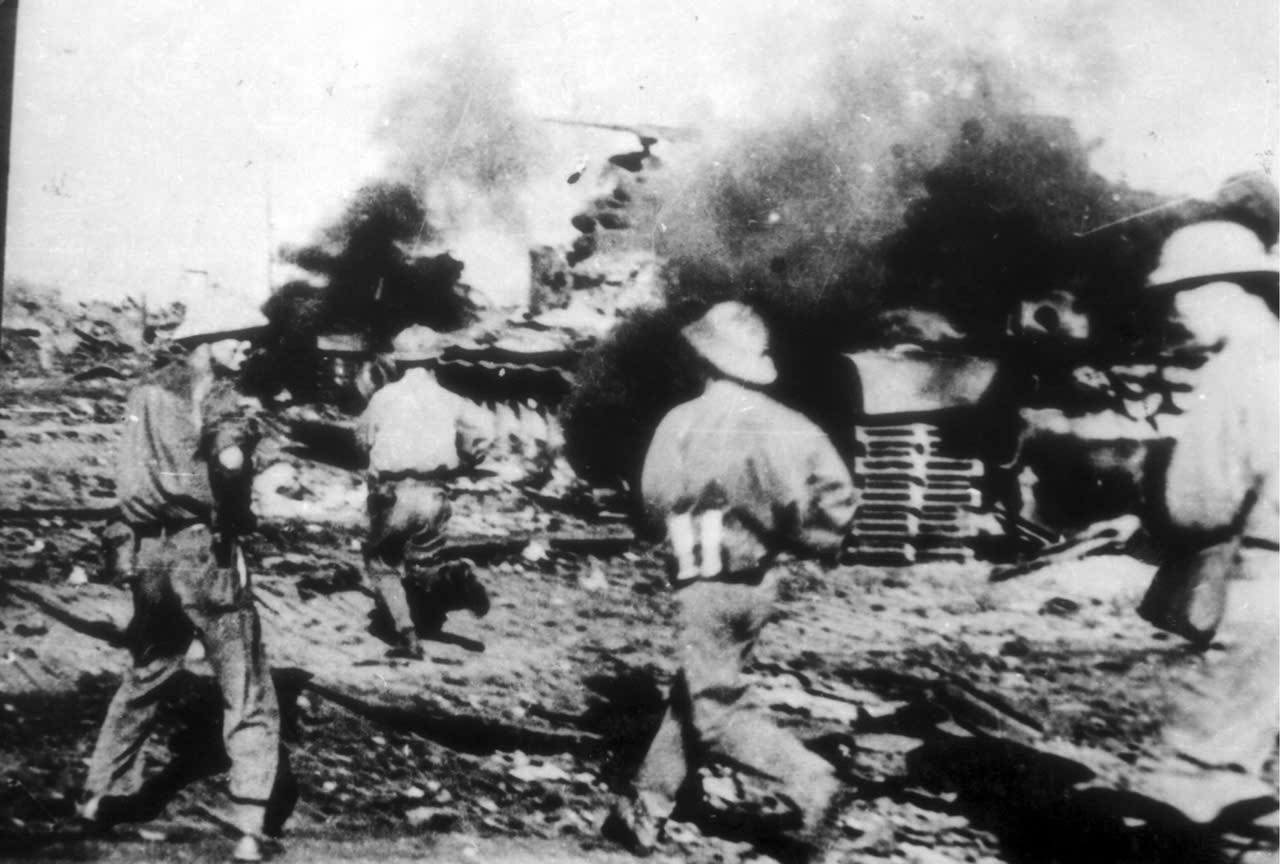 |
| A Liberation Army unit launched a powerful offensive towards Thuan An beach during the Spring 1975 General Offensive and Uprising. (Archival photo) |
From late 1972 to early 1975, the armored engineering branch organized 7 teams and 2 groups to the battlefields to repair and restore damaged weapons and equipment. As a result, hundreds of tanks, armored vehicles, and various types of automobiles were repaired. Simultaneously, several teams of technicians were sent to armored units to work with local technicians on minor and medium repairs to 246 vehicles, 461 artillery pieces, 65 optical instruments, and to restore thousands of spare parts and materials. For units on the battlefield, during 1973-1974, the active repair and restoration of vehicles, along with good maintenance and preservation practices, ensured that before deployment, the vehicles of the units participating in the campaigns were up to an average of 85% to 95%.
To increase the supply of spare parts and materials for repairs during marches and combat, units actively collected 47 tons of supplies from warehouses in the battlefields; and dismantled 67 tons of spare parts from destroyed vehicles. In addition, the Armored Command promptly transported a large quantity of spare parts and materials to the battlefields, including: 134 engines, 100 gearboxes, 2,024 batteries, 2,295 heavy-duty wheels, 44,830 track links… Notably, the Command deployed 8 engineering vehicles and numerous repair tools, along with 19 sets of armored vehicle user manuals translated and compiled by the engineering branch.
Technical innovation ensures rapid troop movements.
During combat operations, the Tank and Armored Vehicle Corps made strenuous efforts to overcome difficulties and hardships, demonstrating creativity in maintaining the technical readiness of tanks and armored vehicles for rapid deployment, ensuring their timely participation in the combat formations of various branches of the armed forces. When vehicles were damaged and there were no replacement parts available, drivers would hitch a ride on other vehicles, traveling hundreds of kilometers to retrieve parts and supplies from severely damaged tanks in the rear to repair their own vehicles. For vehicles that were too severely damaged to be repaired (including automobiles), the soldiers removed parts to repair lightly damaged vehicles and to create spare parts for future use.
To ensure technical support during combat operations, the Armored Corps' technical branch developed a unified plan across units from company to regiment (brigade). At the company level, a repair team was organized, tasked with assisting vehicle crews in towing lightly damaged vehicles and helping with technical inspections during extended rest periods during operations. At the battalion level, a repair team was organized to tow and repair vehicles that were damaged and could not be repaired by the companies. At the regiment (brigade) level, one to two repair teams, each consisting of 15 to 20 technicians, were equipped with a repair vehicle and followed the unit's formation, assisting in towing and repairing damaged vehicles that battalions could not repair themselves.
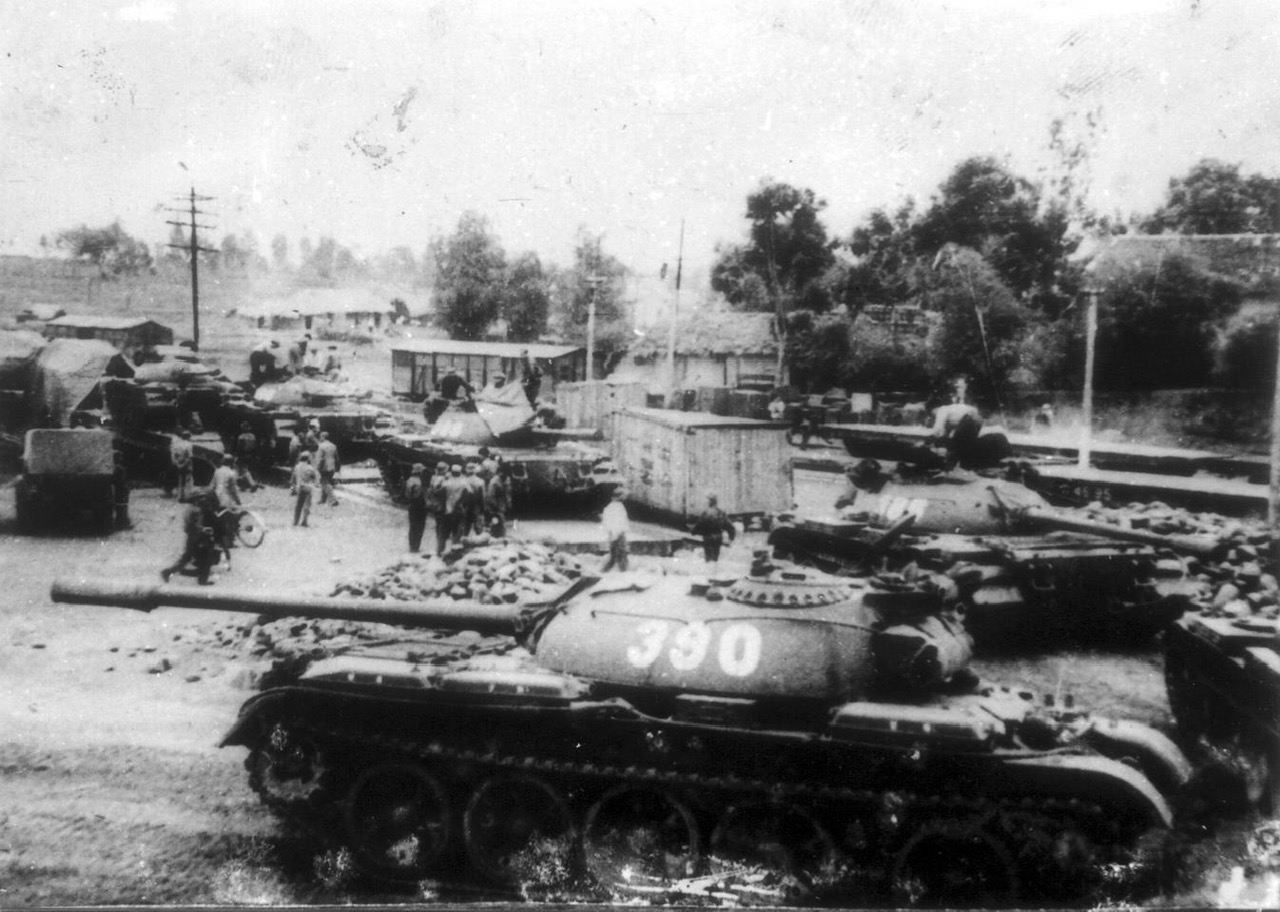 |
| Armored troops participating in the Ho Chi Minh Campaign. (Archival photo) |
With this organizational method, during the march, the teams and units at the regiment (brigade) and Command repaired an average of 80.6% of the total number of damaged vehicles, promptly returning them to combat formations. Thanks to this, the armored troops' marches in major campaigns in early 1975 achieved historical records for the corps. The number of vehicles destroyed during the march was very low (0.3%), and the average vehicle arrival rate was 92.5%, with many units reaching 100%. For example, Battalion 66, Brigade 202, marched nearly 1,700km across 6 rivers and successfully delivered 96% of its vehicles safely. Despite unfamiliar routes and enemy damage during their retreat, forcing them to take detours, some units achieved a marching speed of 249 km/day, such as the 2nd Tank Battalion, 203rd Brigade. Most units marched 16 hours a day, including time for vehicle inspections and meals. During those days of rapid marching, some units marched continuously for 19 hours, yet the drivers remained enthusiastic, cheerful, and drove safely.
During the Ho Chi Minh Campaign, a practical lesson learned was that offensive and deep penetration technical support required high marching speeds, long distances, and continuous marching and fighting. This demanded thorough and accurate technical support before and during combat to ensure vehicles arrived quickly, in sufficient numbers, and were technically sound, ready to engage the enemy in all situations. Therefore, the inspection of tank and armored vehicle technical support before marching had to be meticulous and complete according to regulations. During marching, all technical inspection procedures and content had to be fully implemented during short breaks or temporary stops. Technical support teams had to closely follow the marching and combat unit formations at the front and rear to provide timely support to the units...
The creativity and efforts of the armored engineering sector in overcoming difficulties contributed to increasing the mobility of armored tanks under conditions of rapid marches and shortages of equipment and supplies. This enabled armored units to engage in combat alongside other branches of the armed forces, leading to the victory of April 30, 1975, liberating the South and unifying the country.
MINH QUANG
Source: https://www.qdnd.vn/quoc-phong-an-ninh/nghe-thuat-quan-su-vn/bo-doi-tang-thiet-giap-chu-dong-sang-tao-bao-dam-ky-thuat-trong-hanh-quan-than-toc-mua-xuan-1975-826749

![[Image] First UAV flight test in medical transport](/_next/image?url=https%3A%2F%2Fvphoto.vietnam.vn%2Fthumb%2F1200x675%2Fvietnam%2Fresource%2FIMAGE%2F2025%2F12%2F24%2F1766560655977_thunghiembay-3551-jpg.webp&w=3840&q=75)
![[Image] First Congress of the Vietnam Science and Technology Trade Union](/_next/image?url=https%3A%2F%2Fvphoto.vietnam.vn%2Fthumb%2F1200x675%2Fvietnam%2Fresource%2FIMAGE%2F2025%2F12%2F24%2F1766552551054_ndo_tr_img-1801-jpg.webp&w=3840&q=75)





















































Comment (0)