To avoid misuse and optimize health benefits from protein, people need to follow these principles:
Start from the needs.
Protein requirements depend on body size, age, activity level, and health status. A sedentary adult typically needs less protein than someone who exercises regularly, according to the American website Eating Well .
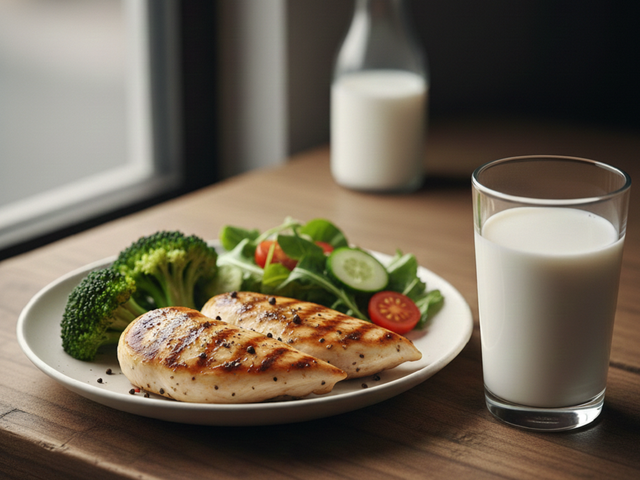
Each meal should include a protein-rich item, such as chicken breast or fresh milk.
PHOTO: AI
For most adults, the general guideline is to consume about 0.8 grams of protein per kilogram of body weight per day. Those who are very active or go to the gym may need a little more. However, doubling your protein intake abruptly rarely provides benefits. Excess protein doesn't automatically convert into muscle. The body will either burn or store the excess protein calories as fat.



Distribute protein evenly throughout the day.
Many people eat very little protein for breakfast, then overeat for dinner. The body synthesizes muscle protein best when supplied in consistent amounts.
The amount of protein each person wants to consume per meal depends on their individual needs and circumstances. For gym-goers, the recommended protein intake is 35 to 40 grams per meal. Even a difference of 15-25 grams per meal can make a difference over time.
Prioritize natural foods.
Natural foods provide protein along with vitamins, minerals, and fiber. Eggs, yogurt, lentils, beans, fish, milk, and cheese are all rich in nutrients. They are digested more slowly and support gut health.
Meanwhile, while protein powders are high in protein, they are not as rich in vitamins and minerals as natural foods. They should only be used as a supplement and not as a meal replacement.
Observe body signals.



Because everyone's body and exercise intensity are different, the amount of protein needed will also vary. A good approach is to pay attention to your body's signals instead of simply consuming the recommended amount of protein.
When there isn't enough protein, the body will show several signs such as persistent fatigue, frequent muscle aches, and slow recovery. On the other hand, bloating, constipation, bad breath, or loss of appetite can be signs of excess protein. These signs help us adjust and achieve the perfect protein intake, according to Eating Well .
Source: https://thanhnien.vn/bo-sung-protein-sao-cho-dung-va-du-185251225001200221.htm

![[Photo] National Assembly Chairman Tran Thanh Man attends the Conference to announce the Master Plan for Hanoi Capital City with a 100-year vision.](https://vphoto.vietnam.vn/thumb/1200x675/vietnam/resource/IMAGE/2026/06/29/1782709639728_ndo_br_1-jpg.webp)
![[Photo] General Secretary and President To Lam works with the Party Committee of the Government on the work of preventing and combating storms, floods, extreme natural disasters and climate change.](https://vphoto.vietnam.vn/thumb/1200x675/vietnam/resource/IMAGE/2026/06/29/1782729441945_a1-bnd-0385-9454-jpg.webp)

![[Image] A look back at the capital's preparations for the century-long master plan.](https://vphoto.vietnam.vn/thumb/1200x675/vietnam/resource/IMAGE/2026/06/29/1782750453122_quy-hoach-100-nam-minh-duy-1-2118-jpg.webp)