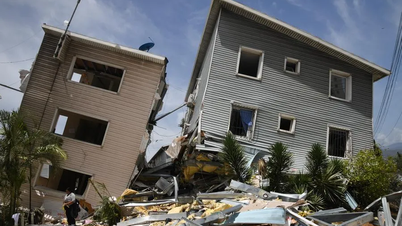
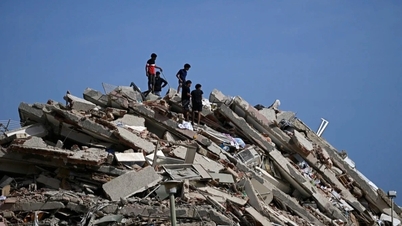
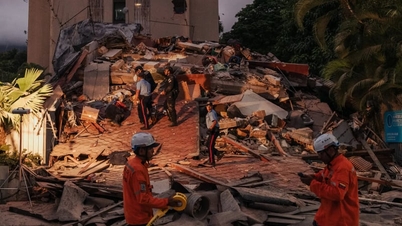
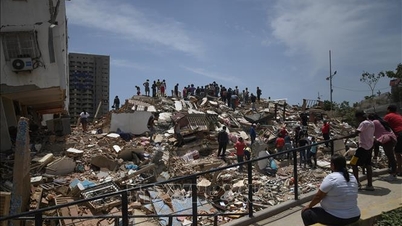
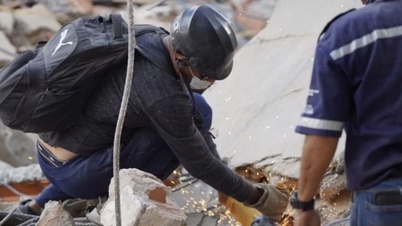
Search and rescue operations continued non-stop throughout the night in Venezuela - Photo: AFP
According to AFP, on June 26, the search and rescue operation for victims of the double earthquake on June 24 in Venezuela continued. Rescue teams continued working through the night of June 25, even using flashlights in some areas due to power outages.
The death toll continues to rise. As of the night of June 25 (local time), Venezuelan Health Minister Carlos Alvarado said that at least 235 people had died and approximately 4,300 had been injured.
The actual death toll could be much higher, with the U.S. Geological Survey (USGS) warning that the death toll could exceed 10,000.
There are too many rocks; I can't dig them out with my bare hands.
Alongside the tirelessly operating machinery, there are also bare hands scraping through layers of broken bricks and stones in the hope of finding loved ones.
In La Guaira, the hardest-hit coastal state, Yamileth Jimenez stands beside the collapsed seven-story apartment building where her 19-year-old son was buried.
Jimenez sobbed to Reuters: "The boy was lying under the concrete slabs, and there was no machinery to pull him out."
Also in La Guaira, Amparo del Giudice tried to dig through a massive pile of concrete in search of her son.
"There are too many rocks, it's impossible to do it with bare hands," AFP quoted Giudice as saying helplessly, but her hands continued to grope through the rubble.
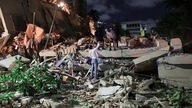


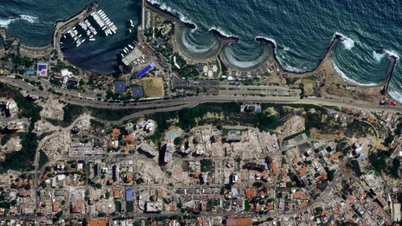
La Guaira is home to Venezuela's international airport. According to the government, at least 250 buildings were damaged or destroyed. Eight hospitals, the headquarters of the Venezuelan Red Cross, and the French Embassy in Venezuela were also severely damaged.
According to estimates by the United Nations Migration Agency, nearly 7 million people could be affected by the two earthquakes.
Thousands of people lost their homes.
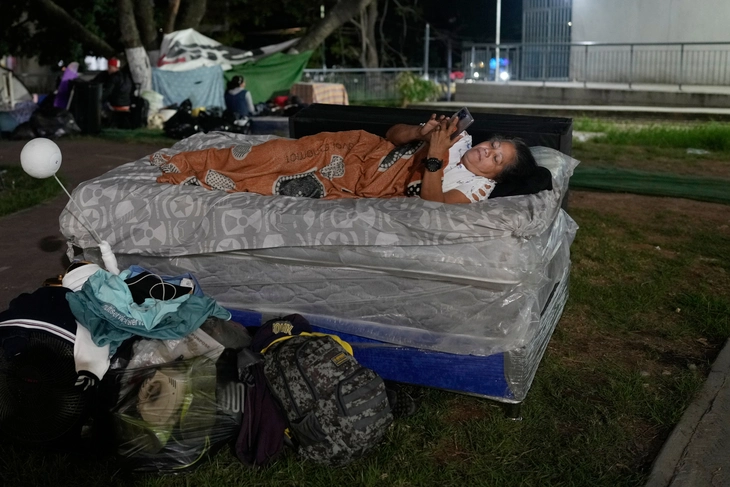
A woman carries a mattress out onto the street to spend the night in the capital Caracas - Photo: AP
Besides the pain of not knowing the fate of loved ones, many Venezuelans are also suffering the pain of losing their homes. This adds to the difficulties that have already accumulated over many years in a country experiencing sanctions and controversial economic policies.
Suhayl Sarquiz, 50, who lost her job a few months ago, told Reuters: "My building is uninhabitable, and now I have nothing. It's just me and my son, and I have no relatives in this country."
Pedro Perez, 64, the owner of a mattress upholstery workshop, said he lost both his home and business and had to sleep on the streets with his wife and children: "We hope the relief will arrive quickly."
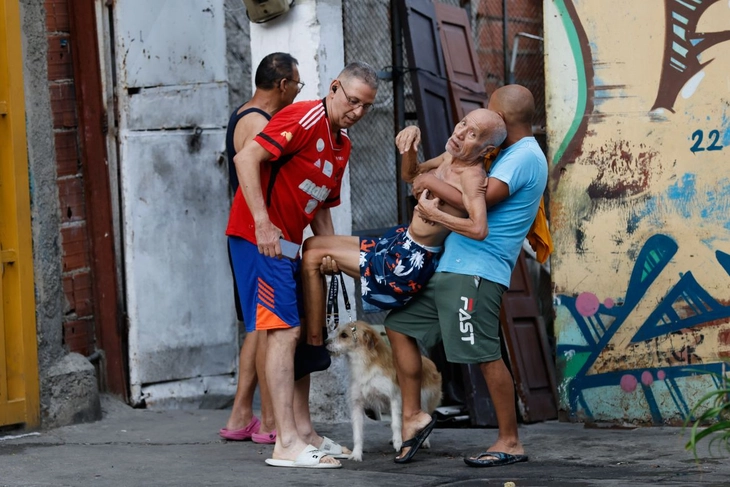
Residents help elderly neighbors evacuate in the capital Caracas - Photo: AP
In the capital city of Caracas, it's not uncommon to find people sleeping overnight on the streets or in their cars.
Rita Gomez, 60, traveled a long distance to the capital after seeing on social media that the apartment building where her daughter lived was collapsing. Her daughter wasn't answering her phone either.



Upon arrival, she said the equipment was already there and the neighbors were "very cooperative and helpful."
"We put our faith in God that they will find her alive," she shared.
Venezuela lies on the boundary between the Caribbean and South American tectonic plates.
Prior to this disaster, the deadliest earthquake in the country's modern history occurred in 1967, killing 240 people.
Source: https://tuoitre.vn/boi-gach-da-tim-con-o-venezuela-100260626191203382.htm


![[Photo] "Hanoi Lotus Festival" honors the lotus flower that has been associated with Vietnam for thousands of years.](https://vphoto.vietnam.vn/thumb/1200x675/vietnam/resource/IMAGE/2026/06/27/1782516943048_sen-ha-noi-2026-minh-duy-1-jpg.webp)