

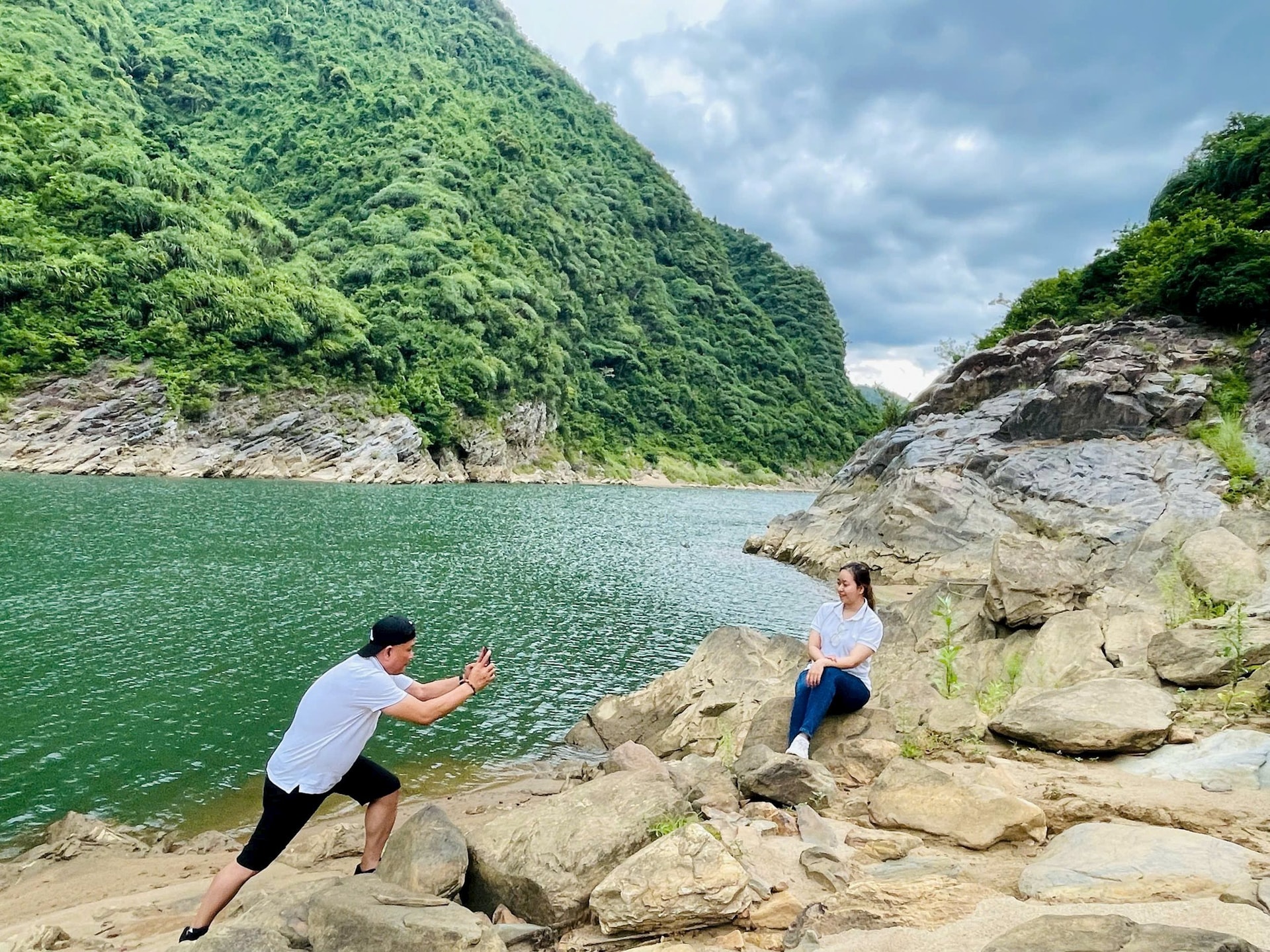
Child of the alluvial soil
The writer Hoang Phu Ngoc Tuong once called Go Noi "a child of alluvial soil," reminding us that this land was enriched by the river's alluvial deposits, by agriculture, and by the very distinctive clustered settlement habits of the people of Central Vietnam. And not only with Go Noi, but the villages along the Thu River are like tranquil lands, where the young leave and the old remain to preserve the fields, the traditional houses, and the seasons of floods and erosion that have passed over the years.
But in recent years, many villages along the Thu Bon River have begun to transform. From the riverside docks, melon fields, noodle vendors, bamboo groves, simple country meals, folk songs on the river, or the fragrant aroma of peanut oil rising from small kitchens, these villages are awakening.
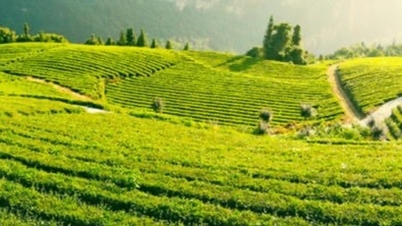
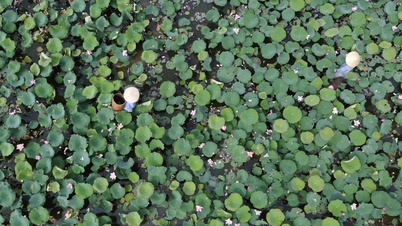
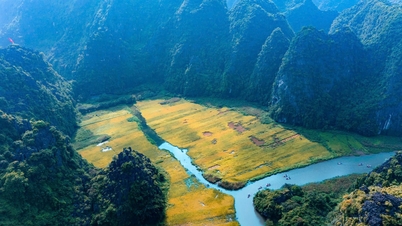
In the early days of summer, returning to the Go Noi area, the most striking feeling is still the color green. From the Black Bridge leading to Cam Phu, the small roads are shaded by trees, the rows of tea plants are neatly trimmed, and the vegetable fields stretch along the riverbanks.
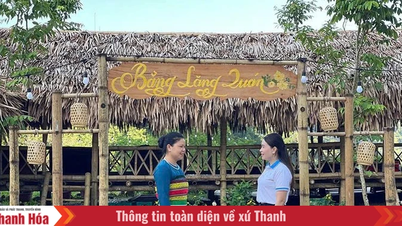
Cam Phu once created a small "craze" during festival seasons a few years ago. Ben Pham along the Thu Bon River suddenly became bustling with thatched huts built along the alluvial plain, flower-lined paths leading visitors into the village, steaming baskets of banh beo (rice cakes), and trays of fresh, vibrant green vegetables just cut from the fields.
People come here to experience the feeling of living in a rural setting, still retaining the scent of alluvial soil. It's a feeling that's becoming increasingly rare in rapidly developing cities.
Gò Nổi is a unique area of Quảng province. For generations, this land, situated between the branches of the Thu Bồn River, has been known by a very colloquial name: the agricultural region of Điện Bàn (formerly).
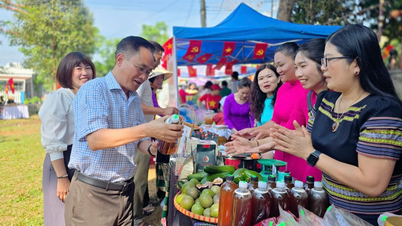
Here, the locals still maintain the tradition of manually pressing peanut oil, making noodles, and making rice cakes, preserving the communal lifestyle of a traditional village. These seemingly ordinary things have become special resources in the eyes of tourists today.
Mr. Nguyen Thanh, a farmer in Cam Phu, once jokingly said that in the past, the land along Ben Pham was just a place where villagers went to relax in the cool evenings.
Now, people are beginning to see opportunities in their own riverside land. Some are planting more flowers, others are rebuilding bamboo fences, some are tidying up their gardens, and others are learning to cook to serve guests.
"We don't think of tourism as building anything grand. It's just about keeping our village more beautiful and cleaner, so that people will come back and love this land," Mr. Thanh said.
Notably, in many current community-based tourism models along the Thu Bon River, young people are beginning to take on leading roles. They return to their villages, join cooperatives, develop clean agricultural products, organize experiential tours, and promote their rural communities on digital platforms.
Carrying the name of the land and the village
Along the Thu Bon River, there are few places where local specialties are so closely associated with the names of villages as in the Dien Ban region.
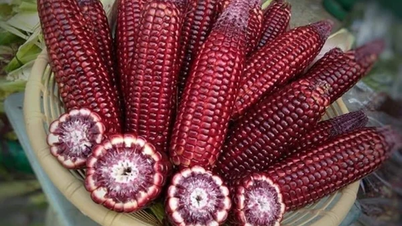
People from Quang Nam have a very unique way of naming things. Dishes are named after the places they come from. For example, Phu Chiem noodles, Cau Mong roasted beef, Dai Loc rice paper, Cam Nam sticky corn…
Each dish carries with it local memories on its journey to make a living.
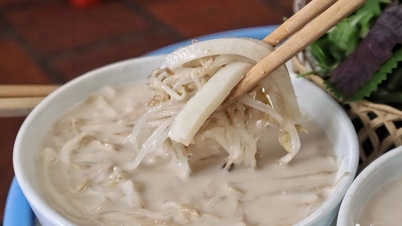
The Quang noodle festival in Phu Chiem village in recent years clearly demonstrates this. From the noodle vendors traveling far and wide, people recognize the unique flavor of Phu Chiem noodles, unlike anywhere else. From the noodles themselves and the broth to the seasoning, everything bears the mark of the village's traditional craft community.
Cuisine has therefore become the most effective "cultural passport" for the villages of Quang Nam province. Tourists may forget a beautiful place to stay, but it is difficult to forget the taste of a dish that once moved them. That is why many villages along the Thu Bon River today are beginning to see cuisine as a pillar for developing community tourism.
In Dien Phuong, many households have opened spaces for experiencing cooking Quang noodles, making rice paper, etc. In Triem Tay, visitors can paddle boats or cycle through the village and then enjoy a traditional meal with garden vegetables and river fish. In Cam Kim, traditional carpentry is connected with a cultural experience tour of the craft village.
The Thu Bon River was once a bustling trading port, connecting Hoi An with the highlands, where boats sailed back and forth carrying goods and culture for centuries. Today, that same river is embarking on a different journey, reviving old ways of life and attracting tourists with its authentic local values.
From Dai Loc down to Duy Xuyen, Dien Ban, and then to Hoi An, along the Thu Bon River, there are still many beautiful villages, traditional crafts, and cultural memories yet to be awakened.
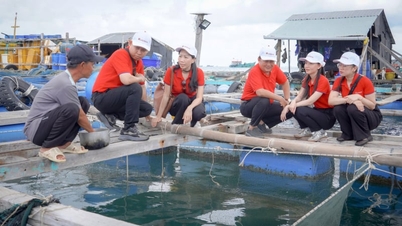
Perhaps these are villages that cultivate crops along the riverbanks. Fishing hamlets that still preserve traditional fishing methods. Waterways steeped in the history of trade. Traditional crafts such as carpentry, mat weaving, and pastry making still quietly exist.
If properly connected, the entire lower Thu Bon River basin could form a unique community-based tourism corridor in Central Vietnam.
There, visitors not only pass through destinations, but also experience the stories of Vietnamese rural life.
Source: https://baodanang.vn/bung-thuc-nhung-ngoi-lang-ven-song-3338782.html


![[Image] A brilliant symphony and explosive power in the skies of Da Nang.](https://vphoto.vietnam.vn/thumb/1200x675/vietnam/resource/IMAGE/2026/05/31/1780196945787_anh-man-hinh-2026-05-31-luc-10-08-51.png)







![[Video] Sunset at Lap An Lagoon – Where the sun sets over the fishing nets](https://vphoto.vietnam.vn/thumb/340x192/vietnam/resource/IMAGE/2026/05/31/1780192137701_beach-landscape-sea-water-nature-grass-745871-pxhere-com.jpeg)































































Comment (0)