

On the fertile basalt slopes, many ethnic minority households have boldly changed their production mindset, actively learning new techniques and gradually forming effective economic models. From farming using traditional methods, earning just enough to survive, many families have now risen to prosperity, contributing to a new look for their villages.
In Quang Phu commune, over 33% of the population are ethnic minorities, mainly Ede, Hoa, San Diu, and Muong people. Previously, agricultural production was fragmented and heavily dependent on weather; crops were monotonous, primarily coffee, and economic efficiency was low. During years of crop failure or low agricultural prices, the lives of the people faced considerable difficulties.
Recognizing this "bottleneck," the Party Committee and the local government of Quang Phu commune have identified information dissemination and poverty reduction as a key factor. Through village and hamlet meetings, agricultural extension training courses, commune officials, farmers' associations, and women's associations have persistently guided and instructed people to change their farming practices, boldly apply scientific and technological advancements, and diversify crops and livestock. From being hesitant to change, many households have proactively sought out and learned effective farming methods, especially from models of the Kinh people both within and outside the locality.
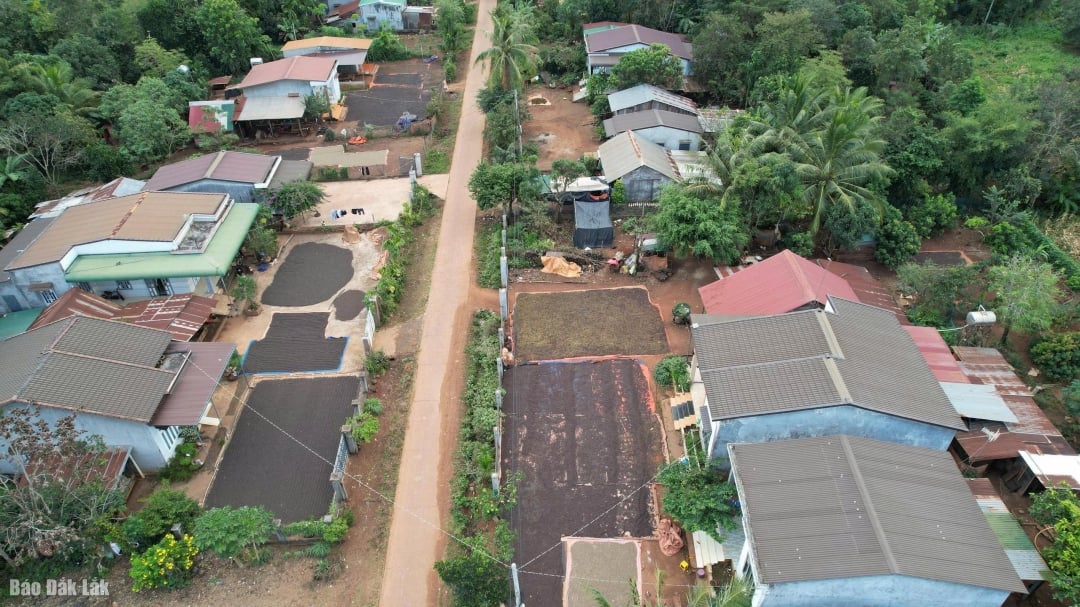 |
| The appearance of the villages in Quang Phu commune is improving day by day. |
In the village of Sút Hluốt, everyone knows the story of the hardworking and persistent economic endeavors of 50-year-old Y Sing Niê, an Êđê man. Starting with 1 hectare of upland fields and nearly 2 sao (approximately 0.2 hectares) of rice paddies given to him by his wife's parents, he and his wife have experimented with many crops, from long-term industrial crops to fruit trees. After the harvest season, he works as a construction contractor, builder, welder, and also buys and sells agricultural products. Thanks to his diligent saving and frugality, his family now owns about 2 hectares of upland fields, along with 1.8 sao of double-cropping rice paddies. He utilizes the cultivated land to grow coffee, durian, and pepper, providing a stable income of 700-800 million VND per year.
In particular, in recent years, Y Sing Niê's family has been interested in and learned the techniques of planting and caring for durian trees. Currently, Mr. Y Sing Niê has developed a durian orchard with more than 200 trees, which has initially shown clear results. Last year alone, the durian yield reached about 7 tons, bringing in over 300 million VND in profit.
"You must be diligent, seize every opportunity to learn from books, newspapers, social media, and practical experience, and boldly apply it, changing your previous way of thinking and doing things," that's how Y Sing Niê always teaches his children and grandchildren when they want to get rich right in their village.
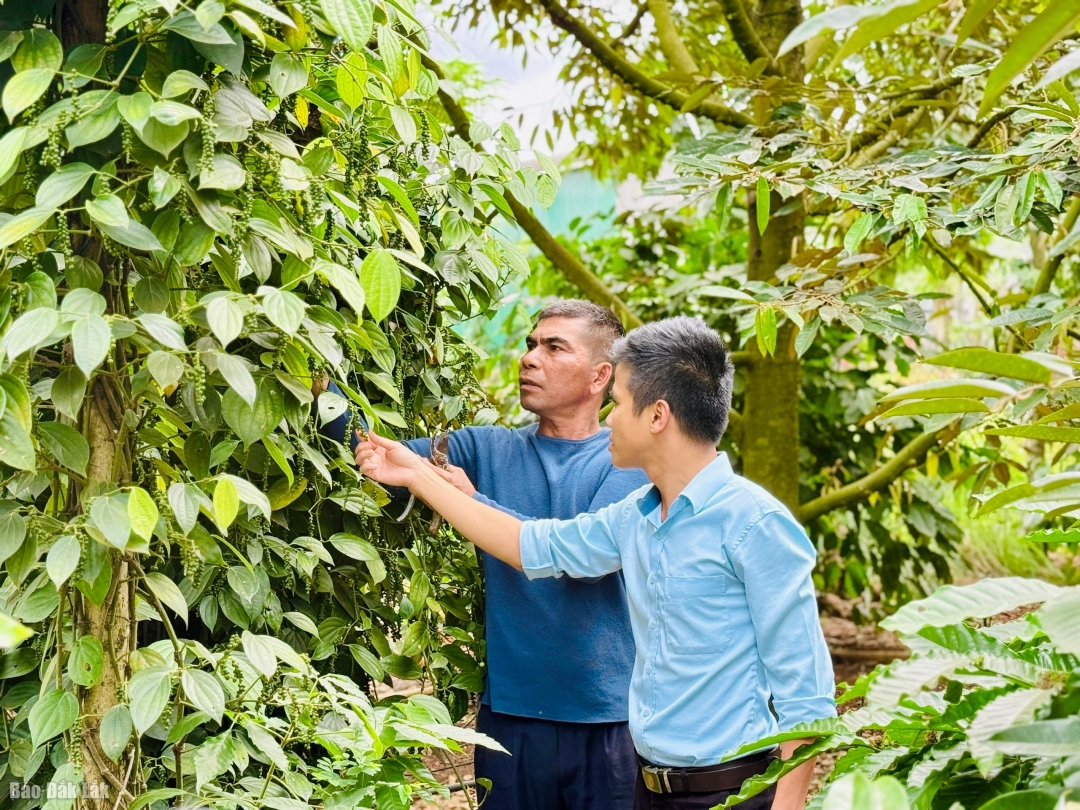 |
| Mr. Y Sing Niê (from Sút Hluốt village, on the left) is always diligent in learning about economic development models and striving to become wealthy. |
Also in Sut Hluot village, H'Loan Nie, 31 years old, is mentioned as a testament to the diligent learning spirit of the younger generation of the Ede people.
Starting with only a small plot of land inherited from her family, Ms. H'Loan used to farm entirely based on her parents' experience. Recently, with the guidance and support of commune officials, she began learning coffee cultivation techniques, boldly investing in new varieties, and intercropping pepper and durian on nearly 1.5 hectares.
Thanks to the application of proper farming practices, her family's coffee yield has steadily increased. This year, she expects to harvest approximately 3.5 tons of coffee and 200 kg of pepper, promising a successful year of production. For her, engaging in economic activities is not only about improving immediate living conditions but also about creating a solid foundation for her children to receive a full education and have a better future.
In reality, the breakthroughs achieved by ethnic minority households in Quang Phu commune stem not only from individual efforts but also from the support of the local government. Implementing national target programs, Quang Phu commune has proactively allocated and effectively deployed investment capital for infrastructure and livelihoods, prioritizing support for ethnic minorities.
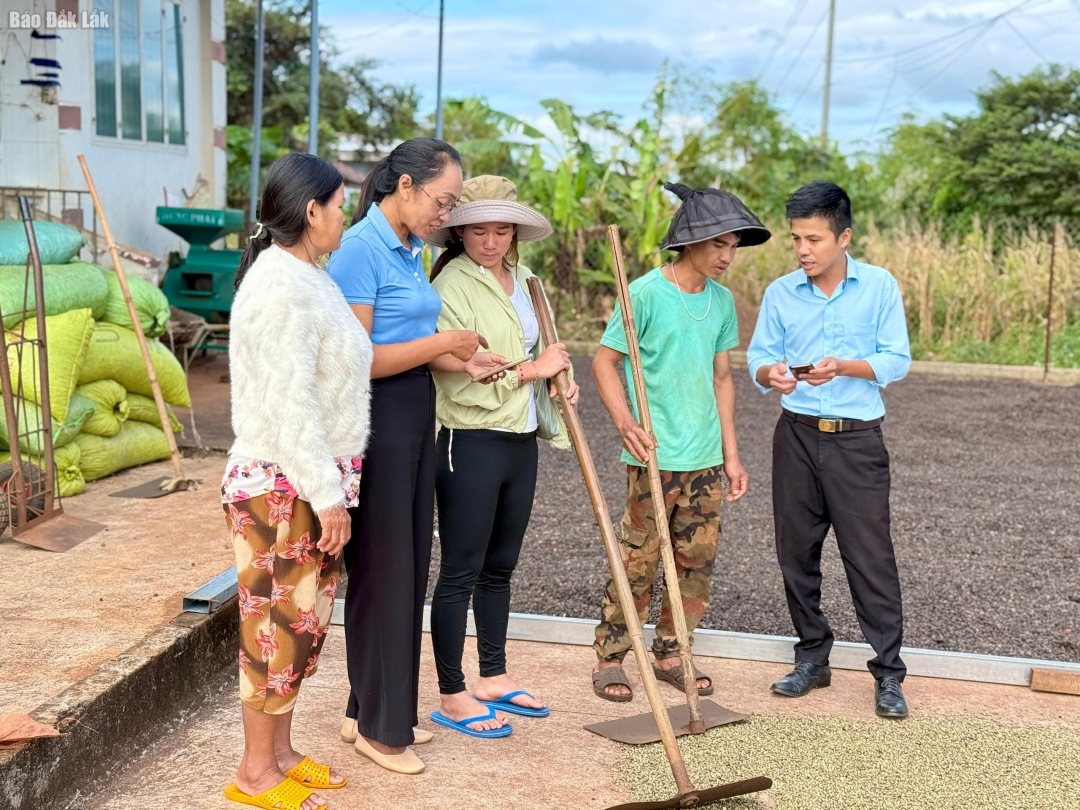 |
| Officials in Quang Phu commune guide residents in understanding and grasping market and seasonal information through applications to support agricultural production and trade. |
Having lived in this area for decades, Ms. H' Đàn Niê, Head of the village and Party Secretary of Sút Hluốt village, said that one noticeable change in Quảng Phú today is the shift in the mindset of ethnic minority people regarding "land preservation." Previously, due to poor farming practices, many households sold their farmland to make ends meet. Now, however, people have learned to cherish their productive land, invest systematically, and consider land as a long-term asset. Diversifying crops such as coffee, pepper, durian, and other fruit trees helps people earn income year-round and reduces risks when the market fluctuates.
Furthermore, the State's investment in transportation infrastructure, electricity, schools, and health stations has created an important foundation for socio-economic development. Concrete roads extending into villages not only facilitate travel and the transportation of agricultural products but also open up opportunities for trade and market connections for local produce.
According to Mr. Tran Ngoc Tam, Deputy Head of the Economic Department of Quang Phu commune, the locality pays special attention to disseminating information and guiding people to choose high-value crops and livestock. Along with that, they provide preferential loans, vocational training, technology transfer, and create conditions for people to confidently invest in production.
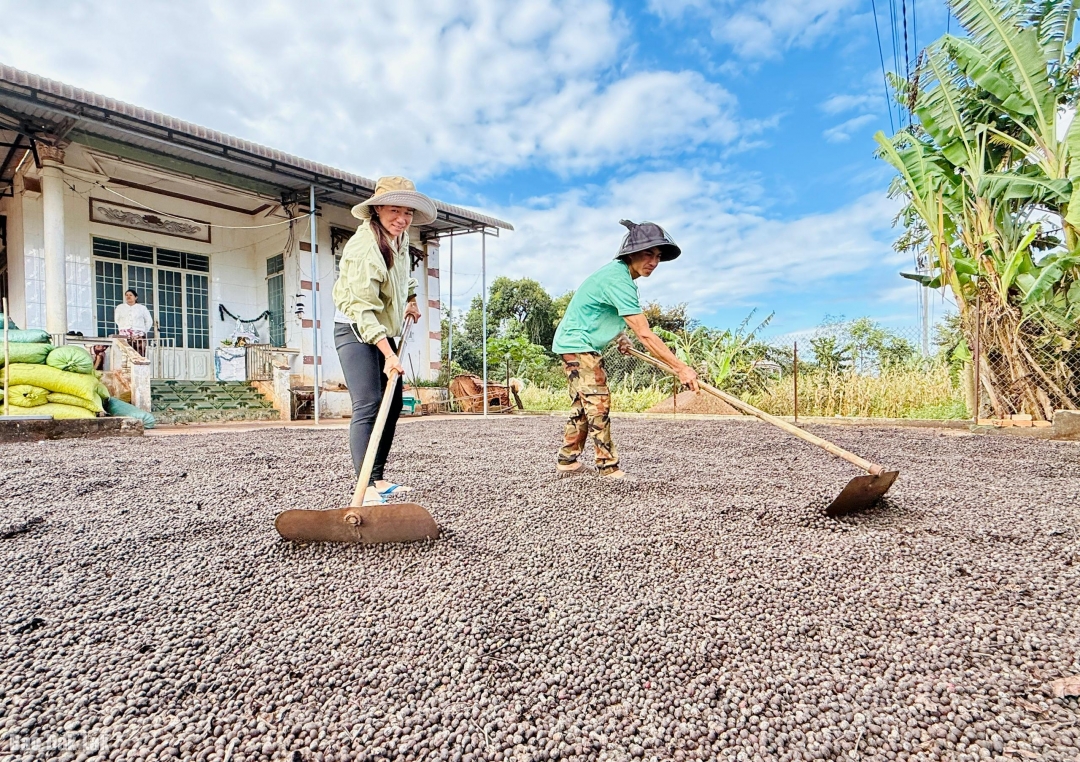 |
| The family of Ms. H'Loan Niê (Sút Hluốt hamlet, Quảng Phú commune) has become more prosperous thanks to coffee cultivation. |
Thanks to the synchronized implementation of various solutions, people's lives have gradually improved. The poverty rate in the commune has decreased sharply from 451 households at the beginning of 2022 (accounting for 3.59%) to only 202 households (accounting for 1.53%) by the end of 2025. Many ethnic minority households have risen out of poverty sustainably, accumulated savings, and actively contributed to the new rural development movement in the locality.
The economic development movement in Quang Phu today is no longer the isolated story of a few exemplary households, but has spread into a shared aspiration of the entire community. The responsible involvement of the government, the timely support of programs and policies, and the diligence and eagerness to learn of the ethnic minority people are creating new momentum for this land.
Quang Phu today has not only changed in appearance, but is also affirming a sustainable direction: economic development linked with improving the people's education, preserving cultural identity, and building a prosperous and happy life for ethnic minority communities.
Source: https://baodaklak.vn/kinh-te/202512/buon-lang-thuc-day-khat-vong-lam-giau-7180f34/



































































Comment (0)