

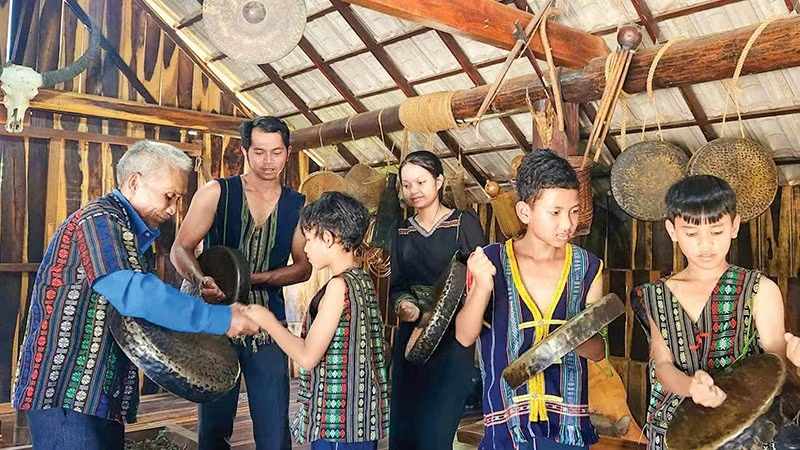
"Formerly part of Lac Duong town, Lac Duong district, Lam Dong province; now it's Lang Biang ward in Da Lat. Many people liken it to villages within the city. And rightly so! Because amidst the rhythm of the city, the sounds of gongs and drums still resound...", musician, Central Highlands cultural researcher, and village elder Krajan Plin confided to me during an unannounced meeting.
The afternoon sun cast long shadows over the mountains. Walking along the Lang Biang road, which runs through the center of Lang Biang ward in Da Lat, Lam Dong province, one encounters the villages of Dang Gia Rit, Dang Gia Det, Bon Dung, Bnoh... The spacious house of the elderly Krajan Plin sits on the main road named after the legendary Lang Biang mountain. Welcoming me into his room, which resembles a miniature museum of ethnic culture, the author of the book "Customary Laws of the Co Ho-Lach People" and numerous works of poetry and cultural research, Mr. K'Plin said: “The lives of the Co Ho people in the villages at the foot of Mother Mountain Lang Biang are different from the past. Single-crop rice cultivation has become a thing of the past, giving way to coffee, roses, and strawberries... which bring in higher incomes. It's no longer unusual for Co Ho people to drive cars to work or for leisure.” And what about preserving traditional culture? I asked. “The Co Ho people here spend their days working in the fields, gardens, and plantations; at night, they become artists. At the foot of this mountain, there are more than a dozen groups that perform gong and drum music for tourists. This is also a way to nurture and promote cultural values through culture,” said elder K’Plin.
I have visited the villages at the foot of the Lang Biang mountain many times, and heard many stories from the elders about the changes in this vast forest region. In the past, this area was surrounded by dense forests and teeming with wildlife; therefore, every village had skilled archers and crossbowmen. Every household owned buffalo and horses that roamed freely in the forest, considered valuable assets. Then came the "lòt drà" – trips to the lowlands to visit markets, and the seasonal "visits to other villages" – through which they absorbed valuable experiences to build their communities.
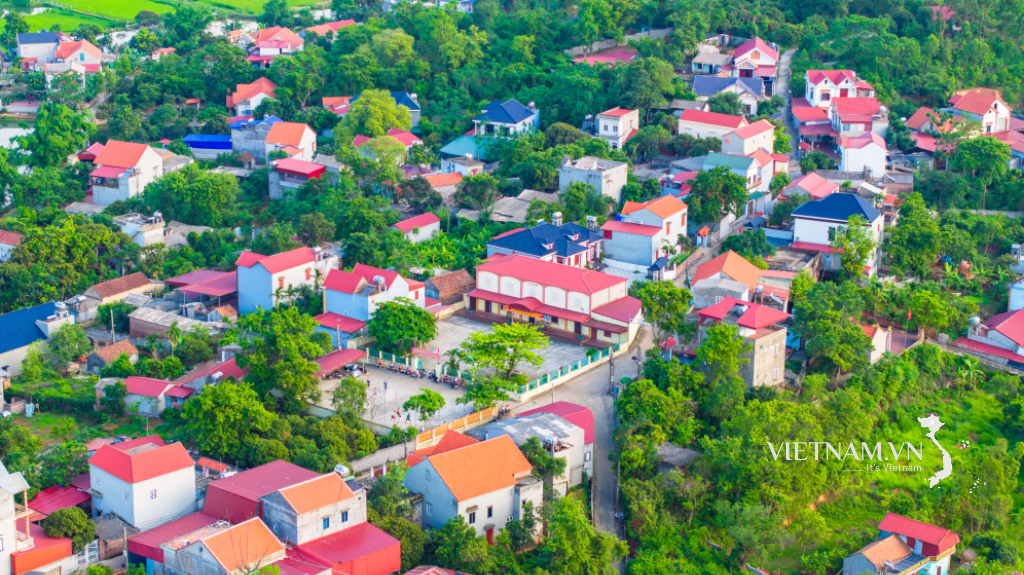
Standing in front of a spacious house in the heart of the ward, unexpectedly, the Party Secretary of Bon Dung 1 residential area, Lang Biang ward, Da Lat, Pang Ting Sin, shared: “In the past, there was an abundance of arable land, but with the mindset of ‘filling one’s stomach,’ and relying solely on rice cultivation, poverty persisted. Now, every household grows flowers, strawberries, coffee, vegetables… and many ethnic minority households have become millionaires.” Bon Dung, literally meaning a large or flat village, is now a well-maintained residential area with colorful high-rise buildings; Dang Gia (Ja), once a hill covered in cogon grass, has been replaced by the vibrant colors of high-tech flowers and vegetables, and lush green coffee plantations. “There are countless stories from the past. Now, the people are working together to preserve and promote cultural values and build a civilized urban area,” said the rose millionaire Pang Ting Sin confidently.
The villages, now residential areas at the foot of the mother mountain Lang Biang, are ablaze with fire, the sounds of gongs and drums, and the melodies of the t'rưng echoing through the mountains. This is the time when the young men and women of the mountain region mingle with travelers, intoxicated by the fragrant rice wine offered at cultural exchange events featuring gong music. There are now more than ten such exchange points in this area, attracting many visitors. The origin of this cultural tourism model stems from the "Friends of Lang Biang" gong club founded nearly 30 years ago by the elder Krajan Plin.
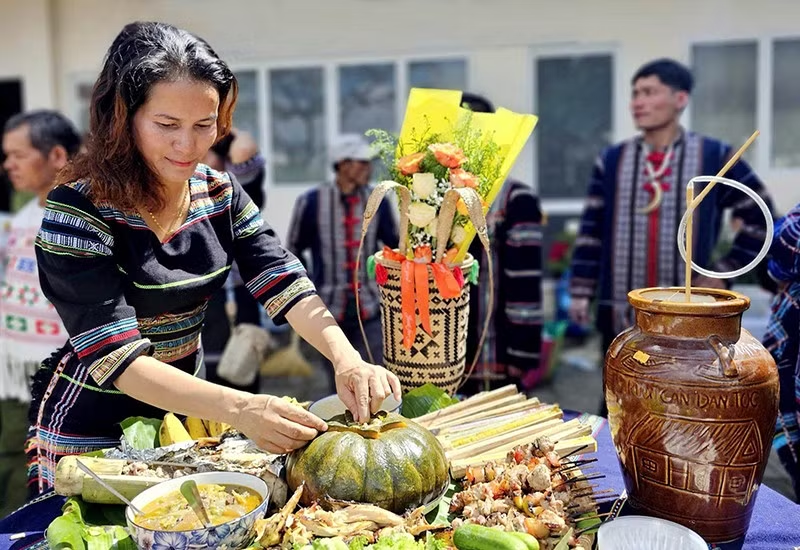
Tonight, the Yồ Rơng gong ensemble of Krajan Druynhs welcomes visitors. As soon as the ritual of seeking permission from the spirits is complete, the resonant sounds of gongs, drums, and bamboo pipe instruments fill the air. Excitement is evident on the faces of the tourists as they listen to the introduction to the culture of the Cơ Ho ethnic group, the love story of the mountain lovers connected to the legend of Lang Biang. While personally playing the gongs and stone instruments amidst dozens of tourists, Aline, a French woman, shared: “I have visited many countries in Southeast Asia, and this is a very interesting experience. The culture of the highland people has a strange allure. I will share this with my friends so they can learn about this land.” Krajan Druynhs, a finalist in season two of Vietnam's Got Talent, said: “Each gong ensemble here consists of about 20 to 30 people, providing music and food for tourists from afternoon until late at night. Everyone in this place is an artist (laughs), it's called a 'village of singers,' and working extra hours in the evenings has contributed to changing the lives of our village.”
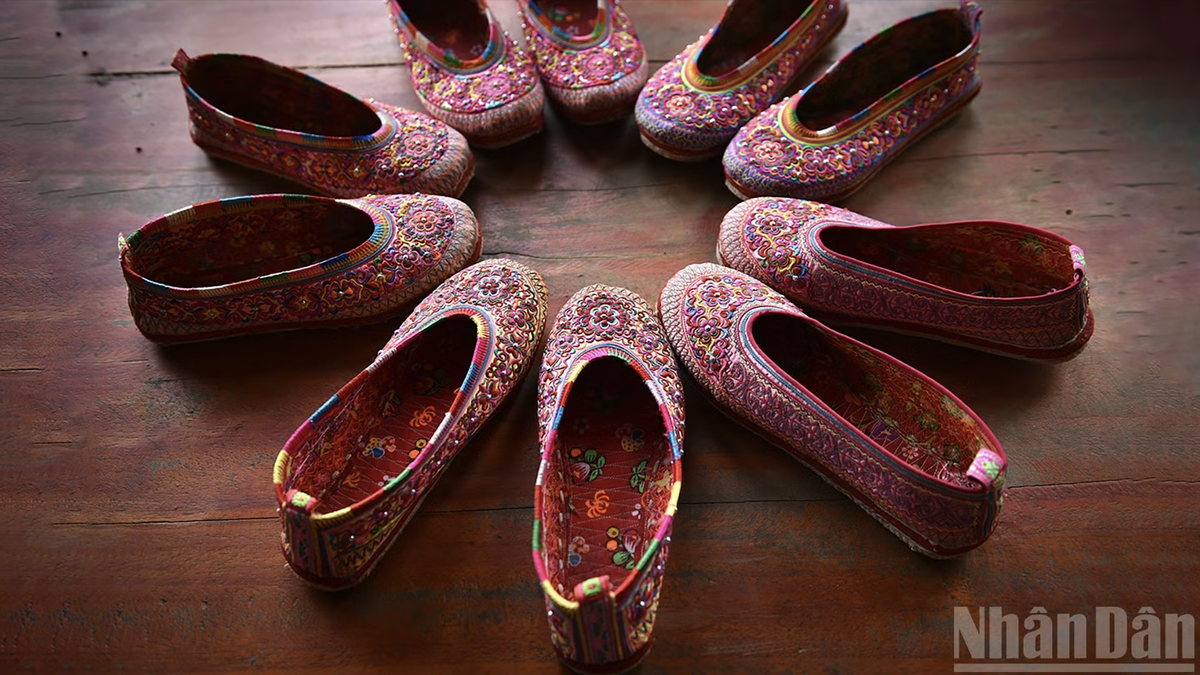
The villages at the foot of Lang Biang mountain have now become residential areas. However, the Co Ho Lach and Co Ho Cil people always preserve their unique cultural identity and adapt it to the times, including gong culture, folk festivals, traditional music, brocade weaving, and rice wine culture... "In recent times, cultural tourism activities in this area have always attracted tourists. The emergence of gong exchange groups has contributed to preserving traditional cultural values and brought economic value through adaptation in the tourism environment," said Tran Thi Chuc Quynh, Secretary of the Party Committee of Lang Biang ward, Da Lat.
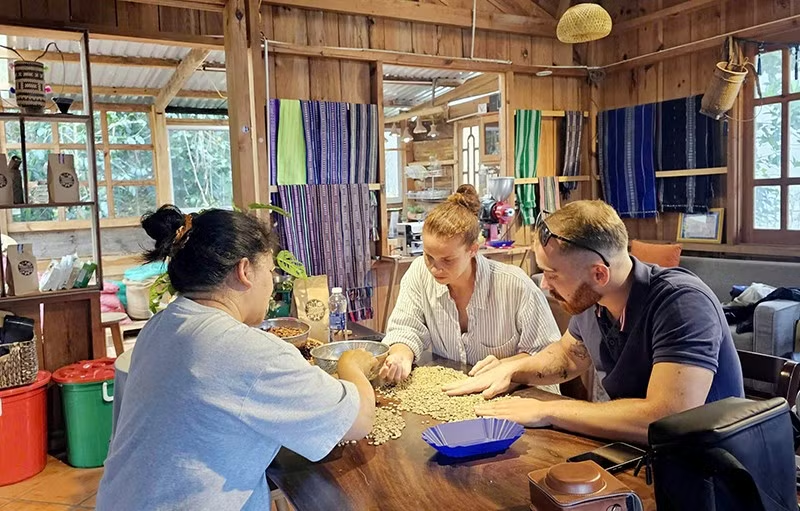
The Lang Biang plateau is steeped in legends. From ancient times, it was considered the center and origin of major clans of the Co Ho people, such as the Pangting, Bonyo, and Krajan, who later dispersed to establish villages in various regions. Now, the red soil plateau is home to many more clans and people from different parts of the world, even from across the globe. They come to this legendary plateau as if by destiny, blending into the cultural flow of this land. K'Ho Coffee, located in the Bnơh C hamlet, is a destination for international tourists experiencing the natural coffee production process. “We are from Portugal and learned about this place on social media. We have a coffee shop back home, so we wanted to experience it to learn more about K'Ho coffee culture. The atmosphere here is very friendly, the coffee is high-quality, and the hand-selected beans are very unique,” said Daniel and Stephanie.
After a fateful encounter, Joshua has been connected to this highland region for over 15 years. “I have become a son of the village at the foot of the mother mountain. Here, Arabica coffee is the specialty. I am working with Rolan to help the villagers establish the local coffee brand and develop a distinctive product of the Co Ho people,” Joshua shared. Along with developing the brand and expanding the market to improve the lives of the locals, Rolan and his wife have built charming wooden houses amidst the coffee plantations to serve visitors who want to learn about the coffee processing process. Now, such tourist destinations are no longer unfamiliar to the villagers here, and it is also a way to spread the beauty of this land within the Lang Biang World Biosphere Reserve.
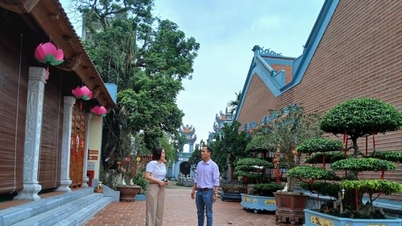
I've made many journeys back and forth across the vast Central Highlands, from the land beside the upstream Dak Bla River, originating at the foot of Ngoc Linh Mountain, to Chu Yang Sin, the "gateway to heaven," the Mnong plateau, and the Ma ethnic minority region of B'Lao... Today, asphalt and concrete roads have replaced the "red dirt roads," and amidst many cities, villages are still "cherished," such as Ako Dhong in Buon Ma Thuot; Plei Op and King Der in Pleiku; or the Ma village in Ward 3, Bao Loc, Lam Dong; the Co Ho Cil tourist village in Cam Ly ward, Da Lat... These are spaces where passersby seem to pause. There, longhouses still nestle beside ancient trees, majestic communal houses stand against the blue sky, firelight flickers during the elders' nights of mourning, and the sounds of gongs and drums still echo whenever the village has a festival. There, mountain girls sing yal yau and tam pit songs; The mothers still keep the rhythm of the loom and brew the fragrant rice wine with herbal yeast...
Villages within urban areas – that image is enough to illustrate the urbanization process in the Central Highlands. This has created challenges in preserving and promoting the cultural values of ethnic minorities. Central Highlands cultural researcher Dang Trong Ho argues: “We need to refine policies for cultural development within economic development and vice versa, so that we can both develop the economy and preserve the cultural values of ethnic groups. The ethnic minorities in southern Central Highlands have a very simple saying: ‘Preserve what we have’ and ‘build a new life,’ which is the harmony between tradition and modernity.”
Lang Biang Ward in Da Lat was formed by merging Lac Duong town, Lat commune (Lac Duong district), and Ward 7 (Da Lat city). It has a natural area of over 322 km² and a population of over 40,000 people, of which nearly 25% are ethnic minorities. Ms. Tran Thi Chuc Quynh stated that the merger of the land at the foot of the legendary Lang Biang mountain and the adjacent ward in Da Lat has opened up a space with great potential for development. In particular, developing tourism linked to the unique culture of the local ethnic minorities is a key direction.
Source: https://nhandan.vn/buon-lang-trong-long-pho-thi-post909193.html

![[Photo] General Secretary and President To Lam presides over a working session with the Central Policy and Strategy Committee on the development of the materials industry.](https://vphoto.vietnam.vn/thumb/1200x675/vietnam/resource/IMAGE/2026/05/21/1779359935432_a3-bnd-3129-1412-jpg.webp)



































































Comment (0)