 |
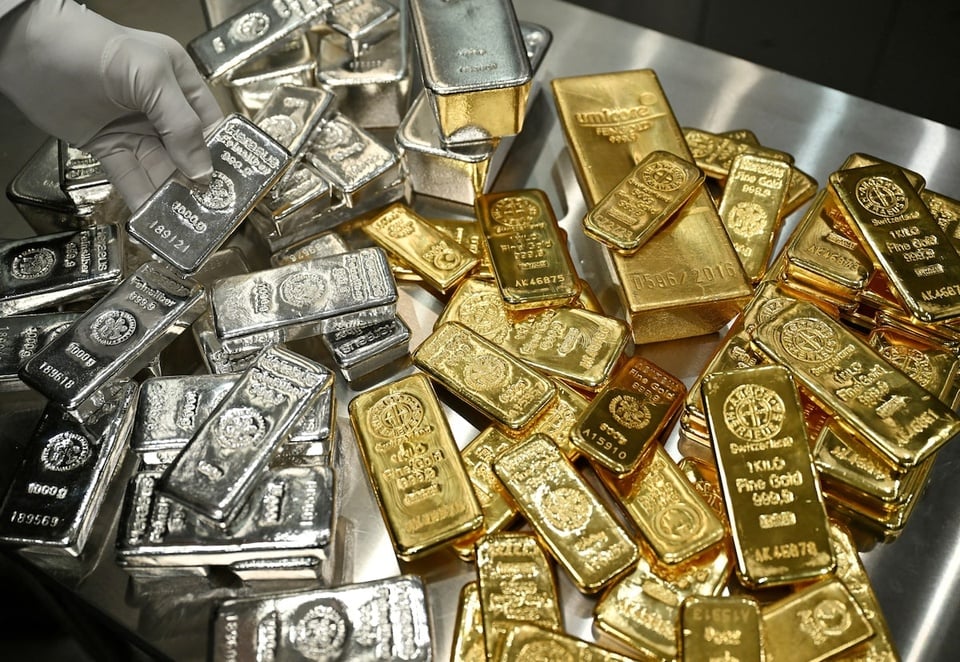
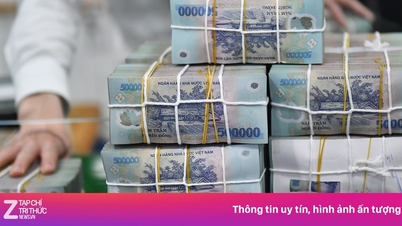
The world's largest gold and silver funds are selling off their holdings amid a market downturn. Photo: Reuters . |
According to data from Muavangbac.vn , during the trading week from June 8th to June 12th, the world's largest gold fund, SPDR Gold Trust, experienced two consecutive net selling sessions of nearly 6.3 tons of gold, causing its gold holdings to drop to 1,013.64 tons.
Since the beginning of June, this fund has sold a total of 15.5 tons of gold, coinciding with the period when the price of the precious metal plummeted. The price of the precious metal once dropped nearly $200 to below $4,100 per ounce, the lowest level since November 2025, before recovering to $4,200 per ounce at the close of trading on June 12.
Not only gold, but the silver market also suffered a sharp sell-off from "sharks". In the most recent trading week, iShares Silver Trust (SLV) - the world's largest silver investment fund - only recorded a single net buying session on June 8th with a volume of 42.23 tons, followed by a series of days of relentless selling off nearly 100 tons of silver. This move reduced the amount of silver held by the fund to 14,960 tons.
On June 9th, spot silver prices fell 3%, reaching their lowest level in two months and trading around $63.37 per ounce. Since the outbreak of hostilities in Iran, the precious metal has lost more than 40% of its value.



As for gold, Kitco experts believe the past trading week was disappointing for investors, as the price of the precious metal has now fallen into bear market territory. However, beneath the short-term fluctuations, the macroeconomic landscape may be shifting in a way that transforms the current "resistance" into long-term support.
At the heart of the current uncertainty is inflation. Analysts say that typically, rising inflation would support gold prices as investors seek to protect their purchasing power. But this time, inflation is putting pressure on gold as the market adjusts its expectations toward interest rates remaining high for a longer period. This has led the Federal Reserve (Fed) to continue its wait-and-see approach and maintain a tight monetary policy for longer than expected.
However, focusing solely on nominal interest rates can lead investors to miss a more crucial factor: real yields. If inflation continues to rise faster than interest rates, real yields will fall. This weakens the attractiveness of US Treasury bonds and often provides a stronger foundation for gold prices. Even in a rising interest rate environment, accelerating inflation can push real yields into negative territory, a condition that historically supports precious metals.
However, that doesn't mean gold prices will recover immediately. Market momentum remains quite weak, and the fact that gold hasn't been able to regain levels above $4,000 per ounce suggests that investors are still waiting for clearer signals about inflation, policy direction, and economic growth prospects.



Source: https://znews.vn/ca-map-lon-nhat-the-gioi-ban-thao-vang-bac-post1659593.html



































![[Image] Ho Chi Minh City: Ma Lang area, Chicken-Rice Market about to change its appearance](https://vphoto.vietnam.vn/thumb/1200x675/vietnam/resource/IMAGE/2026/06/25/1782377698627_ndo_br_m1-jpg.webp)