Within the coffee-drinking community, only a very small percentage truly understand and choose products that genuinely protect their health. A significant portion of consumers daily enjoy a beverage labeled "coffee," but the percentage of agricultural coffee beans in it is very low, even zero.
The technology to produce anhydrous caffeine (synthetic caffeine) without using a single coffee bean is the key to manufacturers profiting and flooding the traditional market with ultra-cheap "coffee." They use chemicals to deceive consumers, because if they used 100% pure, organic coffee beans, the price would never be so ridiculously low.
So, what exactly is caffeine? Caffeine is a naturally occurring compound found in coffee beans and over 60 other plants. However, to cater to the low-cost beverage industry, it cannot be extracted from expensive crops. Instead, total chemical synthesis or the utilization of industrial waste products is the shortest and cheapest way to produce this compound. Caffeine is like a double-edged sword. It is legal and safe when it exists in its original form in coffee beans or other plants, or when its content is precisely controlled in medical settings . But it becomes a "weapon of destruction" when it falls into the hands of counterfeiters who use indiscriminate chemical powders to manipulate consumers' taste buds for profit.
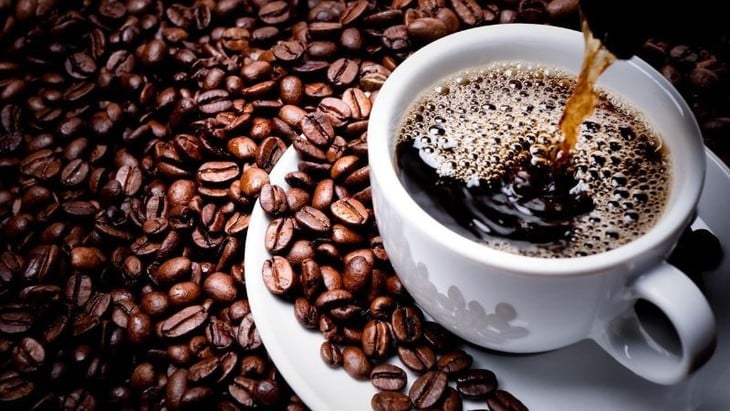
The technology to create synthetic caffeine without using a single coffee bean is the key to manufacturers profiting and flooding the traditional market with ultra-cheap "coffee."
Transforming chemical powders into cheap cups of coffee.
Caffeine, an active ingredient, stimulates the nervous system and promotes alertness. Instead of purchasing Robusta or Arabica coffee beans at prices of hundreds of thousands of dong per kilogram, unscrupulous producers simply use synthetic caffeine (in white powder form) imported in industrial bags at extremely low prices. Just the tip of a toothpick contains enough caffeine to equal an entire cup of strong espresso. To transform this chemical powder into a cup of "coffee" that satisfies consumer habits, producers manipulate the taste, color, aroma, and foam to create bitterness, color, aroma, and texture.
- Create bitterness, consistency, and color.
These establishments use industrial bittering chemicals, or, more sophisticatedly, crush quinine tablets—a highly toxic, bitter-tasting antimalarial drug that is strictly prohibited in food. Additionally, they exploit the burnt bitterness from roasted soybeans or corn, which turn a dark, charred color, to both provide the bitterness and create a thick, dark consistency that deceives the eye.
- Create a fragrance
They use chemical coffee essential oils (synthetic flavorings). Just 1-2 drops of industrial flavoring can make a cup of coffee smell incredibly fragrant, with the aroma spreading further and lasting longer than real coffee.
- Create foam
Real coffee, when shaken, only produces a thin layer of foam that dissipates quickly. Fake coffee has added surfactants (such as industrial foaming agents) to create a thick, smooth, long-lasting foam that looks very appealing.
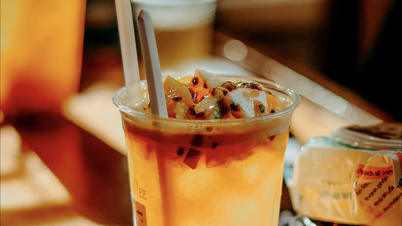
The result is a glass of water made entirely from chemicals, with a thick, dark color, a bitter taste, a strong aroma, and a smooth, creamy foam. Drinking it still makes you feel restless and alert, but the actual percentage of coffee beans is 0%.
How much does one cup of coffee cost?
To brew a traditional Vietnamese filter coffee, you need a minimum of 25g of coffee powder. The current price of 1kg of medium-grade raw Robusta coffee beans ranges from approximately 120,000 VND to over 200,000 VND/kg (depending on the growing region and processing method). After roasting and grinding, the yield is less than 80%. This means the cost of raw coffee beans for one cup of coffee is already nearly 6,000 VND. Add in auxiliary costs: plastic/paper cups, straws, ice cubes, sugar/condensed milk (around 2,000-3,000 VND). Then add in operating costs: rent, utilities, labor, machinery depreciation... Thus, the production cost (cost of goods sold) of a genuine, clean cup of coffee, even sold on the sidewalk, is unlikely to be less than 15,000 VND.
So where do those cups of coffee priced at 10,000 or 12,000 VND (including profit) come from? The answer lies in two "cheap" segments:
1. Mixed Coffee (Half-Dirty Coffee): This is the most common type found in roadside cafes and carts. Real coffee only makes up 10% - 30% to retain some of the original flavor. The remaining 70% - 90% consists of soybeans, burnt roasted corn mixed with artificial coloring and flavoring chemicals, and anhydrous caffeine powder to maintain the "high." The cost of ingredients is then reduced to just a few hundred dong per cup.

2. "Completely Chemical-Free" Coffee (0% Coffee): This appears in powders of unknown origin, packaged in large plastic bags and sold at wholesale markets, or from ultra-cheap coffee carts in industrial zones and near school gates. This type uses the aforementioned chemical formula. The cost per cup is less than 1,000 VND, but selling it for 10,000 VND results in huge profits.
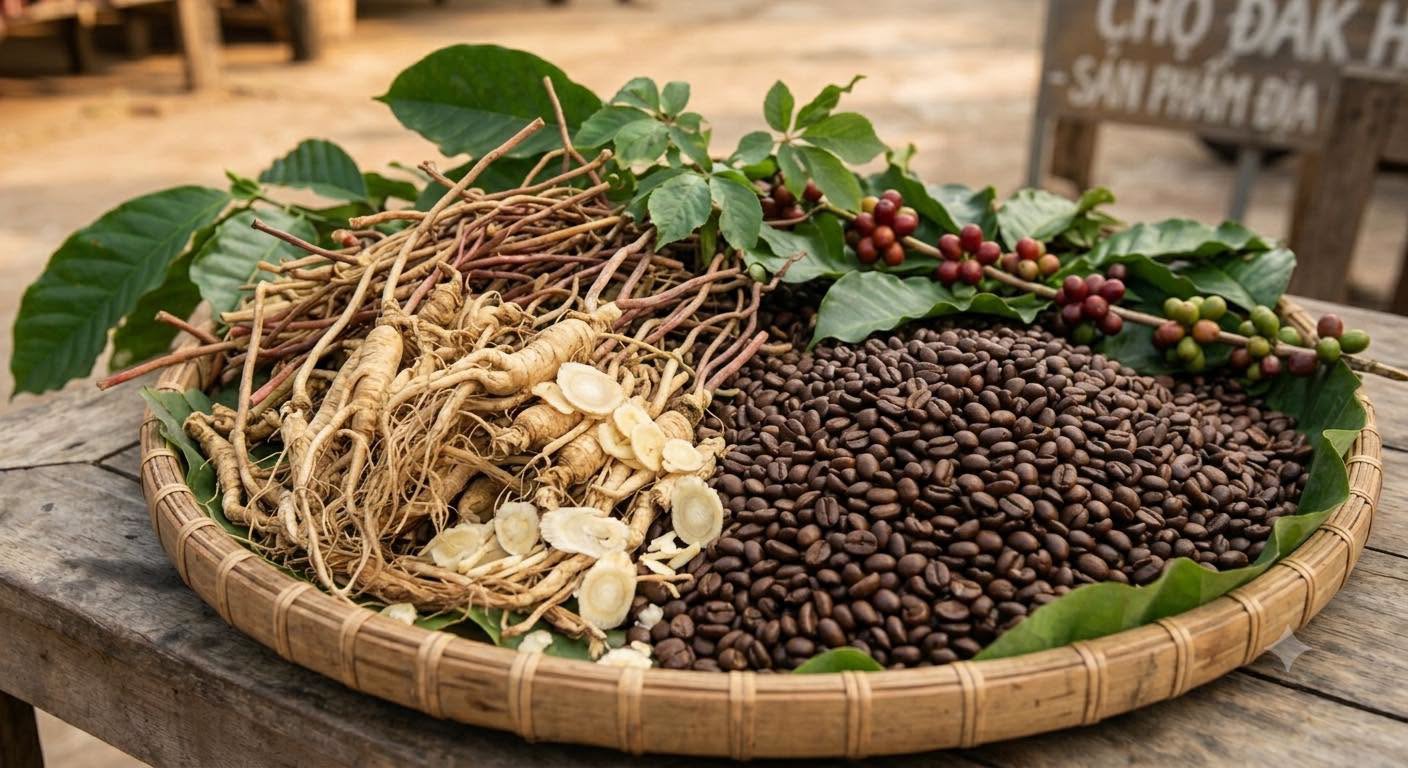
Caffeine is a naturally occurring compound found in coffee beans and over 60 other plants.
How does cheap coffee affect your health?
The market's silence stems from the fact that the majority don't understand what real coffee is. The cleverness, and also the frightening, of chemical technology is its ability to manipulate consumer tastes. Most consumers have had their taste buds "trained" by chemically treated coffee for decades. They assume that coffee must be pitch black, thick, intensely bitter, and intensely aromatic. When given a cup of real coffee (amber brown, diluted like strong tea, with a mild bitterness and slight acidity), they complain it's "fake coffee," or "doesn't give you the thrill."
However, alongside the uninformed majority, the market is gradually shaping a knowledgeable group. Among those knowledgeable, there are two distinct categories:
The type who turns a blind eye: These are owners of budget-friendly cafes. They know exactly what kind of coffee powder they're using, but the pressure of price competition and the pressure to cater to customers' "stronger" preferences force them to continue compromising with blended coffee.
The "choosing original values" category includes producers who say no to chemicals and discerning consumers. They are willing to pay the right price (from 25,000 VND to 50,000 VND or more) at shops that roast and grind their own beans, or buy whole beans to brew at home to protect their health. This is a positive sign, a core element in creating a trend for the community, ensuring health while jointly combating market manipulation by chemicals.
Long-term intake of high doses of synthetic caffeine, combined with harmful free radicals produced from chemical solvents and toxins from burnt roasted corn/soybeans (containing the carcinogen acrylamide), is the silent killer that damages the liver, kidneys, and cardiovascular system of users every day.
Coffee is essentially an agricultural product, and as an agricultural product, it has a fixed value; it cannot be as cheap as water. When a cup of "coffee" is ridiculously cheap, what we are buying is not the natural alertness we get, but a "poisonous" sugar-coated drug from a chemical laboratory.
A smart choice
To protect themselves, consumers need to have firm selection principles: Say no to unbranded, street-brewed filter coffee; prioritize machine-brewed coffee (standard coffee machines will clog and break down immediately if the coffee powder is mixed with additives, chemicals, or thick roasted corn).
For convenient instant coffee products, consumers have the right to know the ingredients by carefully reading the ingredient list on the packaging to see what the 3-in-1 or 4-in-1 ingredients actually are (coffee extract, creamer, sugar, or accompanying herbs). Besides the core ingredients mentioned above, if there are too many additives, flavorings, anti-caking agents, preservatives, anti-caking agents, anti-fattening agents, or chemical sweeteners, consumers need to be extremely cautious to protect their own health and that of their families.
Based on market research, five distinct segments of the current instant coffee market can be identified:



1. Mass-produced instant coffee for export. This type typically uses synthetic caffeine, common creamer, refined sugar, and various artificial additives and flavorings, primarily to optimize production costs. Market price is approximately 3,300-4,000 VND per packet.
2. Standard 3-in-1 coffee: Uses coffee extract from commercially sourced regions, combined with plant-based cream and refined sugar. Market price is approximately 4,500-5,000 VND per pack.
3. Fruit-flavored instant coffee (coconut, durian, etc.): While intended to create novelty in the market, these coffees inadvertently overpower and detract from the natural, original flavor of the coffee beans. Market price is approximately 3,000-5,000 VND per packet.
4. Specialty 3-in-1 Coffee: A major breakthrough using extracts from carefully selected specialty coffee beans (Fine Robusta/Specialty Arabica), combined with high-quality plant-based cream and health-safe sugar. The production cost for this line has reached 4,000-5,000 VND per packet — even higher than the retail price of common varieties and virtually absent from the mass market.
5. Specialty Herbal Instant Coffee (3-in-1, 4-in-1): A groundbreaking combination of original specialty coffee beans and rare Vietnamese medicinal herbs. This line not only addresses the need for alertness but also proactively supports health and boosts the immune system. The price of this line is significantly higher; market prices range from 10,000 VND to 20,000 VND per packet depending on the formula and blending ratio.
Source: https://suckhoedoisong.vn/ca-phe-gia-re-uong-ca-phe-hay-uong-thuoc-doc-169260627210018981.htm


















































![[INFOGRAPHICS] Can Tho implements the Strategy for Ethnic Affairs until 2030, with a vision to 2045](https://vphoto.vietnam.vn/thumb/402x226/vietnam/resource/IMAGE/2026/06/28/1782658308447_1782658217.webp)