

| Commodity Trading Q&A (Number 67): Strategies in Option Trading (Part 2) Commodity Trading Q&A (Number 68): Strategies in Option Trading (Part 3) |
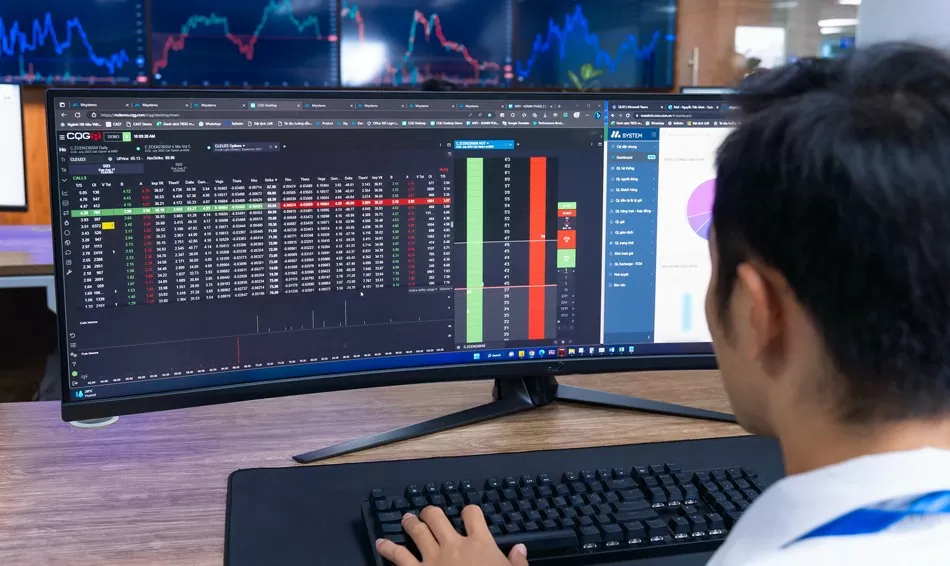
In options trading, the Long Call strategy is a price hedging tool that is of particular interest to businesses and investors in the commodity trading market when the price of the underlying asset increases. So what is this strategy and how is it applied? In today's Q&A, the Industry and Trade Newspaper will help readers understand this trading strategy.
 |
Long Call Option Buying Strategy
The Long Call strategy involves purchasing a call option on an underlying asset at a specific strike price. Investors employing this strategy will profit when the price of the underlying asset rises above the option's strike price, without facing the downside risk associated with directly holding the underlying asset.
In the event that the price of the underlying asset rises above the strike price, the investor can choose not to exercise the option and allow it to expire. Thus, the Long Call strategy can provide unlimited profit for the investor, while limiting losses to no more than the option premium. This strategy is used when participants expect the price of the underlying asset to increase.
For example: An investor executes a long call strategy by buying a call option on a December 2024 corn contract with a strike price of 460 cents/bushel and an option premium of 45 cents/bushel.
Profits from a Long Call strategy depend on the future price of the December 2024 corn contract (ZCEZ24). The following scenarios are possible:
Case 1: The ZCEZ24 contract price is higher than 460 cents/bushel.
If the price of the ZCEZ24 futures contract is higher than 460 cents/bushel, let's say 520 cents/bushel, the investor will exercise the call option to buy the ZCEZ24 contract at 460 cents/bushel and the contract will strike at 520 cents/bushel. The investor will receive a profit (excluding transaction fees and other taxes/fees) calculated as the difference between the market price of the contract and the strike price of the option - Option premium, or (520 - 460) - 45 = 15 cents/bushel.
Case 2: The ZCEZ24 contract price is lower than 460 cents/bushel.
If the price of the ZCEZ24 futures contract falls below 460 cents/bushel, the call option is not exercised. The investor then incurs a loss equal to the option premium, which is 45 cents/bushel. This is the maximum loss an investor can incur when executing a Long Call strategy.
Thus, the Long Call strategy can help investors limit losses on option premiums, while having the opportunity to receive unlimited profits.
Source: https://congthuong.vn/hoi-dap-giao-dich-hang-hoa-so-69-cac-chien-luoc-trong-giao-dich-hop-dong-quyen-chon-phan-4-331423.html

![[Photo] Prime Minister Pham Minh Chinh presides over a meeting on private sector economic development.](/_next/image?url=https%3A%2F%2Fvphoto.vietnam.vn%2Fthumb%2F1200x675%2Fvietnam%2Fresource%2FIMAGE%2F2025%2F12%2F20%2F1766237501876_thiet-ke-chua-co-ten-40-png.webp&w=3840&q=75)






























































![[Infographic] Controlling rabies in pet dogs and cats](https://vphoto.vietnam.vn/thumb/402x226/vietnam/resource/IMAGE/2025/12/21/1766288809667_infographic-kiem-soat-benh-dai-tren-dan-cho-meo-nuoi20251221091138.webp)




















Comment (0)