

Nummular eczema is a chronic skin condition that causes round, coin-shaped bumps, blisters, sometimes oozing fluid, and may scab over.
Dr. Nguyen Thi Kim Dung, a specialist in Dermatology and Cosmetic Dermatology at Tam Anh General Hospital in Ho Chi Minh City, said that nummular eczema is also known as coin-shaped eczema, coin-type dermatitis, or discoid eczema.
Nummular eczema can appear on any part of the body, but is less common on the face and scalp. The condition manifests as red, swollen bumps resembling insect bites, which are particularly itchy at night and covered with tiny blisters. These bumps quickly merge to form larger patches ranging from a few millimeters to several centimeters in size. Over time, these patches dry, scab over, peel, become rough, swollen, tender, or painful, and the skin in the center becomes dry, wrinkled, and red.
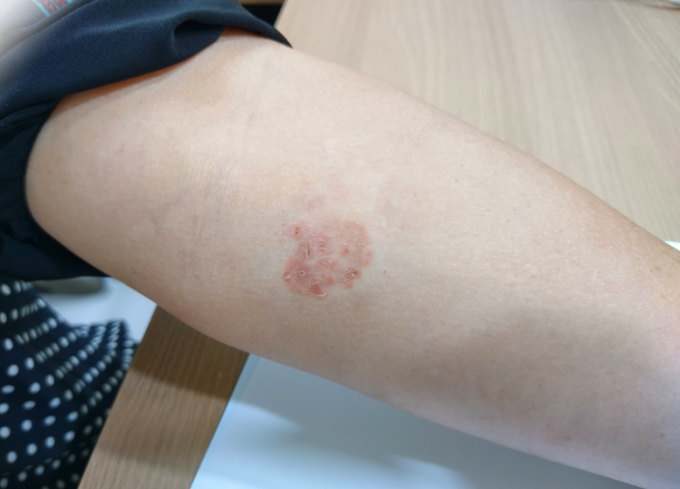
The patient has nummular eczema. Photo: Tam Anh General Hospital
According to Doctor Kim Dung, the exact cause of nummular eczema has not yet been found, but the condition is often related to factors such as allergies; bacterial infections (Staphylococcus bacteria, etc.); contact with rough fabrics; dry skin or prolonged exposure to dry, cold environments; hot baths; skin injuries (burns, scratches, insect bites); and the use of irritating soaps that dry out the skin.
During daily activities, the affected skin area is easily damaged, oozing pus or clear fluid. Therefore, many people worry about contracting the disease through contact with the secretions. However, in reality, nummular eczema is not contagious, as the cause of the disease is due to intrinsic or spontaneous factors such as genetics; a predisposition to allergies; a weak immune system; excretory system disorders; stress, etc. In addition, prolonged exposure to cold, dry environments; insect bites; contact with toxic chemicals; and the use of medications containing isotretinoin, interferon, etc., can also easily cause nummular eczema.
To prevent nummular eczema, it's important to avoid products that easily irritate the skin, such as laundry detergents containing fragrances or dyes. Limit wearing tight clothing and fabrics that cause discomfort. If skin lesions occur, disinfect the affected area and bandage it.
Moisturize the skin with gentle moisturizing products or ointments. Avoid taking excessively long hot baths. Avoid scrubbing vigorously, as this can cause skin abrasions.
Limit your consumption of shellfish and sugary foods. Avoid raw foods (blood pudding, raw meat salad, raw seafood, etc.), and don't eat pickled eggplant or pickled bamboo shoots. Limit foods that can easily cause itching, such as eggs and poultry.
People undergoing treatment for nummular eczema should also avoid foods that can easily cause scarring, such as water spinach, sticky rice, corn, crab, and shrimp. They should also avoid products containing stimulants such as tobacco, alcohol, beer, and coffee.
Dr. Nguyen Thi Kim Dung noted that nummular eczema causes skin damage, making it easy to mistake it for ringworm or tinea versicolor. Preventing the disease is difficult, so people with allergies need to take extra care in protecting their skin.
When symptoms of nummular eczema appear, patients should see a dermatologist or cosmetic skin specialist for early examination and treatment. If left untreated for a long time, the disease will persist, causing discomfort and significantly affecting daily life.
Dinh Tien
Source link





![[Photo] Admire the coral "masterpiece" amidst the million-year-old heritage of Dak Lak province.](https://vphoto.vietnam.vn/thumb/1200x675/vietnam/resource/IMAGE/2026/05/30/1780107638639_y25-jpg.webp)







![[Photo] My Son at night: A thousand-year-old heritage site amidst the Milky Way](https://vphoto.vietnam.vn/thumb/402x226/vietnam/resource/IMAGE/2026/04/15/1776261039184_ndo_br_chon6-jpg.webp)































































































Comment (0)