

At a ceremony in the White House Rose Garden on Wednesday (April 2), Trump held up a sign outlining the tariffs that the administration claims trading partners have "imposed" on the U.S., as well as the "reciprocal" tariffs that the U.S. will impose in response.
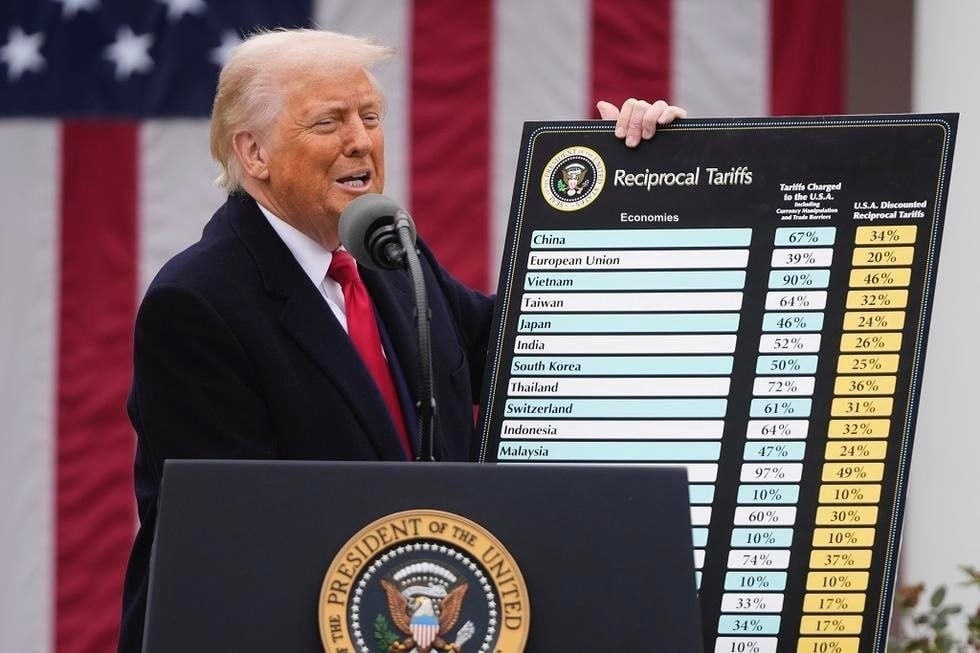 |
Accordingly, those "reciprocal" tariffs were essentially only half the amount that the Trump administration said each country had applied to the U.S. For example, the poster indicated that China applied a 67% tariff and the U.S. would apply a reciprocal 34% tariff in response.
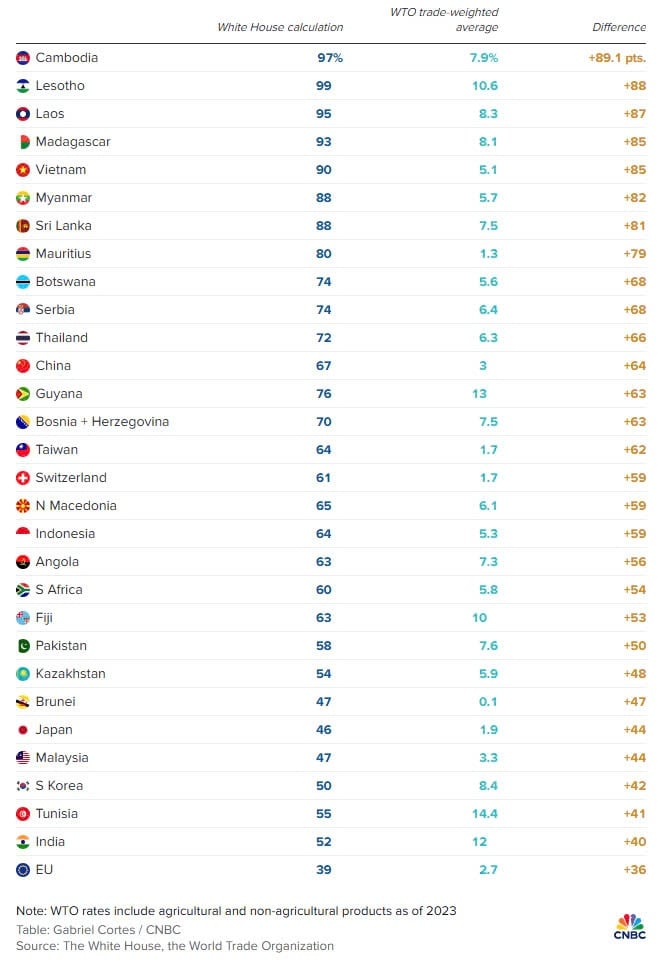
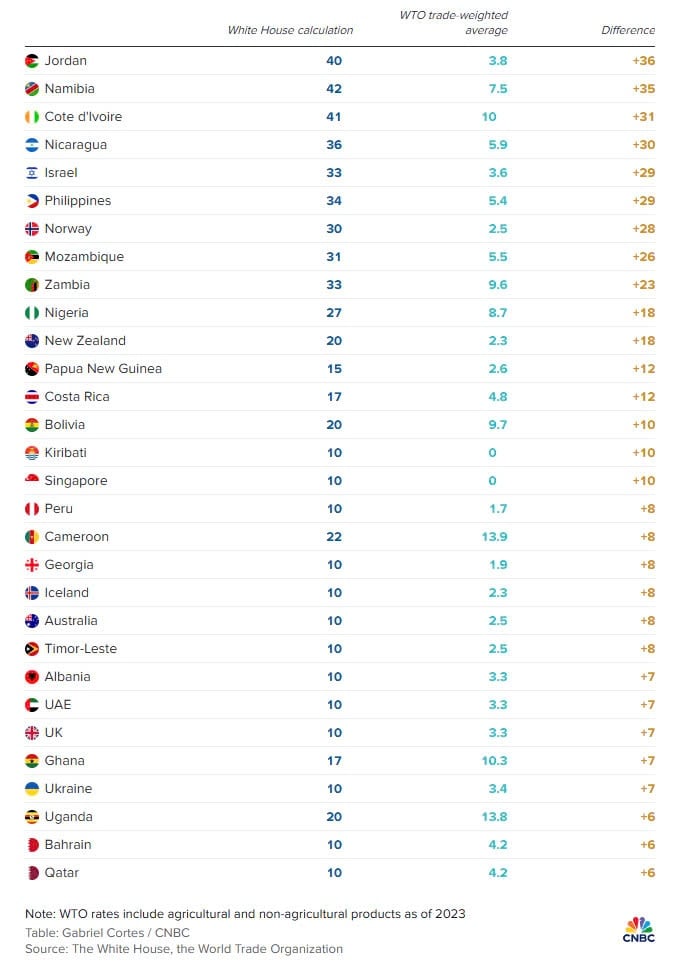
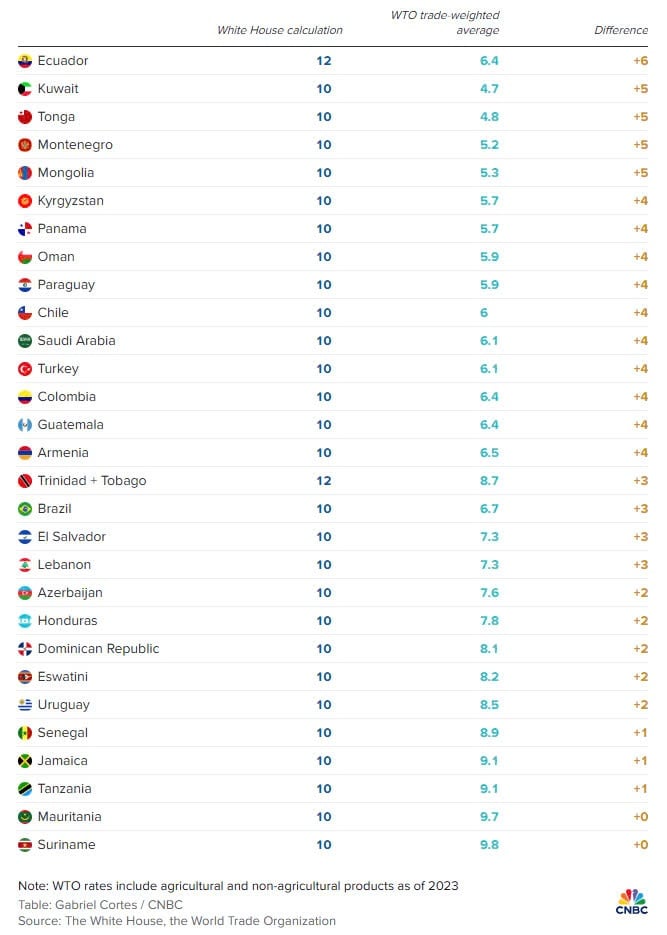
However, a report from the Cato Institute indicates that trade-weighted average tariffs in most countries are significantly lower than those stated by the Trump administration. The report is based on trade-weighted average tariffs from the World Trade Organization (WTO) for 2023, the most recent year for which data is available.
Specifically, the Cato Institute stated that the average trade-weighted tariff rate from China in 2023 was 3%, not 67% as the Trump administration had claimed.
For example, the Trump administration stated that the European Union imposed a 39% tariff on the US, but the Cato report indicates that the EU's trade-weighted average tariff in 2023 was 2.7%.
In another example, the Trump administration stated that India imposed a 52% tariff on the US, but Cato pointed out that India's trade-weighted average tariff in 2023 was 12%.
Below is a comparison table of how the Trump administration calculates tariffs and how the WTO calculates the average tariff rate using trade-weighted factors (source: CNBC).
 |
 |
 |
Although the U.S. Trade Representative (USTR) stated in a press release that calculating the combined effects of tariffs, regulations, taxes, and other policies in multiple countries “can be represented by calculating a tariff level that would bring the bilateral trade deficit to zero.”
"If persistent trade deficits are due to tariff and non-tariff policy and fundamental principles, then the appropriate tariff levels to offset these policies and fundamental principles are reciprocal and fair," the USTR said in a press release.
However, many social media users this week quickly noticed that the Trump administration appears to have calculated the trade deficit by dividing the amount of imports from a particular country to determine the tariffs that the Trump administration believes those countries apply to the U.S. This is an unusual approach because it shows that the U.S. is only considering the trade deficit in goods but ignoring trade in services.
Source: https://thoibaonganhang.vn/cach-tinh-thue-quan-cua-my-cao-hon-nhieu-so-voi-du-lieu-cua-wto-162335.html


![[Photo] Prime Minister Pham Minh Chinh attends the Conference on the Implementation of Tasks for 2026 of the Industry and Trade Sector](/_next/image?url=https%3A%2F%2Fvphoto.vietnam.vn%2Fthumb%2F1200x675%2Fvietnam%2Fresource%2FIMAGE%2F2025%2F12%2F19%2F1766159500458_ndo_br_shared31-jpg.webp&w=3840&q=75)























































































Comment (0)