

 |
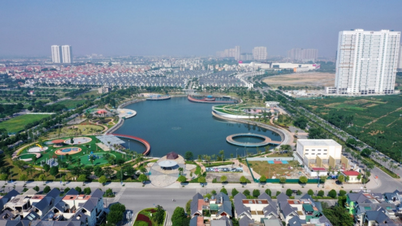
| Property identification also facilitates things for the people. Photo: NQ |
Accordingly, each real estate product (single-family house, apartment, construction project, etc.) will be assigned an electronic identification code (E-ID). This code is a string of characters (including numbers and letters), with a maximum length of 40 characters; it is generated and assigned separately to each house and each product in the project, ensuring no duplication.
The benefit of land identification is that it eliminates legal ambiguity. With a unique identification number, buyers and sellers can publicly access official information about planning, construction progress, and transaction history, instead of relying on brokers or word-of-mouth sources. This helps eliminate "ghost" projects, localized land price bubbles, and protects people from the risks of fraud.
Real estate identification also facilitates transactions, buying, selling, and managing housing and land for citizens. The real estate identification code is like an identity card issued to each citizen, or like a "birth certificate" for real estate. Besides the land title certificate, the national database will demonstrate the identification of citizens' ownership rights. This makes transactions easier, especially when transferring ownership to a new owner, as the information will be updated immediately on the system.
Decree 357 clearly demonstrates the trend of managing the real estate market through technology and digitalization. The real estate identification code is considered an important step in the digitalization roadmap for the housing sector and real estate market, in line with management requirements in the new context.
However, many people are concerned about whether the identification of real estate will require them to provide additional documents or go through new administrative procedures. People will only truly benefit when the assignment of real estate identification codes is accompanied by substantive administrative reforms. If it only stops at assigning codes, while transactions such as transfers, inheritances, and property registration still require submitting paper documents and waiting according to the old process, people will find it difficult to perceive the clear benefits.
According to Decree 357, citizens are not required to submit documents or provide additional information. Data will be integrated and shared by competent state agencies. For real estate identification to be truly effective, the key factor is the quality of the input data.
The identification code is merely a technical tool for managing property information in the digital environment; it does not equate to ownership or land use rights. Without clear legal regulations, it can easily lead to misunderstandings between the data management value and the actual legal value of real estate.
Some argue that assigning a unique identifier to each property will lead to lower prices or an end to speculation. Experts, however, believe this is an incomplete understanding. Property identifiers do not directly change prices; they only serve as a tool for identification and management. The core value of identification lies in establishing a unified and transparent data platform.
When each property has an "electronic identity card," all information from planning, construction, transactions, mortgages to transfers will be tracked continuously. This helps the market gradually shift from emotional trust to data-driven trust, limiting dubious transactions, price manipulation, and speculation.
In the context of a real estate market lacking transparency, Decree 357 is expected to provide a basis for the State to effectively apply regulatory tools such as taxes and credit. This will direct capital flows towards sustainable development, rather than short-term speculation…
Source: https://huengaynay.vn/kinh-te/can-cuoc-bat-dong-san-163145.html



![[Image] Nearly 125,000 Hanoi students completed the Literature exam for the 10th grade entrance exam.](https://vphoto.vietnam.vn/thumb/1200x675/vietnam/resource/IMAGE/2026/05/30/1780117233041_ndo_br_thiet-ke-chua-co-ten-2-png.webp)































































































Comment (0)