

Dr. Can Van Luc, Member of the National Financial and Monetary Policy Advisory Council:
We need to disburse public investment funds decisively.
For a long time, we haven't really encouraged public bond issuance, focusing mainly on private placements. Therefore, the Ministry of Finance needs to study and improve the process and procedures for reviewing and approving public bond issuance plans. In addition, relevant authorities need to promptly resolve violations in the real estate and bond markets that have had preliminary investigation results announced, thereby building confidence among businesses.
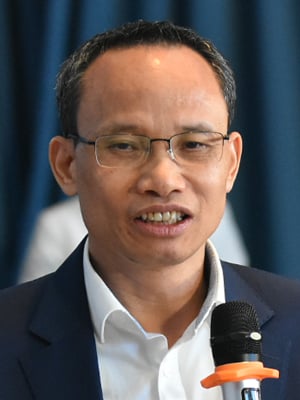
Real estate development will be very difficult if the disbursement of public investment capital is not on schedule. Therefore, localities need to be decisive in disbursing public investment capital. This is a very important issue, within the reach of Ho Chi Minh City and other localities. In particular, it is recommended that the three laws related to real estate be passed soon; otherwise, it will be very difficult for the real estate market, including land and corporate bond markets, in the coming period.
Mr. LE HOANG CHAU , Chairman of the Ho Chi Minh City Real Estate Association:
We hope for appropriate regulations.
Currently, legal obstacles are the biggest problem, accounting for up to 70%. Firstly, some legal regulations lack consistency and are contradictory or conflicting. Secondly, there are issues with access to capital. Thirdly, credit from commercial banks, despite being the "support system" for businesses and the market, is difficult to obtain, and interest rates remain high.
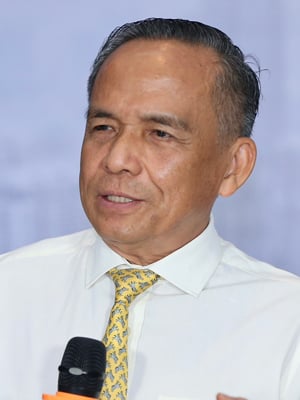
I hope there will be appropriate regulations to facilitate the development of social housing, housing for workers, and the renovation and reconstruction of old apartment buildings. While it's not certain that it will be passed at this National Assembly session, I expect the amended Land Law to be passed and come into effect soon, as planned, once all the necessary provisions are finalized.
Mr. NGUYEN MINH TRI, Member of the Board of Directors of Vietnam Agricultural and Rural Development Bank ( Agribank ):
The bank offers loans at low interest rates.
As a commercial bank, we fulfill our responsibility to mobilize capital for lending. We affirm that banks themselves must also invest in capital flows, including real estate, specifically social housing, and infrastructure. However, when lending, banks aim to recover their capital. Therefore, when granting credit for social housing projects, legal compliance must be ensured for both buyers and investing enterprises.
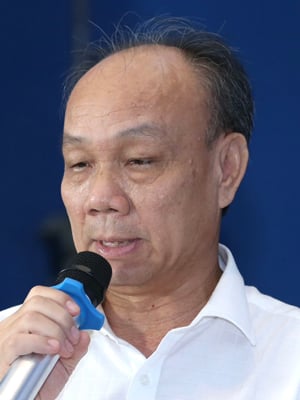
Specifically for the preferential credit package of 120,000 billion VND for investors and homebuyers in social housing and worker housing projects, Agribank has registered 30,000 billion VND since the first day of implementation. Currently, the disbursement rate is not high, but the bank is always ready; as long as businesses meet the legal requirements, they will disburse the funds.
Agribank, like other banks, is eager for projects to be completed because real estate also has a significant impact on other projects. Banks always aim to lend to customers who are profitable, have efficient businesses, and offer low interest rates as required by the Government and the State Bank of Vietnam.
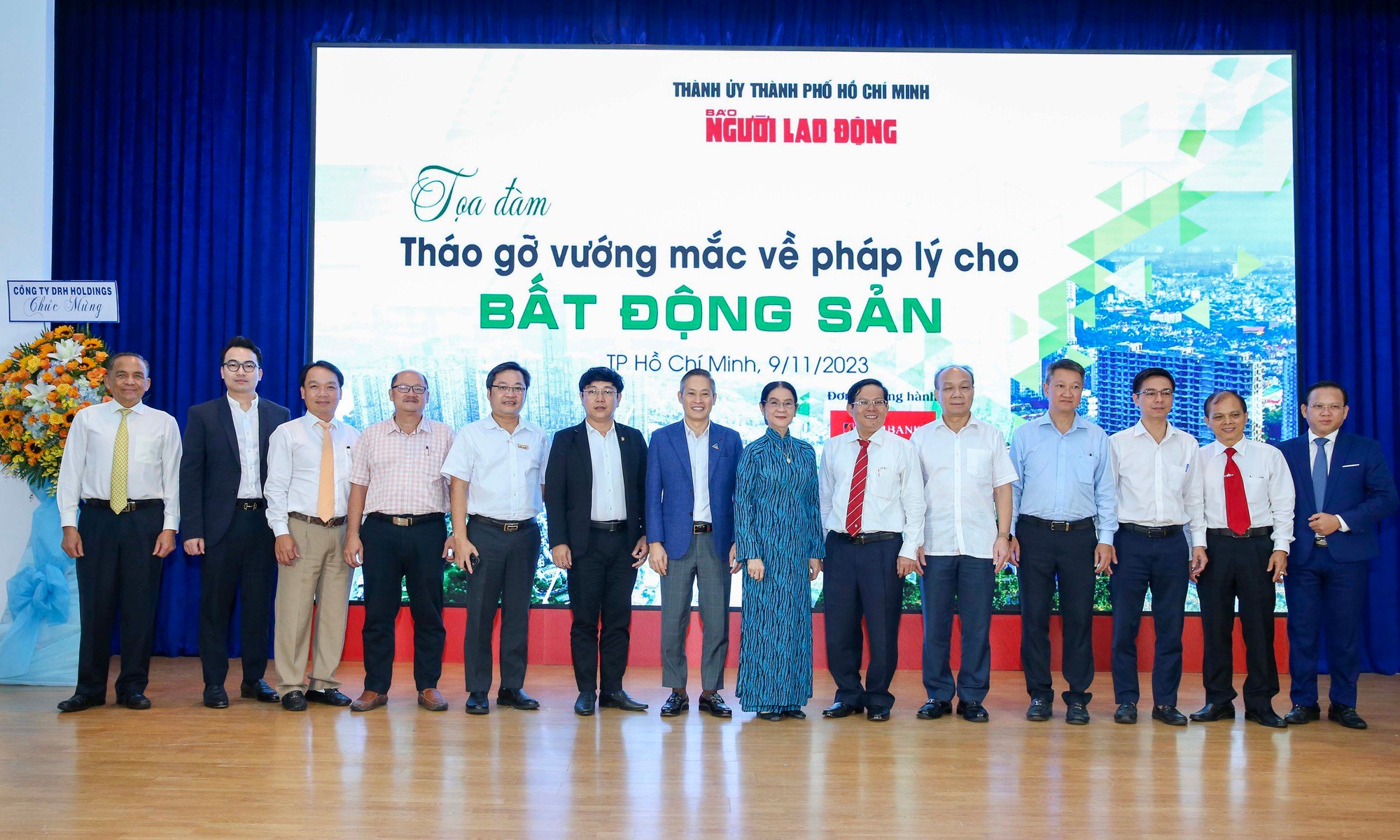
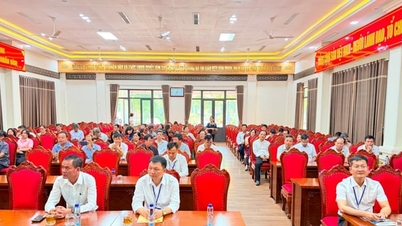
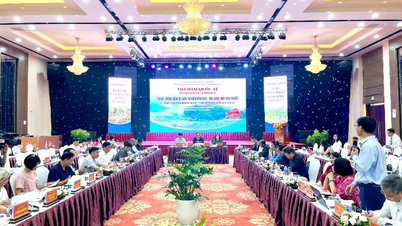
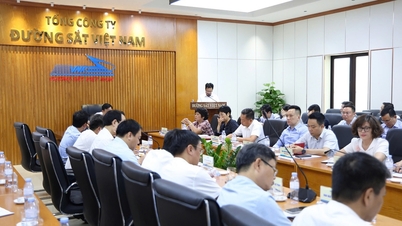
Delegates pose for a commemorative photo at the seminar. Photo: HOANG TRIEU
Mr. PHAM DANG HO, Head of the Housing Development and Real Estate Market Department - Ho Chi Minh City Department of Construction:
A separate process is needed for social housing.
Ho Chi Minh City has issued procedures for implementing social housing projects and rebuilding old apartment buildings, and will soon advise on issuing procedures for commercial housing projects. However, these procedures are clearly scattered across various laws, lacking a consistent system, leading to potential differences in implementation between provinces and cities. Therefore, when finalizing the legal system, attention should be paid to transitional and retroactive provisions for projects that are currently underway.
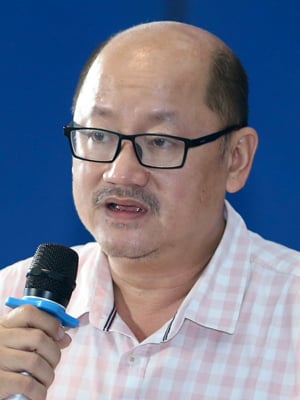
Social housing projects require a separate process and simplified administrative procedures. Furthermore, a central coordinating agency is needed to oversee the overall investment procedures for the project. Accordingly, a proposal could be made to establish an inter-agency task force to address investment procedures in a single meeting, reaching a consensus on legal procedures. This would allow for the simultaneous and efficient handling of investment procedures, thereby accelerating project progress.
Mr. NGUYEN NGOC VAN, Deputy Director of the Department of Construction of Binh Duong Province:
The key lies in how we perceive and resolve the problems.
Binh Duong views businesses as partners and is very empathetic to the difficulties they face. The Provincial People's Committee holds weekly meetings to address the difficulties and obstacles faced by businesses. These meetings specifically identify the root causes of problems and how to resolve them. For example, when an issue is assigned to the Department of Planning and Investment, specific opinions and content must be sought, and approval from relevant departments and agencies must be obtained before a proposal can be submitted to the Provincial People's Committee.

Regarding obstacles, businesses must be given answers on whether or not they can be resolved; if so, within what timeframe, and with a commitment to implementation. In reality, the difficulties are similar, but ultimately, it's about the approach and how to expedite the resolution process – answers must be provided promptly, ensuring satisfaction and meeting the requirements of each aspect of the problem.
Mr. BUI NGOC DUC, General Director of Dat Xanh Group:
A difficult problem for businesses.
Legal issues and procedures are factors affecting the survival of projects and the businesses developing them. Businesses often use the word "pleading" when referring to these factors recently, because there are still many outstanding obstacles.
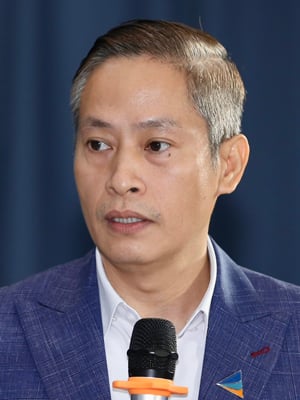
In reality, the company had legally reached a compensation agreement with the residents a long time ago. However, to register the land ownership change with the company, that agreement is insufficient. We were required to sign a land use rights transfer contract, in other words, to cancel the compensation agreement notarized 13 years ago. This is impossible. We apply the law, but the law is highly localized. This significantly impacts not only the real estate sector but also the investment environment in Vietnam. Therefore, ensuring compliance with the law is a very difficult problem for businesses.
Mr. NGO DUC SON, General Director of DRH Holdings JSC:
Legal difficulties are unpredictable.
Progress has been made in resolving legal obstacles for 148 projects in Ho Chi Minh City, but the results have not been effective.
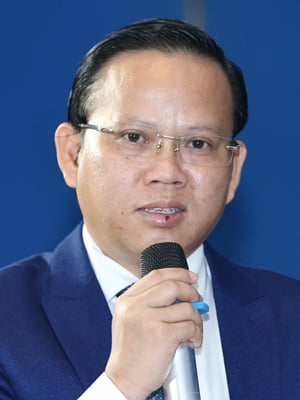
The project developers themselves anticipated the difficulties and chose the least bumpy paths. However, policy challenges such as investment regulations and real estate market regulations were unforeseen.
Journalist - Dr. TO DINH TUAN, Editor-in-Chief of Nguoi Lao Dong Newspaper:
10 groups of solutions
There are 10 groups of solutions aimed at resolving legal obstacles for the real estate sector in the coming period.
Firstly, it is necessary to amend and promptly pass laws such as the Land Law (amended); the Real Estate Business Law (amended); the Housing Law (amended), etc. Secondly, continue to adjust sub-laws, as these documents provide specific guidance to suit the new situation and avoid overlapping.

Thirdly, we need to address the issue of law enforcement by officials and civil servants. However, this is not something that can be done overnight. To solve this problem, in addition to boosting morale, in the long term, we need to build a systematic, well-structured, scientific, and standardized work process.
Fourth, it is necessary to expedite the resolution of past negative incidents that have not yet reached a final conclusion, so that people and businesses can feel secure and confident in investing.
Fifth, it is necessary to increase the issuance of bonds to the public. Sixth, it is necessary to increase the disbursement of public investment to contribute to stimulating economic growth.
Seventh, promote the social housing development fund to help people settle down, stabilize their lives, contribute to and build the country.
Eighth, promote the development of industrial real estate, especially in the context of some businesses leaving other markets and choosing Vietnam as a new market. Developing industrial real estate will contribute to stimulating the overall real estate market and driving it upward.
Ninth, real estate businesses, including the Real Estate Association, need to strengthen their recommendations and propose more effective and practical solutions that are more relevant to the actual situation.
Tenth, strengthen the role of the media. The Nguoi Lao Dong newspaper, along with other media outlets, will promptly speak out, support, and accompany businesses, quickly reflecting the current situation and proposing solutions.
Source: https://nld.com.vn/kinh-te/toa-dam-thao-go-vuong-mac-ve-phap-ly-cho-bat-dong-san-can-tiep-tuc-cai-tien-quy-trinh-thu-tuc-20231109223005822.htm

















































![[Video] Sunset at Lap An Lagoon – Where the sun sets over the fishing nets](https://vphoto.vietnam.vn/thumb/1200x675/vietnam/resource/IMAGE/2026/05/31/1780192137701_beach-landscape-sea-water-nature-grass-745871-pxhere-com.jpeg)






































Comment (0)