

Remote alert
Engineer Nguyen Van Ngoc, in charge of hydrology at Ban Ve Hydropower Company, along with several other young engineers, guided us and explained the importance of the automatic rainfall monitoring system: Prior to 2018, due to the lack of an automatic rainfall monitoring system, the unit could not accurately track the water flow into the reservoir during the rainy season in Laos (which is often out of sync with Vietnam). Meanwhile, the Ban Ve Hydropower reservoir has a total area of 8,700 km² , and a large portion of this area is located in Laos. Without accurate data on rainfall and water flow into the reservoir, reservoir operation and flood control efforts would be difficult.
I recall that around the end of August 2018, a major flood occurred upstream of the Nam Non River. Satellite cloud imagery only showed dense clouds, but the lack of accurate rainfall data made proactive flood prevention and control efforts difficult. As a result, in a short time, by the afternoon of August 31st, the floods forced 230 households in Tuong Duong district to evacuate urgently, with 7 households having their houses completely swept away; the Ban Ve bridge, 4 school buildings, and 1 commune People's Committee headquarters were deeply submerged…
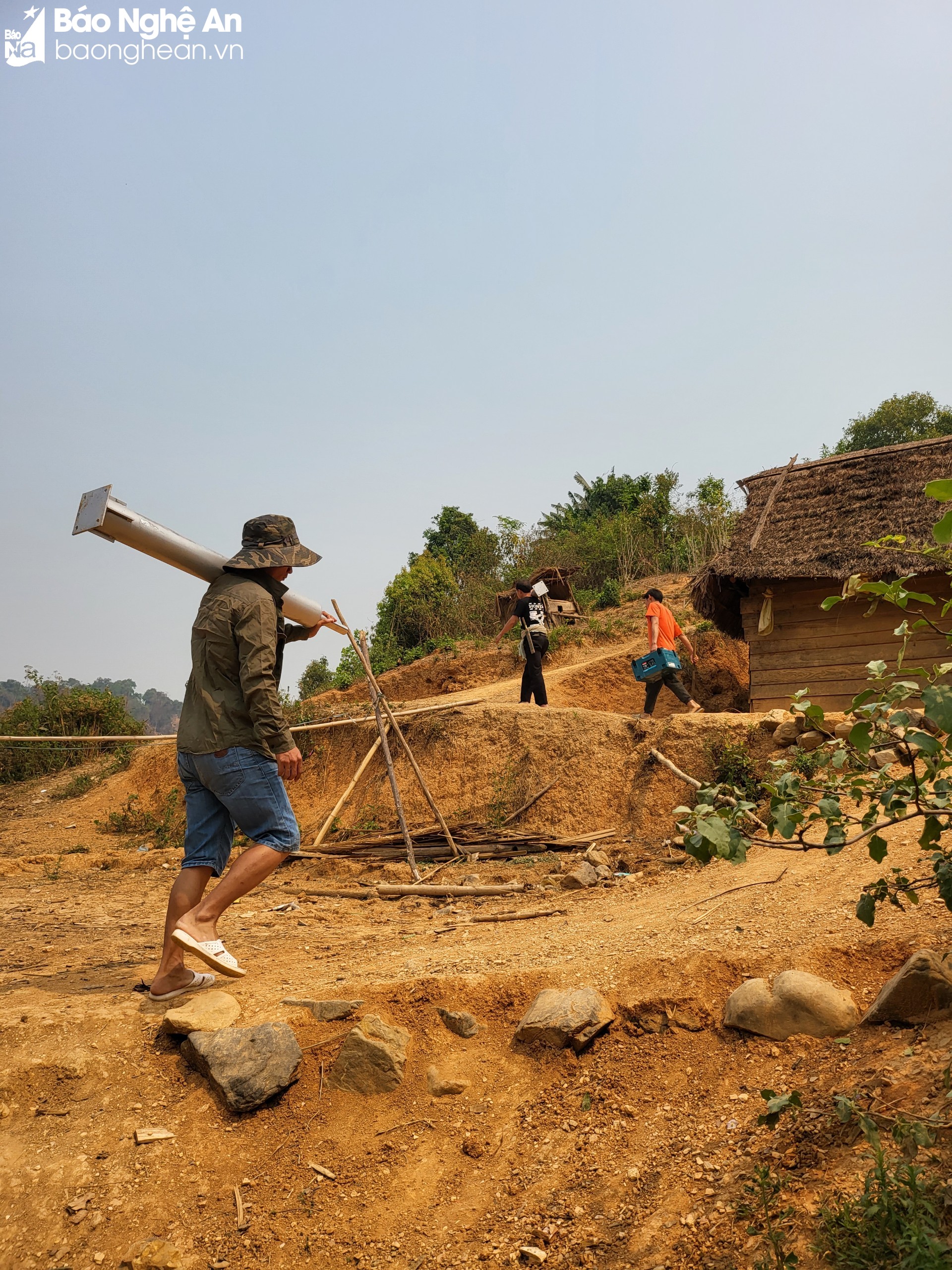
“After the major flood at the end of August 2018, Ban Ve Hydropower Company decided to install four pilot automatic rain gauge stations around the plant area. Then, based on the watershed map, the company coordinated with the North Central Region Meteorological and Hydrological Station to select suitable locations and survey for the installation of measurement points. Currently, in addition to the 13 monitoring stations located upstream of the Ban Ve Hydropower Reservoir within Vietnam, the company has also purchased monitoring data from 22 stations located in Laos,” engineer Ngoc shared.
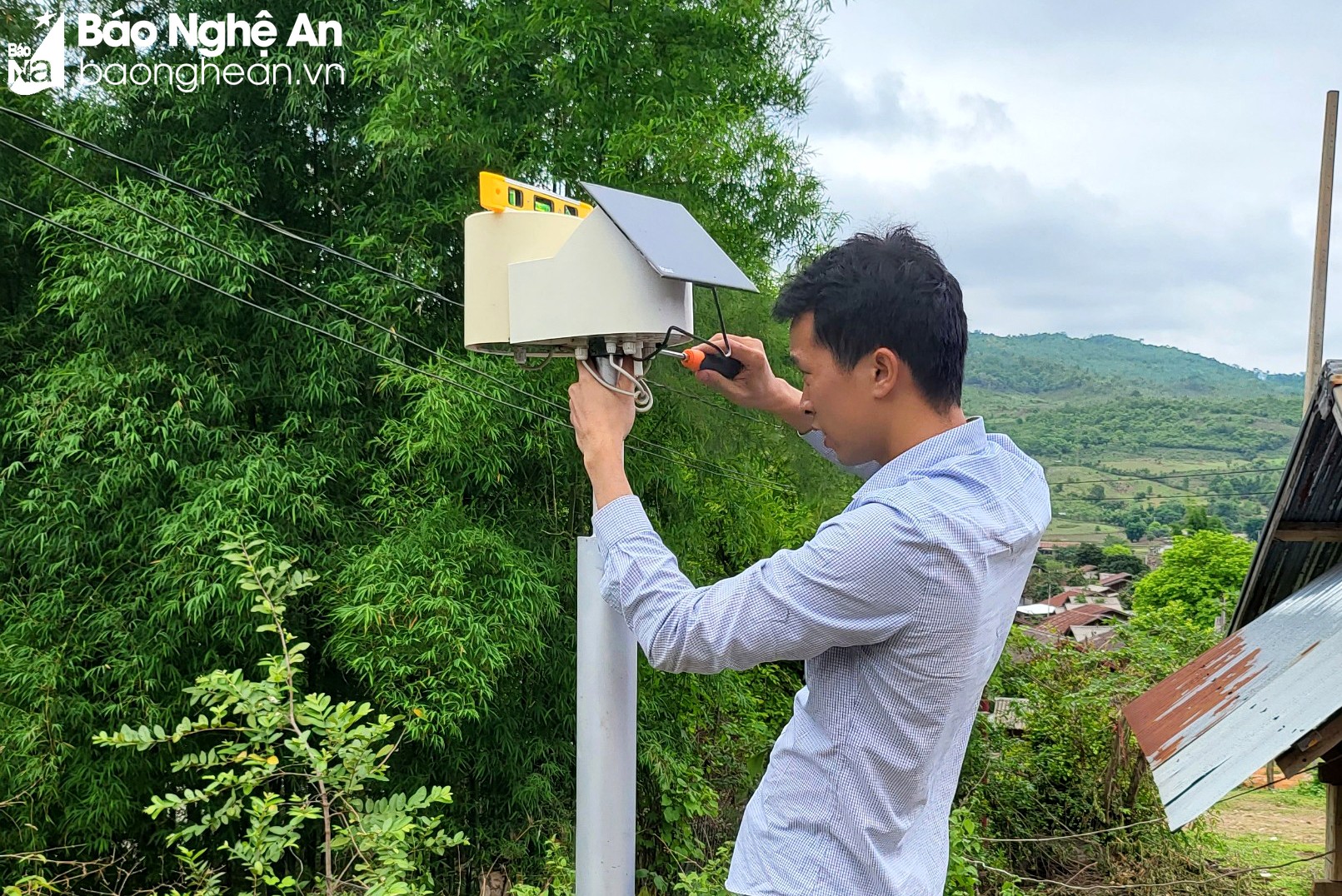
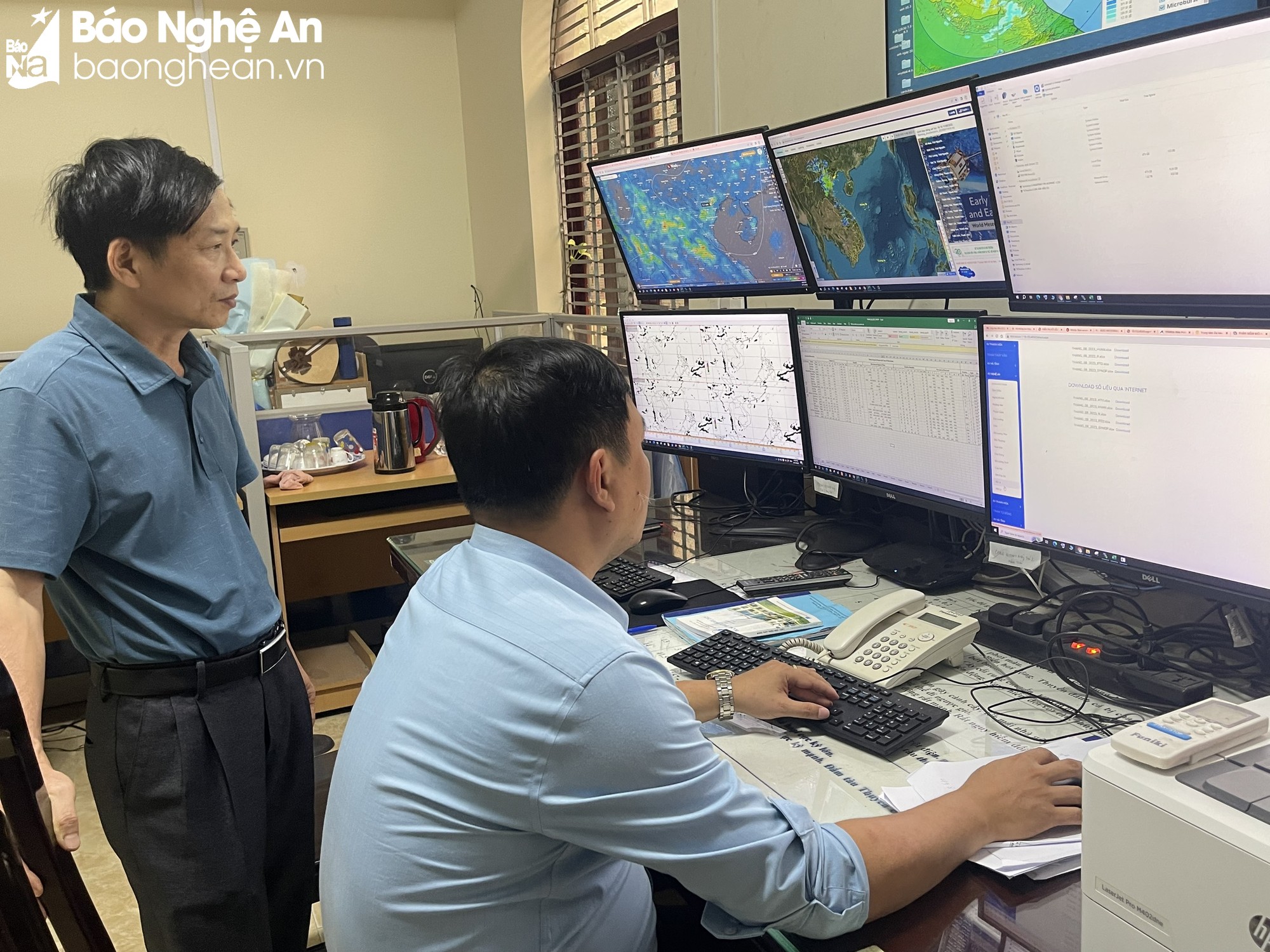
Although it is a small device installed on the roof, the continuous, hourly transmission of rainfall data during the flood season plays a crucial role in flood forecasting and warning, enabling disaster response and mitigation. From the automatic monitoring stations, after rainfall occurs, the device measures the amount of rain and then periodically transmits the data every hour to the North Central Region Meteorological and Hydrological Station. Meteorological and hydrological experts then use professional methods to analyze and calculate the flow rate and time of water inflow into the reservoir, and then provide the calculated data to the Ban Ve Hydropower Plant and other relevant agencies.
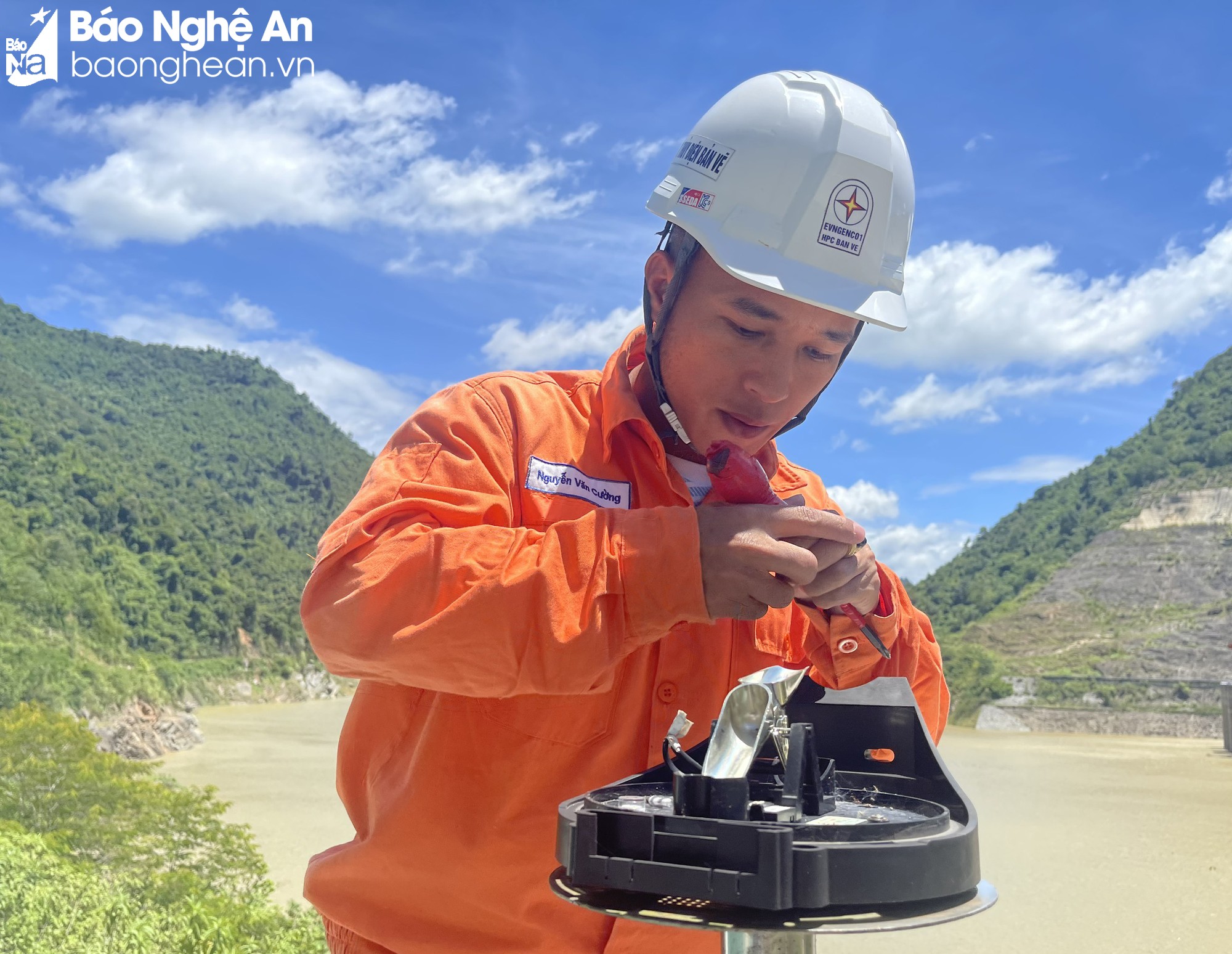
Currently, according to engineer Ngoc, excluding monitoring stations located near the Ban Ve Hydropower Dam, the distance from the nearest station at the People's Committee of Huu Khuong Commune (Tuong Duong District) to the furthest station within Vietnam, located at the People's Committee of Keng Du Commune (Ky Son District), is approximately 80-90 km. Thanks to these automated monitoring stations, rainfall data will be transmitted automatically in real time, improving the effectiveness of forecasting, warning, and early detection of potential floods and sudden flood surges, especially in mountainous and upstream areas. Early warning information about the occurrence of floods and short-term flooding plays a crucial role in operating and regulating the reservoir to ensure safety, as well as in planning for downstream flood control.
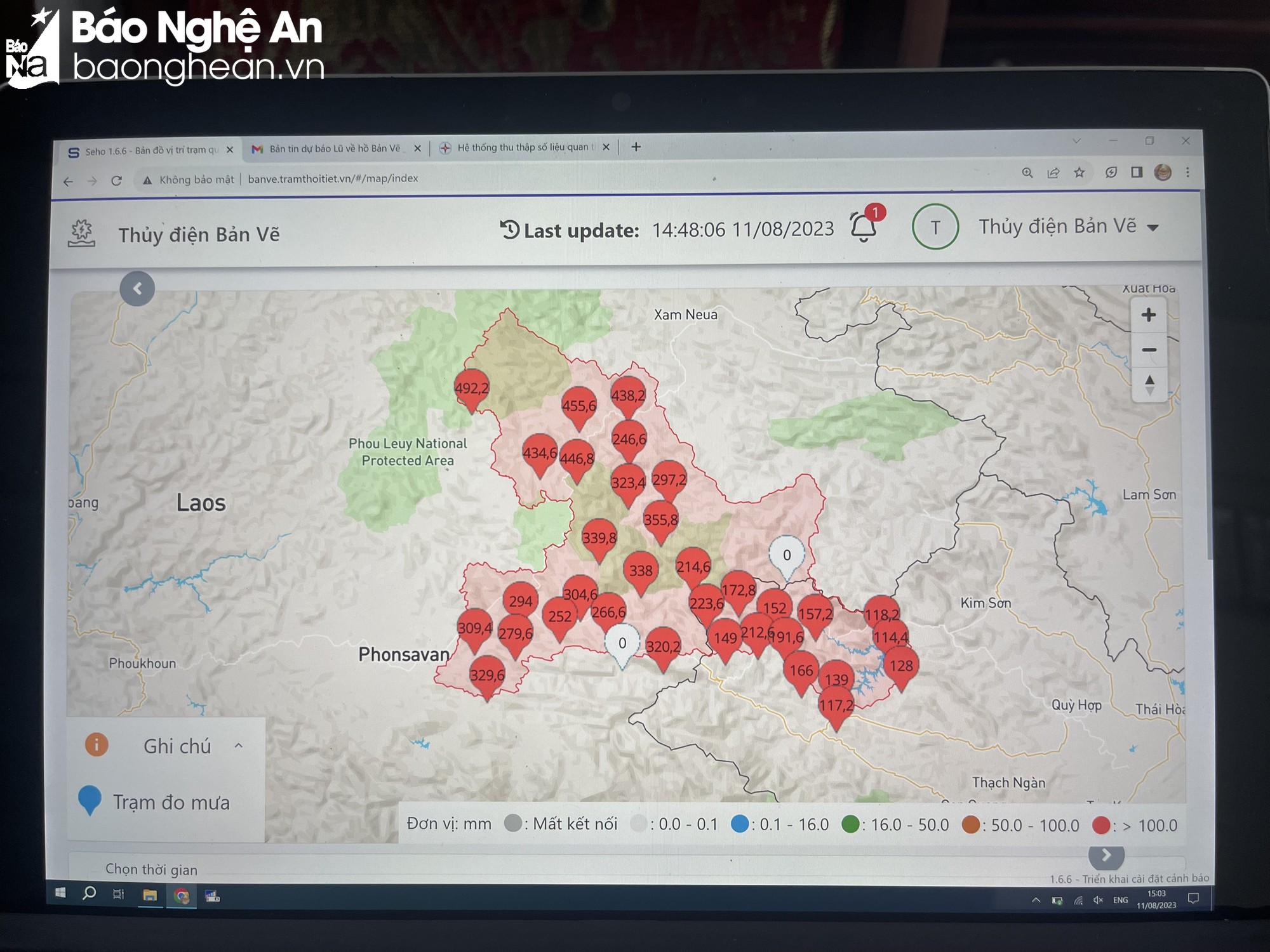
Engineer Ngoc cited the effectiveness of automated monitoring data as an example. This is especially true in flood control and prevention efforts in recent years, which have been consistently effective. Most recently, from August 3-9, 2023, monitoring results showed rainfall of 492mm at Nam Non (in Hua Phan province, Laos), while stations in Vietnam, such as Mai Son commune (Tuong Duong district), recorded only 157mm of rainfall, and Huu Khuong commune (Tuong Duong district) recorded 114mm. This indicates a major flood occurred upstream of Nam Non. As of August 11, 2023, the water level in the Ban Ve hydroelectric reservoir was measured at 187.11m, nearly 30m higher than before the flood (158m). Without automated monitoring stations, when floods occur, it will be difficult to operate reservoirs and control floods to ensure safety for downstream areas.
Increase the density of the monitoring network.
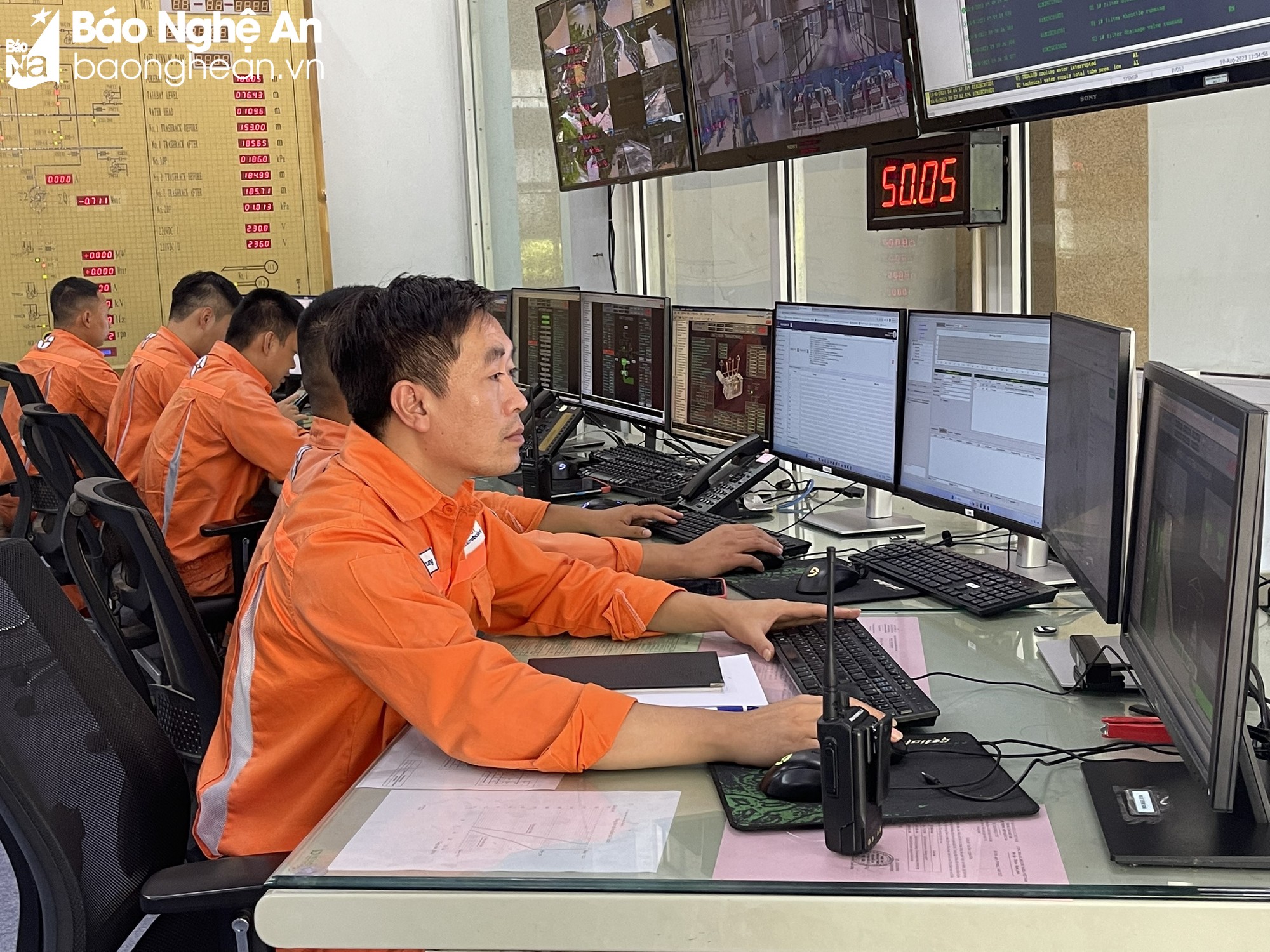
Engineer Nguyen Van Ngoc also stated that, to ensure the effective operation of monitoring equipment, before the rainy season, Ban Ve Hydropower Company sends staff to inspect the operational status and maintain the equipment to ensure reliable monitoring results. If any data is abnormal, they will ask collaborators to check it. Because the monitoring stations must be located in populated areas with phone coverage, there have been times when travel between Vietnam and Laos has been difficult due to the Covid-19 pandemic, so they have had to rely on a team of collaborators to inspect and maintain the equipment. Specifically in 2023, Ban Ve Hydropower Company conducted inspections from April 11th to 27th.
To better understand the current automated rainfall monitoring system, we also met with Dr. Nguyen Xuan Tien, Deputy Director of the North Central Region Meteorological and Hydrological Station. According to Dr. Tien, rainfall is the input data source for flood forecasting. In tropical regions like ours, the main cause of floods is rain. Before 2019, only satellite cloud imagery was used to forecast rainfall, resulting in low accuracy and many errors. The most typical example is the flash flood on the Nam Non River in 2018, which caused significant damage.

Since 2019, data sent from automatic rain gauge stations has yielded invaluable insights. Not only does it predict rainfall and floods, but the data also helps assess rainfall forecasts, serving as a benchmark to verify unpredictable weather predictions and warnings. Importantly, the data is stored and stored for extended periods, which is crucial for calculating and operating reservoirs and developing flood control scenarios. Having a long data series allows for more accurate hydrological calculations for these reservoirs, enabling more efficient water regulation to support production and daily life.
In principle, after automatic rainfall data is transmitted to the center, meteorological and hydrological experts will use hydrological models to calculate the inflow of water. With the data in hand, a forecast can be provided to relevant agencies and units within 10-20 minutes.
Dr. Nguyen Xuan Tien - Deputy Director of the North Central Region Meteorological and Hydrological Station
However, it's also important to note that in hydrological forecasting, rainfall forecasts are only short-term predictions. To ensure accuracy, additional hydrological stations are needed to measure water flow at specific times. Forecasting rainfall 24, 48, and 72 hours in advance is particularly challenging. This is because the river basins of major rivers in Nghe An are mostly located in Laos, and Laos lacks meteorological stations (3-4 stations are needed to improve accuracy). Therefore, accurate upstream data is unavailable.
"The principle of hydrology is that the nearest rain area will carry water first (in the first hour), then in the second hour, more distant areas will carry water, and when the water from distant areas merges with nearby areas, a flood peak will appear. Having these hydrological monitoring stations would help predict the flood peak. And once the peak is identified, there will be time to adjust and manage flood prevention and control efforts downstream. However, currently, on the Nam Mo river branch (flowing from Ky Son), there is only a hydrological station in Muong Xen commune, so it does not yet meet the requirements for accurate forecasting. We have proposed this at many conferences and forums, but it has not yet been implemented," added Dr. Nguyen Xuan Tien.
According to the review, the automatic rain gauge system in the province is currently relatively well-equipped with 91 monitoring points. However, this network is still insufficient to meet forecasting needs, as Nghe An is a large province with unique climatic and hydrological characteristics and is prone to severe natural disasters nationwide. Every year, natural disasters occur frequently, causing significant damage to people and property. In particular, climate change has had a strong impact, altering some climate patterns, with more extreme weather events occurring. Meanwhile, the current equipment and machinery in some areas and stations are either insufficient or outdated, failing to meet forecasting requirements.
For rapidly occurring natural disasters such as thunderstorms, lightning, flash floods, and landslides, forecast and warning bulletins have been issued fully, promptly, and accurately according to procedures. However, they are not truly effective in terms of timing, the warning area remains vast, and communication efforts still have many shortcomings.
“Furthermore, due to socio -economic development, the demand for highly accurate meteorological and hydrological information is increasing, especially for the short, steep rivers and streams in Nghe An, where floods rise and fall quickly. In addition, the regulation by hydroelectric reservoirs makes flood forecasting and warning difficult and less accurate… Therefore, it requires careful planning and investment in installing more equipment to increase the density of warning ‘eyes,’ in order to better serve the work of forecasting and warning of natural disasters,” emphasized Dr. Nguyen Xuan Tien.
Source





![[Photo] General Secretary and President To Lam presides over the meeting to approve the draft report on the results of the second inspection by the Politburo of the Standing Committee of the Hanoi City Party Committee.](https://vphoto.vietnam.vn/thumb/1200x675/vietnam/resource/IMAGE/2026/05/26/1779789811432_a2-bnd-4430-9620-jpg.webp)





























































































Comment (0)