

" IF WE'RE NOT CAREFUL, WE'LL HAVE TO HIRE EVERYTHING TO FOREIGNERS"
On February 20th, the University of Transport Technology (UET) signed an agreement with the Vietnam Railways Corporation ( VNR ) to cooperate in leveraging strengths, improving the quality of human resources, and promoting research and application of science and technology in the railway sector. At the signing ceremony, Mr. Hoang Gia Khanh, General Director of VNR, stated: "We have determined that in the next 10 years, the entire state resources will essentially be dedicated to the operation of the railway sector, including national and urban railways. According to the plan, we must start construction of the Hanoi-Lao Cai railway before December 10th of this year and complete it before 2030. Therefore, we must organize human resource training starting now."

Students from the University of Transport and Communications are doing internships at the Ben Thanh - Suoi Tien Bus Station urban railway project (Ho Chi Minh City).
Also at this event, Mr. Nguyen Cao Minh, Head of the Hanoi Urban Railway Management Board, stated that Hanoi must complete 300 km of urban railway by 2035. This is a challenging goal given the very low starting point. In the past 20 years, Hanoi has only completed two inner-city railway lines, and the implementation process has encountered many obstacles, one of the reasons being the issue of human resource quality. "Not only is recruitment difficult, but hiring is also very difficult, from workers to engineers to experts. Even now, finding railway and urban railway experts is very challenging. The immediate challenge is that the construction process requires quality control, a quality control center is needed, and everything has to be outsourced to foreign companies, which is very difficult."
Recently, the National Assembly's Science , Technology and Environment Committee conducted surveys at several universities offering railway engineering programs. According to Dr. Ta Dinh Thi, Vice Chairman of the Committee, the current state of the universities' facilities and the availability of lecturers and experts reveals significant difficulties. Current resources rely primarily on student tuition fees, but few students are pursuing majors related to railways. "We recognize that training human resources for the railway industry is an urgent issue. Universities face significant challenges, and practical demands are high. In the near future, we will need to adopt new technologies, and if we're not careful, we'll have to hire all foreign personnel," Dr. Ta Dinh Thi shared.
Mr. Tran Van Khai, Standing Member of the National Assembly's Science, Technology and Environment Committee, also commented: "China builds thousands of kilometers of high-speed railway every year. We set a target of achieving the same number in 5-10 years, but will we be able to do it? Looking at the current situation and the requirements, it's truly worrying."
WHEN THE MARKET IS STILL IN… THEN THE FUTURE
According to experts, there are three main issues affecting the quality of human resource training for the railway industry in Vietnam today, all of which are problematic: instructors, facilities, and students. The first two factors indirectly impact the third (students), as the lack of qualified instructors and modern teaching equipment further discourages and discourages students from pursuing a career in railway engineering.
However, the biggest challenge remains attracting more students, especially talented ones, to study majors that serve the railway industry. According to Associate Professor Ngo Van Minh, Deputy Head of the Innovation and Technology Transfer Department at the University of Transport, with human resources serving the railway industry, we cannot let the market operate on its own, because in reality, the job market for the modern railway industry is still in the future. "Railway projects are in the investment and construction planning phase; no projects have been implemented yet. The need for railway engineers is in the future, not the present. Therefore, it is not yet possible to attract students to study these majors, which is why few students choose to study railway engineering," Associate Professor Ngo Van Minh said.
According to Associate Professor Ngo Van Minh, preparing human resources for a labor market that lacks it is primarily the responsibility of the state, along with the participation of businesses. Training a railway engineer is not just a matter of 2-3 months, but at least 4.5 years. Therefore, preparation must begin at least 5-7 years in advance (because it also requires training specialists to produce skilled teachers).
Currently, universities generally have policies to support students from disadvantaged backgrounds by waiving or reducing tuition and living expenses, and providing scholarships from the state budget and non-state funding sources. However, no university has a specific policy for students, trainees, and researchers in the railway engineering field due to insufficient resources. "To attract students, the government needs to have a policy of waiving/reducing tuition fees for students studying railway engineering. Priority should be given to expanding preferential interest rate student loans specifically for railway engineering students," Associate Professor Ngo Van Minh proposed.
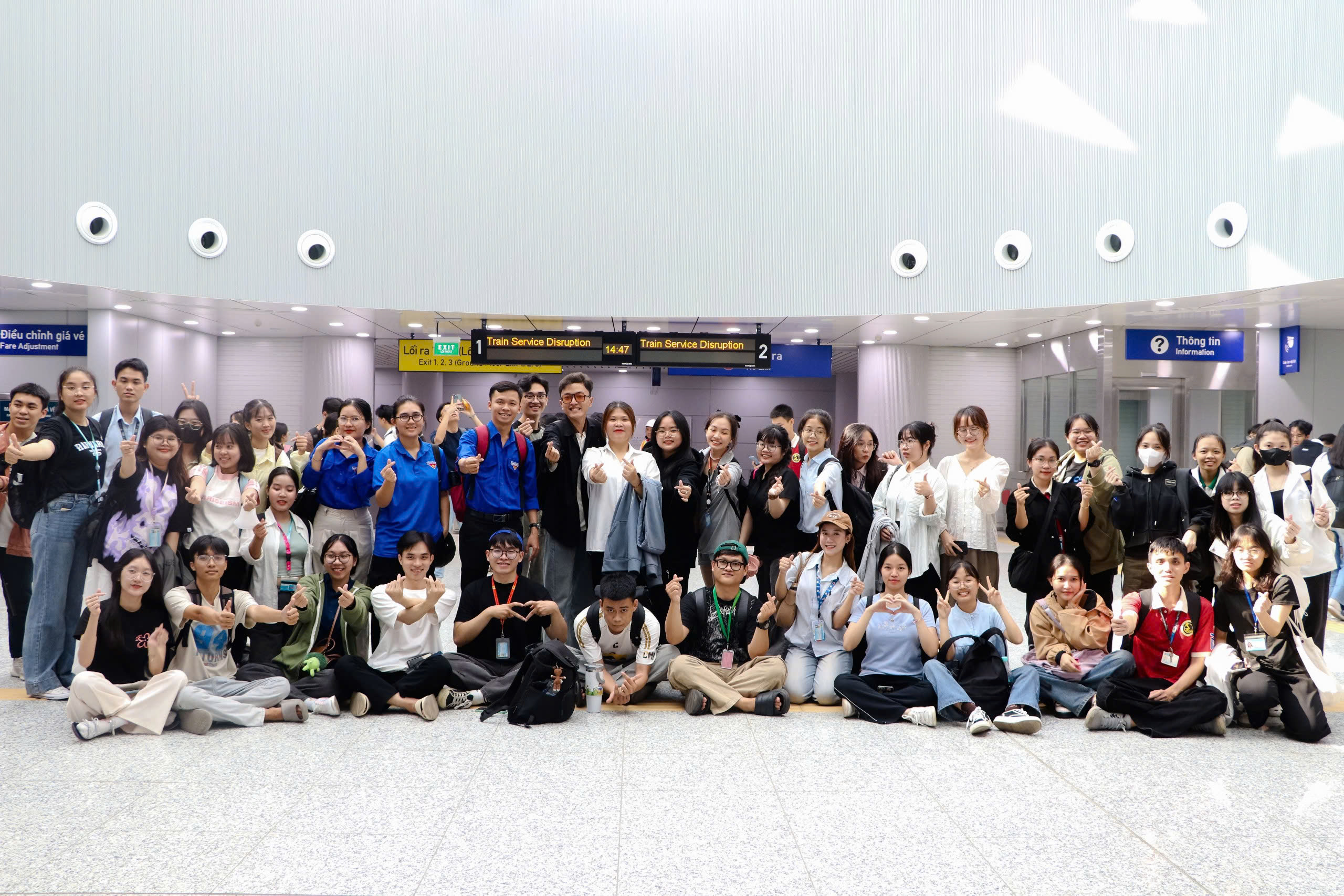
According to experts, the biggest challenge remains attracting more students, especially talented ones, to study majors that serve the railway industry.
THERE SHOULD BE AN ORDERING MECHANISM
According to Dr. Nguyen Ngoc Son, Standing Member of the National Assembly's Committee on Science, Technology and Environment, without breakthrough policies, it will be difficult to attract high-quality human resources to the railway industry. Granting scholarships and tuition waivers to attract students only addresses the symptoms, because most students, when choosing a major/specialization, are often influenced by the future prospects of that field of study. If future employment with good income is guaranteed, the attraction will certainly be greater than if only scholarships or tuition waivers are offered.
"With the draft revised Railway Law (currently under preparation), the agency in charge of drafting the law should include provisions for ordering the training of human resources for the railway industry. Our current context requires a sufficient supply of high-quality personnel in a short period, so we need to include a clearer and more specific policy in the law: a policy for ordering training from universities, or even designating universities with existing resources in terms of lecturers, facilities, and training programs to receive these orders," proposed Dr. Nguyen Ngoc Son.
Similarly, Associate Professor Nguyen Thanh Chuong, Chairman of the University Council of the University of Transport, said: "The tuition fee exemption policy has brought success in terms of student recruitment quality for teacher training, police, and military majors… However, for fields with a narrow labor market like the railway industry, I fear that the tuition fee exemption policy will not be enough to attract students. Because after graduation, students still face the risk of unemployment. Perhaps we should broaden the incentives and add a policy of commissioned training for railway personnel."
Warning about the "shifting from one extreme to the other" phenomenon.
Mr. Nguyen Ngoc Dong, former Deputy Minister of Transport, warned of the shift from one extreme to the other. "For so many years, nobody needed them, but now suddenly the demand is very high, so schools are rushing to train them. What will happen then? Therefore, we need to determine training needs and have a central authority to handle this. Then, there should be a specific training roadmap, because at a certain point, the enrollment quota must be reduced. Our lesson is still there, when we once aggressively recruited road engineers, only to later be unable to recruit them due to a labor market surplus," Mr. Nguyen Ngoc Dong stated.
He added: "Regarding the training program, we shouldn't just 'tear it down and start over.' There's no such thing as 'high-speed rail engineers,' we should have 'railway engineers.' This means that students should first learn about railways, then study additional subjects required for the job, such as control, signaling, train dynamics, aerodynamics, etc. The world does it the same way; they add some specialized subjects to the curriculum based on the basic program."
Source: https://thanhnien.vn/nghich-ly-dao-tao-nhan-luc-nganh-duong-sat-cap-hoc-bong-mien-hoc-phi-la-chua-du-185250221221618505.htm


![[Image] Nearly 125,000 Hanoi students completed the Literature exam for the 10th grade entrance exam.](https://vphoto.vietnam.vn/thumb/1200x675/vietnam/resource/IMAGE/2026/05/30/1780117233041_ndo_br_thiet-ke-chua-co-ten-2-png.webp)










![[Video] Nearly 125,000 Hanoi students begin the 10th grade entrance exam.](https://vphoto.vietnam.vn/thumb/402x226/vietnam/resource/IMAGE/2026/05/30/1780130133514_dung00-16-28-24still006-png.webp)
















![[Photo] Admire the coral "masterpiece" amidst the million-year-old heritage of Dak Lak province.](https://vphoto.vietnam.vn/thumb/1200x675/vietnam/resource/IMAGE/2026/05/30/1780107638639_y25-jpg.webp)




























































Comment (0)