

A relative of mine in Ho Chi Minh City bought the house almost 15 years ago. He moved in when his children were young, and now the eldest is in university, but for all these years, the thing that worries him the most is the lack of a land ownership certificate.
A few days ago, he called, sounding very happy. The neighborhood committee had just announced that his area might soon receive land ownership certificates after many years of waiting.
"The whole neighborhood was thrilled," he said. "It felt like the house was finally truly mine."
Unlocking hundreds of trillions of dong.
His joy stems from a recent policy of Ho Chi Minh City: removing obstacles for more than 60 real estate projects with approximately 68,000 houses, while striving to issue 61,200 land ownership certificates in 2026, equivalent to about 90% of eligible applications.
This is a very welcome decision, because what the city is doing is not just addressing a long-standing administrative procedure, but rather freeing tens of thousands of legally stalled houses to resume normal circulation.
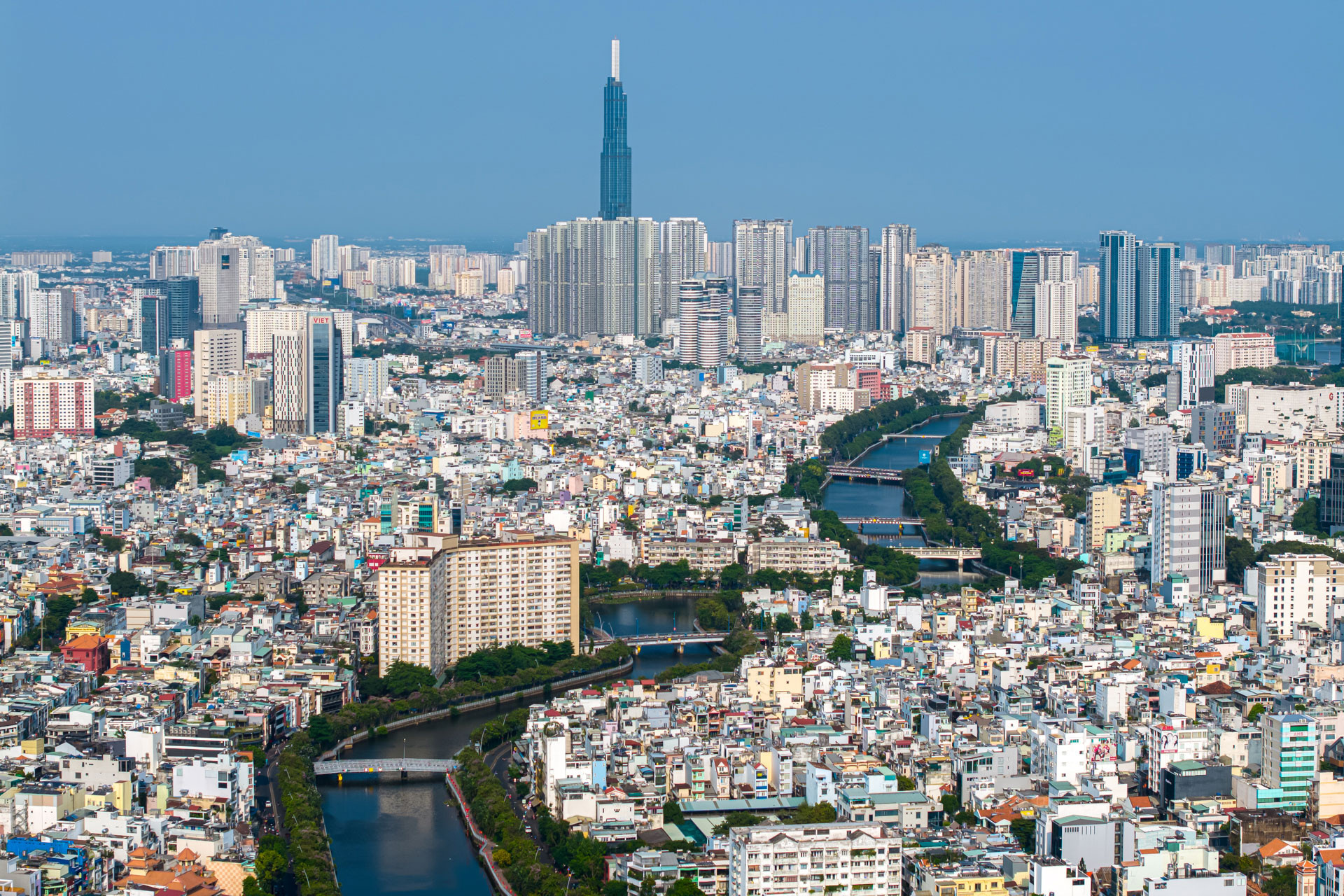
If we assume that each apartment costs several billion dong, while townhouses can cost tens of billions of dong, then resolving the issues for approximately 68,000 houses and issuing 61,200 land ownership certificates in 2026 means that hundreds of trillions of dong worth of assets will have their legal status finalized and return to normal circulation in the market.
Once granted a land title, people not only feel more secure about their ownership rights, but can also buy and sell transparently, transfer ownership legally, mortgage for loans, and access formal credit.
A house ownership certificate is not simply a document certifying home ownership; it also helps people transform their property into capital for business, investment, or to manage their family's long-term financial needs.
Notably, after nearly a year and a half of operation, Task Force 1645 has held dozens of meetings to resolve obstacles for hundreds of projects. Tens of thousands of apartments have had their legal issues resolved, while thousands of files have been transferred to the tax authorities to complete the procedures for issuing ownership certificates.
Perhaps because it is the place where economic life is most vibrant and where it clashes most strongly with market realities, Ho Chi Minh City is also often the locality that has to come up with solutions sooner than the rest.
Recently, thousands of Novaland customers received news that many projects are accelerating the process of issuing land ownership certificates after a long period of legal delays. Aqua City, in particular, is expected to begin handing over certificates from June 2026, while the company stated that approximately 4,300 land ownership certificates in Ho Chi Minh City could be issued this year.
What's noteworthy is not just the number of land ownership certificates, but the fact that the removal of legal obstacles is helping the market gradually regain confidence after years of homebuyers being haunted by projects that "have houses but no ownership certificates."
The story at HH Linh Đàm outside Hanoi.
What is happening in the HH Linh Dam area in Hanoi shows that the issue of issuing land ownership certificates to residents is no longer simply a matter of paperwork, but a problem of addressing a social reality that has existed for more than a decade.
Over 10 years ago, many people bought apartments here for around 15-17 million VND/m². Today, even without land ownership certificates and with most transactions still conducted via handwritten documents, apartment prices have risen to approximately 40 million VND/m². People still live there, houses are still being bought and sold, prices continue to rise, only the paperwork hasn't kept pace.
It's noteworthy that there are currently around 40,000 residents living stably in the HH Linh Dam area. After all these years, what most residents hope for most is not investment profits or moving elsewhere, but that their biggest home will finally be fully recognized by law.
Hanoi authorities are currently surveying and exploring solutions for the HH Linh Dam area.
Perhaps Ho Chi Minh City's approach is a valuable lesson to learn: addressing violations by developers using appropriate legal tools, while simultaneously protecting the rights of residents who have purchased homes, settled in, and dedicated their entire lives to those properties.
Unblocking bottlenecks
One of the most important changes now is to begin separating the rights of innocent homebuyers from the wrongdoings of developers. Violating businesses must be punished, but people cannot be left indefinitely stranded.
Therefore, the National Assembly issued Resolution No. 29/2026/QH16 on a special mechanism to handle stalled projects and land violations that have lasted for many years.
The spirit of this resolution is quite clear: not to overlook wrongdoing, but also not to allow thousands of projects and vast amounts of assets to remain idle in the economy.
According to the Ministry of Agriculture and Environment, by March 2025, the whole country had 4,489 land-related projects facing difficulties and obstacles, with a total investment of over 3.35 million billion VND.
In the context of Vietnam needing more growth drivers, unblocking stalled projects is perhaps the quickest way to unlock the capital and assets that are currently stuck.
Ho Chi Minh City is currently perhaps the leading locality in this approach. Task Force 1645 meets weekly to resolve issues for each specific project, and allows people to directly submit applications for land use rights certificates instead of being entirely dependent on the investor as before.
The model of Ho Chi Minh City is being closely followed by many residents in stalled projects across the country. They hope that the local authorities where they live will be as proactive as the city government, streamlining procedures to issue land ownership certificates to residents.
In any case, the residents have already paid for their houses and have been living there for a long time, so how can you "force" them to leave those houses?
The most noteworthy aspect of Ho Chi Minh City's approach is that the city is proactively seeking ways to bring assets that have been "stuck" for many years back into normal circulation within the economy.
Ultimately, what people sometimes need isn't a grand policy, but simply the feeling that the house they've lived in for over a decade finally truly belongs to them.

Source: https://vietnamnet.vn/cap-so-do-so-hong-cho-dan-tp-hcm-danh-thuc-hang-tram-nghin-ty-dong-2514014.html



![[Image] A brilliant symphony and explosive power in the skies of Da Nang.](https://vphoto.vietnam.vn/thumb/1200x675/vietnam/resource/IMAGE/2026/05/31/1780196945787_anh-man-hinh-2026-05-31-luc-10-08-51.png)

















![[Video] Sunset at Lap An Lagoon – Where the sun sets over the fishing nets](https://vphoto.vietnam.vn/thumb/340x192/vietnam/resource/IMAGE/2026/05/31/1780192137701_beach-landscape-sea-water-nature-grass-745871-pxhere-com.jpeg)



































































Comment (0)