


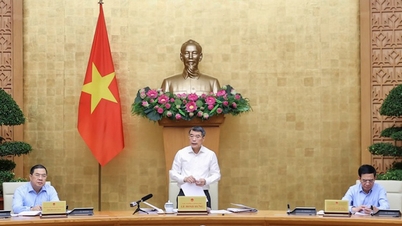
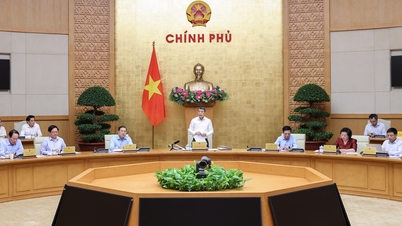
This regulation stipulates the working principles; the system of responsibilities; working relationships; the procedures for handling work; the work program; the information and reporting system; and other matters related to the activities of the Government , the Prime Minister, and members of the Government.
This regulation applies to the Government, the Prime Minister, members of the Government, ministries, ministerial-level agencies, People's Councils, People's Committees at the provincial level (hereinafter referred to as ministries, agencies, and localities), and agencies, organizations, and individuals that have working relationships with the Government and the Prime Minister.
Principles of Government operation
All government activities must comply with the Constitution and laws, ensure the leadership of the Party, and implement the principle of democratic centralism. The government operates under a system that combines the collective responsibility of the government with the responsibility of the Prime Minister and each member of the government. The government makes decisions by majority vote on matters within its jurisdiction.
Emphasize personal responsibility and exemplary conduct of government members and heads of ministries and ministerial-level agencies. Each task should be assigned to only one lead agency, which will bear primary responsibility, with relevant agencies coordinating its implementation.
Ensure that work is handled within the proper authority, procedures, and processes as prescribed by law and this Regulation; strengthen coordination, information exchange, and ensure uniformity in handling work.
Implement assignment, delegation, and authorization in accordance with legal regulations, coupled with individualized responsibility, strengthened inspection, supervision, and control of power; ensuring centralized leadership and unified management by the Government.
Strictly enforce administrative discipline and order; implement the principle of collective leadership and individual responsibility, ensuring that subordinates obey and comply with the leadership, direction, and assignments of their superiors.
Ensuring openness, transparency, and accountability in the organization and operation of the Government, ministries, ministerial-level agencies, and localities in accordance with the law; creating conditions for citizens, businesses, and social organizations to participate in, monitor, and contribute to the development and implementation of policies and laws.
We encourage and protect officials who dare to think, dare to act, dare to advise, dare to take responsibility, and propose new and complex issues for the common good.
Promoting the application of science and technology, digital transformation, and data-driven governance, including real-time data, in leadership and management; building a unified, seamless, continuous, democratic, rule-of-law, professional, modern, effective, and efficient administrative system that serves the people.
The responsibilities, scope, and methods of government work.
The Government uniformly manages the national administration; fully performs its duties and powers as prescribed by the Constitution and laws; and closely coordinates with relevant agencies and organizations in carrying out its duties and powers as prescribed by law.
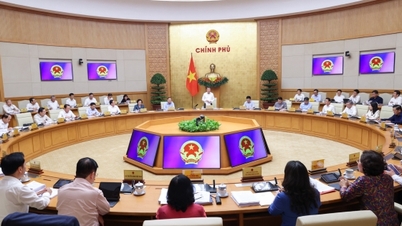
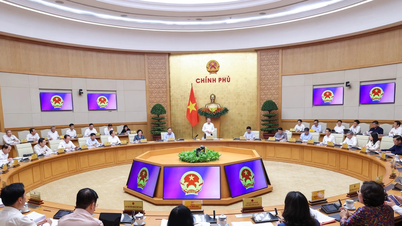
The Government decides on matters within its authority in one or both of the following forms: a) Discussion and decision at a Government meeting; b) Decision by ballot of Government members or other written form.
Government decisions must be approved by more than half of the total number of Government members. In case of a tie vote, the decision voted on by the Prime Minister shall be implemented.
The Government assigns the Prime Minister or the Deputy Prime Minister in charge of the relevant field to consider and decide on urgent issues requiring immediate attention within the Government's authority. The Prime Minister, Deputy Prime Minister, or Minister/Head of a ministerial-level agency assigned to the task shall report on the decisions made at the next Government meeting.
The Government and the Prime Minister shall implement decentralization and delegation of authority in accordance with the law, ensuring compliance with the principle of defining authority while ensuring its implementation, accountability, and the inspection, supervision, and control of power as prescribed by law.
Members of the Government are responsible for fully performing their duties and powers as prescribed by the Constitution and laws; proactively and actively participating in resolving the Government's common affairs; discussing, voting on, and being responsible for the Government's decisions; and bearing full and comprehensive responsibility before the Government, the Prime Minister, and the law for the matters to which they are delegated or authorized.
Issues discussed and decided by the Government
Proposals, projects, and draft documents submitted to the National Assembly and the Standing Committee of the National Assembly in accordance with the law include: legislative orientations for the term, annual legislative programs and adjustments to legislative programs; policy proposals; draft laws, ordinances, draft resolutions, and other documents as prescribed by law.
Policies and legal regulations fall under the authority of the Government.
Strategies, plans, and programs for socio-economic development over the long term, medium term, and annually; medium-term and annual public investment plans; five-year public debt borrowing and repayment plans; national five-year financial plans; state budget estimates and annual central budget allocation plans; state budget final accounts; and other matters within the authority of the Government or submitted to competent authorities as prescribed by law.
Proposals regarding the organizational structure of the Government; the establishment and abolition of ministries and ministerial-level agencies; the establishment, dissolution, merger, and division of administrative units; boundary adjustments; and renaming of administrative units in accordance with the law, to be submitted to competent authorities for decision.
The socio-economic situation is assessed periodically on a monthly, quarterly, six-monthly, or annual basis, as well as important and unexpected issues, and the main tasks and solutions for directing and managing the implementation of the socio-economic development plan.
Policies for the development of industries, sectors, regions, and localities fall under the authority of the Government as stipulated by law.
The authority to temporarily suspend, halt, or repeal legal documents rests with the Government as prescribed by law.
Reviewing the leadership and management work of the Government and the Prime Minister, and the implementation of the Government's working regulations.
Other issues that the law stipulates the Government must discuss and decide upon, or that the Prime Minister decides to bring up for discussion.
Working relationships between the Government, the Prime Minister, Ministers, and heads of ministerial-level agencies with agencies and organizations within the political system.
The Government and the Prime Minister direct ministries, agencies, and localities to organize and implement resolutions, decisions, conclusions, and regulations of the Central Committee, the Politburo, the Secretariat, and the Government Party Committee in accordance with the Party's guidelines and policies, the Constitution, and the laws of the State.
The Government, the Prime Minister, and members of the Government advise the Party Committee of the Government on leading the implementation of the Government's tasks, institutionalizing, concretizing, and promptly organizing the implementation of the Party's guidelines, policies, and resolutions, and implementing reporting according to their functions, duties, and the Working Regulations of the Party Committee of the Government. Periodically, monthly, quarterly, or when necessary, the Government, the Standing Committee of the Government, and the Prime Minister meet with the Standing Committee of the Party Committee of the Government and the collective Standing Committee of the Party Committee of the Government to reach consensus on major policies, orientations, projects, and important contents in accordance with the Working Regulations of the Party Committee of the Government.
The Government, the Prime Minister, Ministers, and heads of ministerial-level agencies shall closely coordinate with the National Assembly, the Standing Committee of the National Assembly, and other agencies of the National Assembly; fully implement the reporting, explanation, and question-answering regime as prescribed by law; and proactively research, resolve, and respond to proposals from National Assembly deputies and voters within their authority.
The Government, the Prime Minister, Ministers, and heads of ministerial-level agencies shall coordinate with the Central Committee of the Vietnam Fatherland Front and the central agencies of political and social organizations in carrying out their duties and powers; create conditions for these organizations to participate in policy and lawmaking, social supervision and criticism in accordance with the law; and shall be responsible for researching, resolving, and responding to proposals from the Central Committee of the Vietnam Fatherland Front and political and social organizations.
The Government leads the work of People's Committees at all levels; guides and inspects People's Councils at all levels in the implementation of the Constitution, laws, resolutions of the National Assembly, ordinances, resolutions of the Standing Committee of the National Assembly, orders and decisions of the President, resolutions and decrees of the Government, decisions and directives of the Prime Minister; checks the constitutionality and legality of resolutions of People's Councils; creates conditions for People's Councils to perform their duties and powers as prescribed by law; and promptly considers and resolves proposals of local authorities and voters.
Provincial People's Committees may propose to the Government, the Prime Minister, Ministers, and heads of ministerial-level agencies the delegation of authority to competent agencies, organizations, units, and individuals at the local level to perform tasks and exercise powers in accordance with the capabilities and practical conditions of the locality. After receiving proposals from competent agencies, organizations, units, and individuals at the local level, the Government, the Prime Minister, Ministers, and heads of ministerial-level agencies are responsible for considering and resolving them; if they disagree, they must respond in writing stating the reasons.
Working relationship between the Government, the Prime Minister, Ministers, and heads of ministerial-level agencies with social organizations and socio-professional organizations.
The Government, the Prime Minister, Ministers, and heads of ministerial-level agencies shall establish and maintain working relationships with social organizations and socio-professional organizations in accordance with the law; create conditions for these organizations to participate in consultation, feedback, and social critique of policies, draft legal documents; and promptly receive, study, explain, and incorporate valid opinions and recommendations.
Promoting the role of social organizations and socio-professional organizations in disseminating information, mobilizing support for the implementation of policies and laws; participating in monitoring and providing feedback on implementation; strengthening information exchange and dialogue to promptly grasp social opinions, contributing to improving the quality of policy formulation and the effectiveness of policy and law implementation.
Openness, transparency, information provision, and accountability.
The Government, the Prime Minister, the Deputy Prime Ministers, and the members of the Government shall ensure openness and transparency in their operations; they are responsible for providing complete and timely information on policies, decisions, and the results of their direction and management as prescribed by law.
Information disclosure and provision are primarily carried out through mass media, electronic portals, digital platforms, and interconnected information systems, ensuring convenient access, exploitation, and use of information for citizens and businesses.
The Government, the Prime Minister, the Deputy Prime Ministers, and members of the Government proactively receive, process, and respond to opinions and suggestions from citizens, businesses, and society in accordance with the law; promptly identify issues and have quick and appropriate policy responses in line with practical developments.
The Minister and Head of the Government Office is the Government spokesperson; presiding over the provision of information on Government activities, organizing press conferences, and implementing other forms of information dissemination as prescribed. Ministries, agencies, and localities are responsible for coordinating, providing timely and accurate information, sending leaders from their respective ministries and agencies to attend press conferences, directly answering questions, and being responsible for providing timely information on matters within their areas of expertise.
Handling cases of non-compliance with the Regulations.
Ministers, heads of ministerial-level agencies, and chairpersons of provincial People's Committees are directly responsible for directing the serious, full, and timely implementation of the regulations in this Regulation, administrative discipline and order, and resolutions, decisions, and directives of the Government, the Prime Minister, and the Deputy Prime Ministers. They are prohibited from speaking out against or acting contrary to these resolutions, decisions, and directives. In case of differing opinions, they must still comply but may present their views to the level that issued the resolution, decision, or directive and may reserve their opinions. Depending on the nature, extent, and consequences of not complying with the above regulations, Ministers, heads of ministerial-level agencies, and chairpersons of provincial People's Committees are responsible for self-criticism and submitting explanatory reports to the Prime Minister; the results of implementation will be publicly disclosed as directed by the Prime Minister.
Ministers, heads of ministerial-level agencies, and chairpersons of provincial People's Committees are directly responsible for directing the review and handling of cases of non-compliance with the regulations in this Regulation by relevant units and individuals, and publicly disclosing the results of the handling on the Government's electronic information portal and the electronic information portals of the relevant ministries, agencies, and localities.
The Government Office shall compile, report, and propose recommendations for handling cases of non-compliance with the regulations in this Regulation, report to the Prime Minister for consideration and decision, and publicly disclose them on the Government's Electronic Information Portal and the electronic information portals of relevant ministries, agencies, and localities.
Source: https://baotintuc.vn/thoi-su/quy-che-lam-viec-cua-chinh-phu-20260531134739071.htm
![[Photo] Solemn bathing ceremony and Buddha procession in Hue](https://vphoto.vietnam.vn/thumb/1200x675/vietnam/resource/IMAGE/2026/05/31/1780228263543_1-jpg.webp)
![[Photo] The General Secretary, President and his wife begin their state visit to the Philippines.](https://vphoto.vietnam.vn/thumb/1200x675/vietnam/resource/IMAGE/2026/05/31/1780230559452_anh-man-hinh-2026-05-31-luc-19-28-11.png)
![[Image] Hanoi Police officially crowned champions of V-League 2025/2026](https://vphoto.vietnam.vn/thumb/1200x675/vietnam/resource/IMAGE/2026/05/31/1780244769054_ndo_br_039d561b692be875b13a-jpg.webp)
![[Photo] Admire the coral "masterpiece" amidst the million-year-old heritage of Dak Lak province.](https://vphoto.vietnam.vn/thumb/1200x675/vietnam/resource/IMAGE/2026/05/31/1780221235105_anh-man-hinh-2026-05-31-luc-16-53-27.png)












![[Video] Sunset at Lap An Lagoon – Where the sun sets over the fishing nets](https://vphoto.vietnam.vn/thumb/340x192/vietnam/resource/IMAGE/2026/05/31/1780192137701_beach-landscape-sea-water-nature-grass-745871-pxhere-com.jpeg)































![[Photo] Admire the coral "masterpiece" amidst the million-year-old heritage of Dak Lak province.](https://vphoto.vietnam.vn/thumb/402x226/vietnam/resource/IMAGE/2026/05/31/1780221235105_anh-man-hinh-2026-05-31-luc-16-53-27.png)





























Comment (0)