

If this proposal is approved, the criteria will help drafting agencies to self-assess and open up a transparent monitoring mechanism, enhancing accountability and policy quality right from the initial stages.

Setting a "standard" for policy documents.
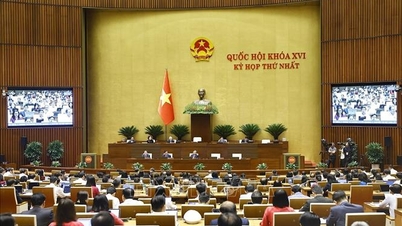
In the process of institutional reform and the drafting and promulgation of legal documents, the quality of policy dossiers is considered a crucial foundation for determining the quality of the entire document. However, recent experience shows that many dossiers are merely формаl, lacking quantitative analysis and failing to fully assess the impact.
According to Nguyen Quoc Hoan, Director of the Department of Legal Document Drafting (Ministry of Justice), many shortcomings in the law do not stem from a lack of regulations, but from regulations that are incorrect and do not address the right issues. As a result, some areas are in a state of both "shortage and excess." In some places, the lack of a legal framework causes confusion for management agencies and discourages businesses from implementing policies. Conversely, some areas are "tightened" by outdated management thinking, coupled with cumbersome administrative procedures, thus limiting innovation. These shortcomings both diminish the effectiveness of state management and directly hinder production, business activities, and innovation.
Faced with the urgent need to innovate the law-making process, the Ministry of Justice has proposed a set of criteria for evaluating and scoring ministries and ministerial-level agencies in the development of policy dossiers, projects, and draft legal documents. This is considered an important technical tool to quantify requirements, which have long been assessed primarily subjectively.
According to the proposal, the criteria should not only focus on checking the completeness of the documentation but also delve into evaluating the essence of the policy. The criteria are developed comprehensively, encompassing everything from identifying the policy problem, objectives, and proposed options, to assessing socio -economic impacts, compliance costs, feasibility, and alignment with the existing legal system.
It is noteworthy that the scoring is not merely a formality, but is linked to specific content. For example, a policy proposal is only highly rated when it clearly demonstrates the necessity of its issuance, provides supporting data, analyzes various options, and selects the optimal option based on a cost-benefit comparison.
The Ministry of Justice proposes that, in cases where, after consulting with members of the Government , a policy document, project, or draft document requires a redo of the drafting or review process due to not meeting requirements, 20 points will be deducted. Furthermore, if, after issuance, the competent authority decides to temporarily suspend or terminate the implementation due to errors in the evaluation and scoring period, all points will be deducted, resulting in a score of 0 points.
Increase accountability and limit the use of "framework laws" and "specific laws."
Upon receiving this information, lawyer Le Quang Vinh commented that the development of the criteria is not aimed at "creating more procedures," but rather at standardizing the quality of policy input. If the policy dossier is good and has been thoroughly analyzed, the subsequent drafting process will be much smoother, reducing the need for numerous revisions. Once approved, each policy must "pass through" a scoring process based on specific criteria. Avoiding responsibility or issuing vague regulations will become more difficult, helping to limit the situation of "framework laws"—that is, regulations that are vague, lacking specificity, and require further guidance.
Instead, policies should be designed in more detail from the outset, minimizing legal loopholes and risks during implementation. "Even if a regulation is correct in its objectives, if the implementation costs are too high or cause multiple interpretations among citizens and businesses, it will be difficult to put into practice," lawyer Le Quang Vinh analyzed.
From a citizen's perspective, Ms. Bui Ngoc Thoan (from Yen Hoa ward, Hanoi) stated: "The most important thing is that policies must be stable and predictable. Businesses and citizens are certainly very afraid of regulations that change constantly or are issued without specific guidance. If policy documents are carefully evaluated from the beginning, this risk will be mitigated." In addition, Ms. Bui Ngoc Thoan also suggested expanding consultation during the policy document development process. Accordingly, opinions should not be limited to management agencies, but should increase the participation of those directly affected, especially businesses and citizens. Furthermore, relevant agencies need to train and develop the staff involved in lawmaking to ensure they have sufficient capacity to meet new requirements.
Another issue raised is the monitoring and transparency mechanism. Legal experts and citizens alike believe that the results of policy application evaluations should be gradually made public, thereby creating pressure to improve quality and enhance accountability of relevant agencies. If implemented consistently and effectively, this would be an effective "measure," contributing to improving policy quality, perfecting the legal system, and better serving citizens and businesses.
Source: https://hanoimoi.vn/cham-diem-ho-so-chinh-sach-thuoc-do-moi-nang-chat-luong-xay-dung-luat-741704.html




































































































Comment (0)