

The film "Red Rain," a historical film about the war to defend Quang Tri Citadel , being produced by the People's Army Film Studio, leaves a profound impression not only because of its moving content but also thanks to its authenticity and meticulousness in setting construction.
Meticulous investment
The film "Red Rain," produced by the People's Army Film Studio, is a large-scale project, with 85% of its filming taking place in Quang Tri province. The film crew built sets at locations such as Hai Le commune, An Don ward (Quang Tri town), Trieu Thuong commune (Trieu Phong district), and Ta Con airport (Huong Hoa district).
One of the highlights of the film set is the reconstruction of Quang Tri Ancient Citadel in its pre-war state , followed by a reenactment of its destruction by bombs and bullets, creating a haunting image of desolation and ruin.
In addition, the scene of soldiers crossing the Thach Han River, which is up to 160 meters wide, was also recreated in real life to ensure its vividness. Other scenes such as the surgical station, the forward command post, and large-scale scenes of chaos and fleeing were also recreated at various locations throughout the province.
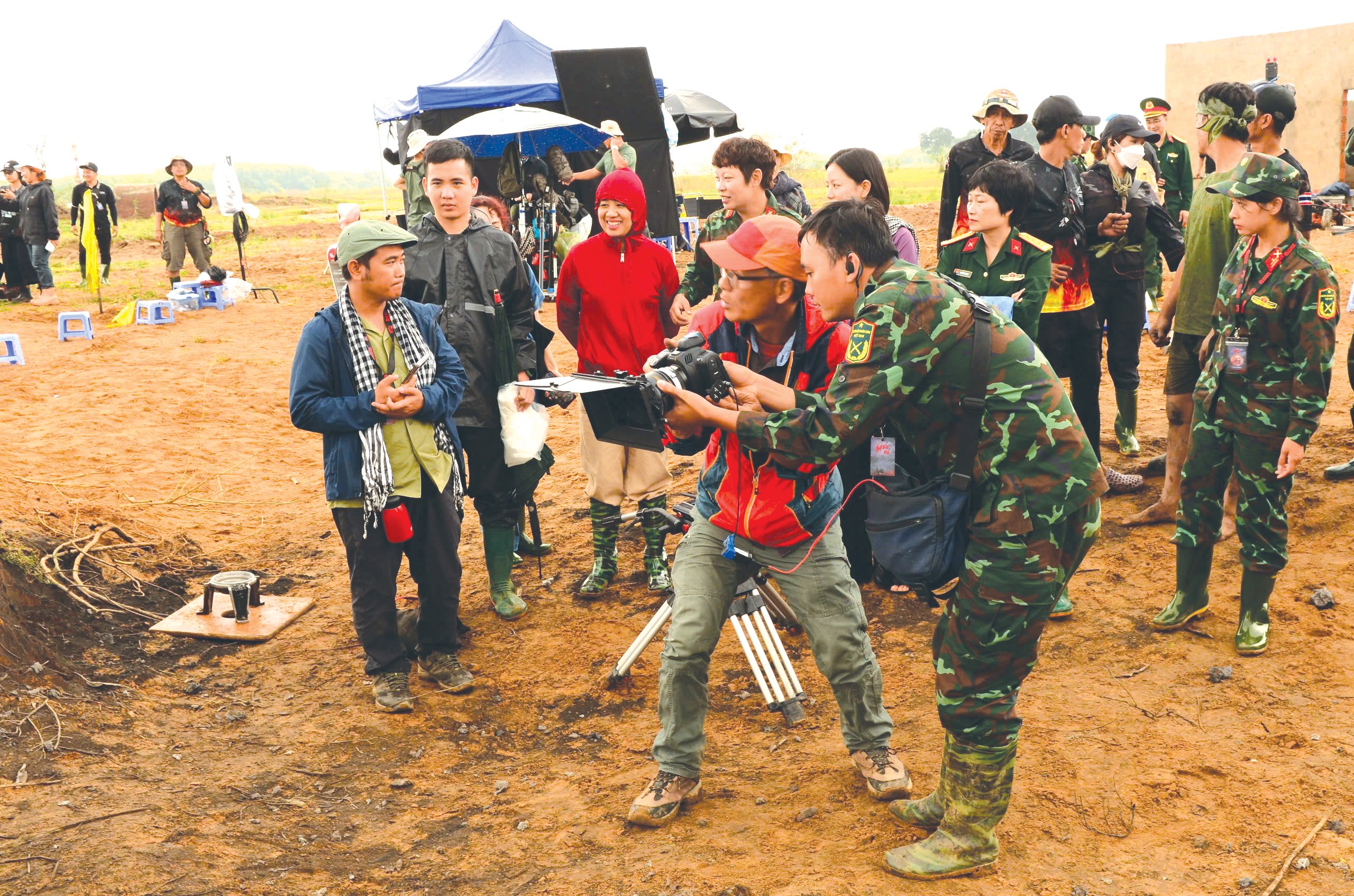
Scenes from the filming location of "Red Rain" in Quang Tri - Photo: TRAN HOAI
With a crew of 150 people, the film mobilized thousands of extras, including soldiers and local people. The film crew also used many heavy vehicles such as tanks and armored vehicles, creating impressive large-scale war scenes.
Major Nguyen Quang Quyet, the deputy director of the film "Red Rain," shared that the film crew made every effort to recreate the brutal atmosphere of war and the resilience of the people during that period. One of the film's special settings is the field bunker – designed to serve as a medical area for wounded soldiers.
The bunker was not just a shelter, but also had to reflect the hardships, shortages, and brutality of war. The film crew made full use of materials such as wood, stone, mud, and even old electrical wires from the war to create an authentic space.
In the filming, the crew tried to realistically recreate the living and fighting conditions of the soldiers. The beds initially intended for the wounded and sick were gradually replaced by stretchers as the number of patients increased. To some extent, even doors were repurposed as means of transporting the wounded.
On the table, basic medical instruments such as scissors, bandages, and even bottles of medicine are realistically recreated. These details show that the film crew put a lot of effort into creating a vivid experience, making viewers feel as if they are transported to a wartime setting.
The muddy scenes – an indispensable element of war – were meticulously recreated. The film crew poured water and mud into the bunkers to highlight the harshness and hardship of the battlefield. The actors had to move through the mud, demonstrating the struggles of the soldiers facing nature and bombs.
Recreating the brutal atmosphere of war.
Besides creating the physical setting, the film crew also paid special attention to conveying the tense and painful atmosphere of war. The sounds of bombs falling, calls for medical help, and the deathly silence during those harsh moments were realistically recreated.
Assistant director Nguyen Quang Quyet shared that the film crew's goal was to ensure that viewers not only saw but also felt the ferocity and sacrifice in each scene. This authenticity not only respects history but also conveys the resilient spirit of previous generations.
The setting in "Red Rain" goes beyond simply illustrating a historical period; it touches the hearts of viewers through its intricate details. Images of makeshift bunkers, simple hospital beds, and bloodstains evoke the noble sacrifices and profound losses of war. The film also skillfully incorporates simple yet deeply moving moments, such as soldiers chatting and encouraging each other in the bunker, or the marks of nature etched onto the battlefield. All of this creates a realistic, vivid, and emotionally charged historical portrayal.
The setting in "Red Rain" is not just a backdrop for the story, but also a special character that contributes to conveying the film's spirit. Through the skillful hands and dedication of the director, the setting has become a bridge for viewers to better understand the past, to feel the sacrifice and indomitable will of their ancestors. "Red Rain" is not just a film, but also a moving journey that takes us back to the glorious pages of our nation's history.
The images from the film set are not merely the backdrop for the story, but also vivid "witnesses," transporting viewers back to the brutal days of war. Small details such as moss clinging to the walls, the light from oil lamps, or bloodstains all contribute to evoking emotions, allowing viewers to feel both the suffering and the resilience of the previous generation.
Tran Hoai
Source: https://baoquangtri.vn/boi-canh-phim-mua-do-chan-thuc-va-cam-dong-191410.htm















































































Comment (0)