

In reality, when faced with issues such as delayed speech, ADHD, language disorders, autism spectrum disorder, learning difficulties, etc., many parents still struggle to accept that their child needs special education and are hesitant to seek early intervention.
Besides that, there are also fathers and mothers who sacrifice their work and time to be with their children, helping them make remarkable progress. The happiness they experience is immeasurable.
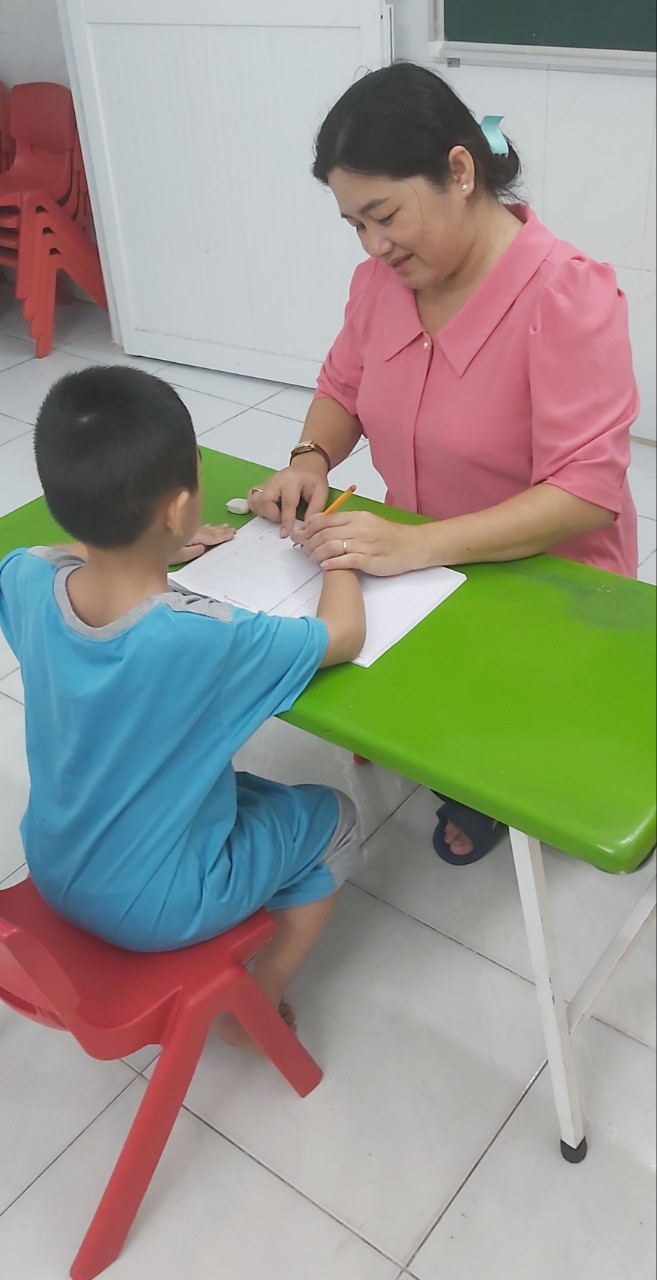
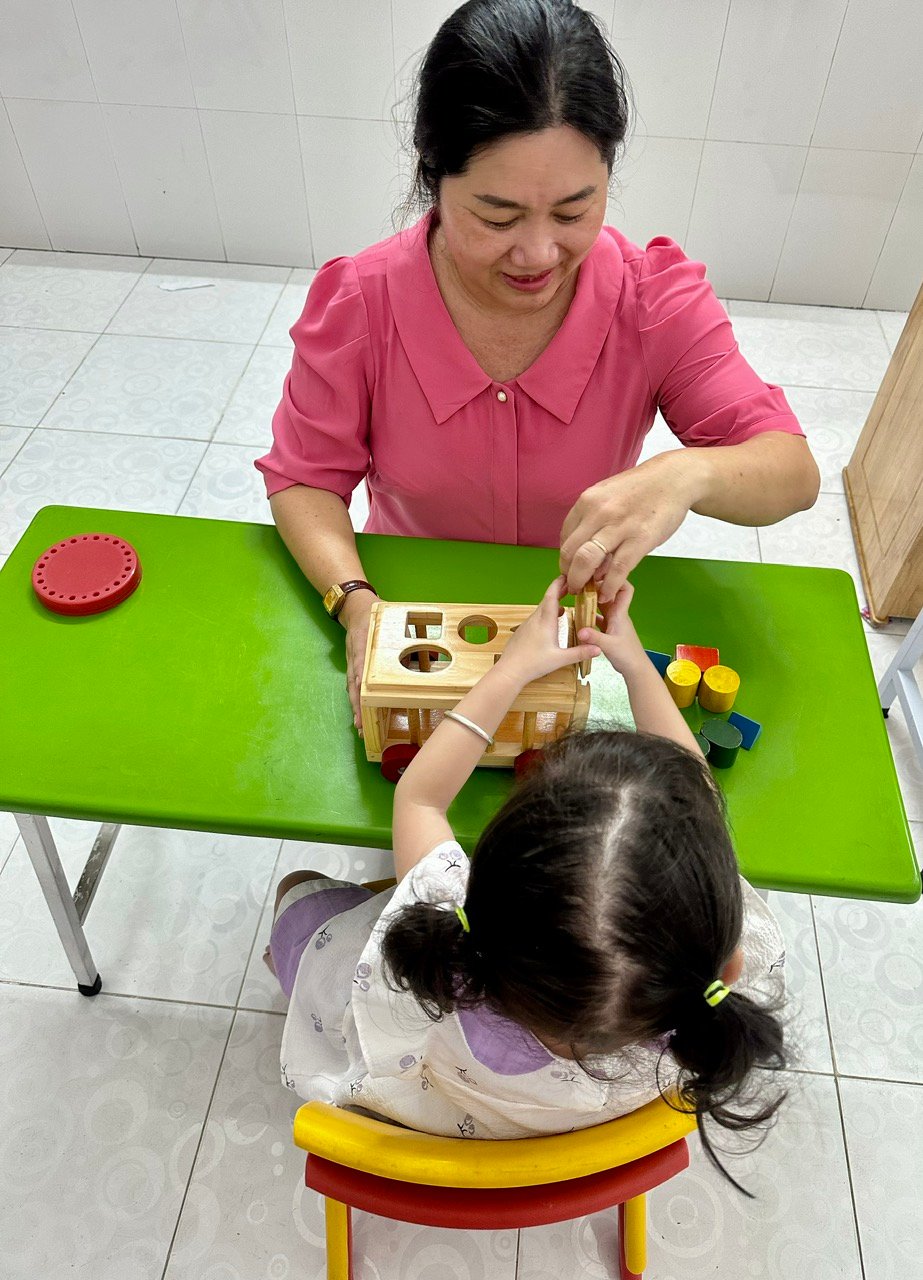
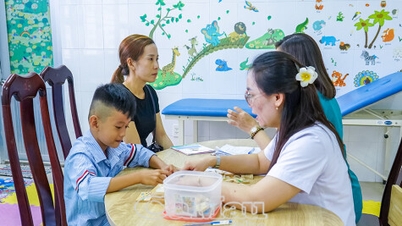
Ms. Nhu Y, a teacher at Tuong Lai Special School, provides one-on-one intervention for the children.
"HOW CAN I GET MARRIED IF I HAVE A DISABILITY CERTIFICATE?"
"That child is 24 months old. During the Covid-19 pandemic, everyone was glued to their phones and iPads from morning till night. Even when sleeping, the child was still dreaming, waving their hand in the air as if swiping an iPad. When the child was brought to school, they didn't interact with the teacher, saying they wouldn't look at her. The mother still said, 'There's nothing wrong with my child,'" Ms. NY, a teacher at a special education school in Ho Chi Minh City, told a reporter from Thanh Nien Newspaper. Upstairs, where Ms. Y. works, the sounds of children howling, shouting, crying, and laughing still resound, even in the middle of the day.
Ms. Y. said that each special needs child is a world of their own, no two are alike. There's a 4-year-old who doesn't speak Vietnamese but just babbles something, and if you listen carefully, it sounds like they're speaking Korean. Or there's a child whose voice is squeaky like a cartoon character's, but it's neither English nor Vietnamese.
"There's a boy, in third grade, very handsome, but he can't grasp the material when he goes to school, he's developmentally delayed. His parents accept him, but his grandparents absolutely refuse to take him for a developmental assessment. They're afraid he'll be certified as disabled. They say, 'If he gets a disability certificate, how will he ever get married?'" Ms. Y sighed.
Ms. NN, a teacher at a special needs school in Ho Chi Minh City, said that in the past two years she has provided one-on-one intervention for many children aged 15-30 months. Clearly, a segment of parents have become aware early on that their children exhibit behaviors different from their peers and accept that their children need early intervention.
However, some parents still find it difficult to accept their child's condition. Or, while the parents accept it, the grandparents object, adamantly refusing to allow the child to receive a disability certificate because they "fear the certificate will follow the child for life." Some children are still sent to regular schools until they can no longer attend, at which point their parents reluctantly bring them to a special needs school.
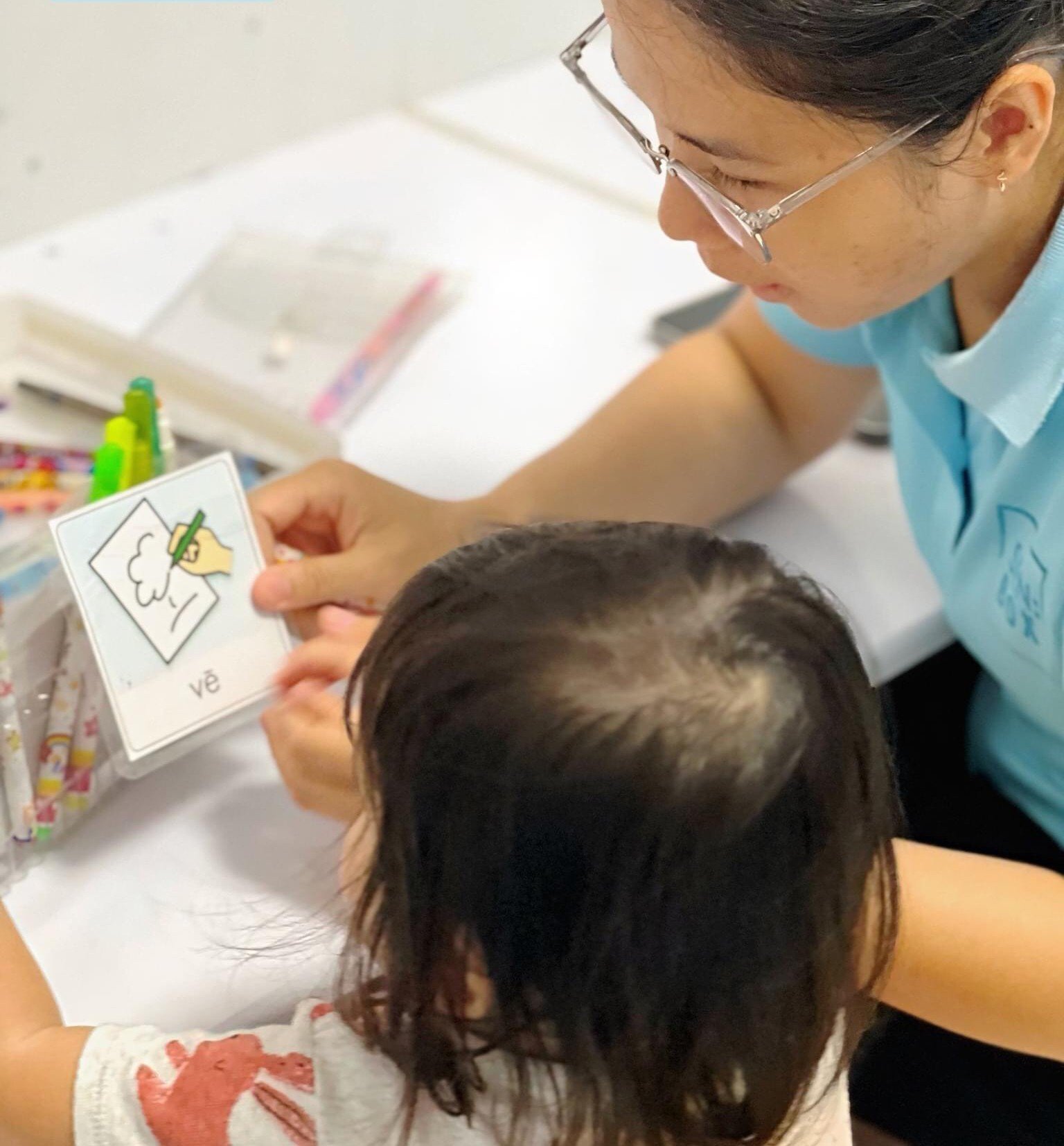
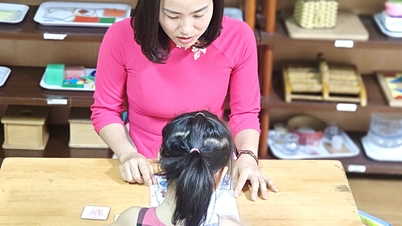
Teachers at SENBOX center during the process of teaching young children.
There are things more important than reading and doing math.
Ms. Tran Thi Hoai Nghi, a teacher at Kim Dong Primary School in Go Vap District, Ho Chi Minh City, has had many conversations and heart-to-heart talks with parents over the years when she noticed unusual signs in their children.
There was a mother who, after being advised to have her child tested and learning that he had autism spectrum disorder, almost abandoned her busy work schedule to be with him. The boy speaks English very well and has made remarkable progress; the mother cried tears of joy. Or there was a family with a 5-year-old son who couldn't speak; the wife quit her job, and the husband also reduced his workload so they could both spend more time with their son. After two years, the boy could speak, and the family was overjoyed.
But Ms. Nghi's advice wasn't always successful. Many times, she faced strong backlash from parents. They couldn't believe that their children, who were so beautiful and handsome, some even possessing exceptional talents like English or math skills, were actually suffering from learning disabilities, autism spectrum disorder, or ADHD.
"There are also cases where students have disability certificates from the local authorities, but their parents don't submit them to the school for various reasons. As a result, the children don't have an individualized education plan, which is a great disadvantage," Ms. Nghi confided.
Ms. Nguyen Thi Nhu Y, a teacher at Tuong Lai Special School on Ngo Quyen Street, District 5, Ho Chi Minh City, recounted the story of a recent student. When brought to her, the child was three and a half years old, unable to speak, constantly running around, unable to recognize colors or shapes, and would either put toys in her mouth or throw them away. The child's mother had not accepted her child's difficulties, saying, "My child is normal," and refused to consult a doctor.
"I kept encouraging her until the mother finally allowed her child to be tested and evaluated. The child was diagnosed with autism spectrum disorder. Although the child is 3 and a half years old, her intelligence is only like that of a 12-month-old baby. Since learning the results, the mother has been worried, calling me every day asking, 'Teacher, can you help the child? Can you teach her to be like other normal children? Can she go to first grade, learn to read and do math?'" Ms. Nhu Y shared.
"Many parents are very anxious about whether their children can learn to read and write, but there are things more important than that. For a child to be able to learn, they first need skills such as interaction and communication, play, attention span (observation, listening), language comprehension, self-care skills, social skills, etc.," Ms. Nhu Y explained.
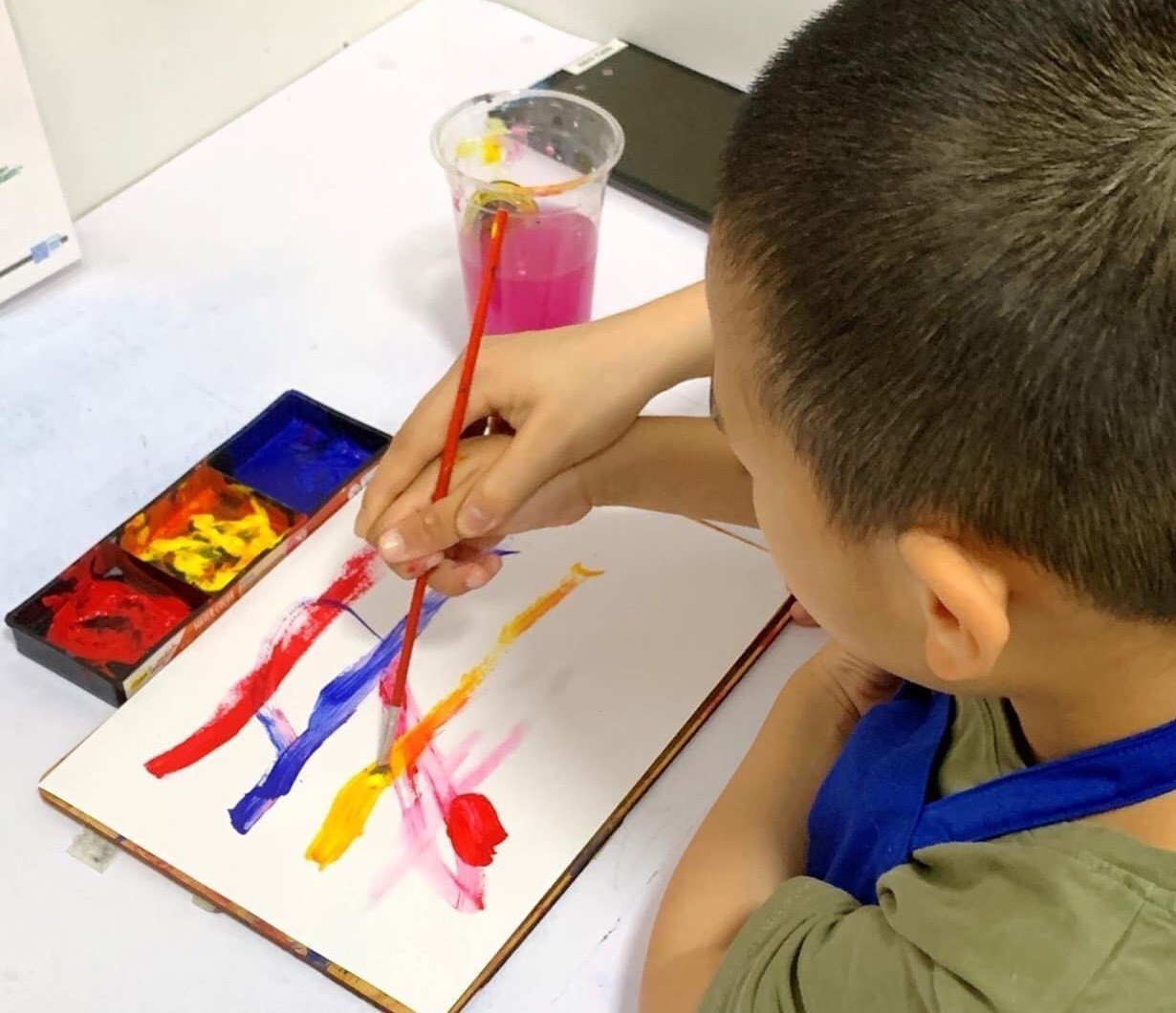
The children are being introduced to colors.
DO YOU THINK THAT TREATING AUTISM WITH MEDICINE, ACUPUNCTURE… WILL CURE IT?
Doyle Mueller is a teacher from Germany with over 25 years of experience working with children with learning disabilities around the world, including Germany, the UK, Australia, New Zealand, and Vietnam. He is currently the director and founder of the SENBOX teaching system and the special education center of the same name in District 7, Ho Chi Minh City.
This center is currently providing intervention for approximately 26 children with issues such as intellectual disabilities, developmental delays, autism spectrum disorder (ASD), attention deficit hyperactivity disorder (ADD), attention deficit hyperactivity disorder (ADHD), and defiant behavior. Children receive full-time intervention from 8 am to 5 pm each day, in either one-on-one or two-on-one settings.
Present at the workplace where Mr. Mueller and his colleagues were working, we observed children whose daily progress was monitored through visual evidence; individualized education plans (IEP); and the curriculum through AAC (Augmentative Alternative Communication).
The golden period for intervention.
Ms. Nguyen Thi Nhu Y stated that the period from 0-3 years old is the golden age for intervention for children needing special education. Intervention from 3-6 years old is considered late, but better late than never; parents shouldn't wait until their children are in their teens.
According to teachers, parents can bring their children to the Center for Supporting Inclusive Education for People with Disabilities in Ho Chi Minh City (under the Department of Education and Training of Ho Chi Minh City, 108 Ly Chinh Thang Street, District 3, Ho Chi Minh City) for diagnosis and assessment of their developmental level.
To ensure that interventions for children are carried out using scientifically sound methods, all teachers working here must be graduates of special education, psychology, and social education departments, possess knowledge of healthcare , and receive training every Saturday to gain more experience.
Speaking to Thanh Nien newspaper, Doyle Mueller expressed his concerns about some parents of children requiring special education, particularly their refusal to accept that their children need special education. There are still those who believe that taking their children to this doctor or that hospital for treatment with medication or acupuncture will cure them.
Or there are parents who bring their children to school or special education centers but don't know or don't dare ask the teachers what interventions they have done for their children, what exercises they have given them...
Mr. Mueller wants to change the perception of all parents, emphasizing the need to accept that children require special education, and that this should be done as early as possible to avoid missing the crucial period of a child's development. He particularly stressed that even after sending their children for intervention, parents shouldn't leave them entirely to the school or childcare facility. According to him, parents should be allowed to observe, understand, and ask "why" about the teachers' intervention methods with their children. If teachers refuse all these requests, then they are in the wrong…
(to be continued)
Source link
































































































Comment (0)