

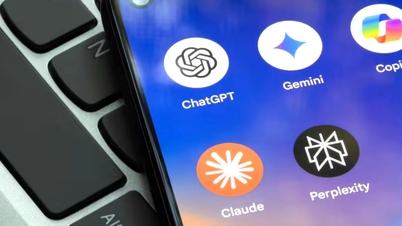
Tencent's Yuanbao and Moonshot's Kimi apps temporarily suspended image recognition services during the 2025 Gaokao (national college entrance examination). When asked for an explanation, the chatbots responded: "To ensure the fairness of the college entrance examinations, this function cannot be used during the exam period."
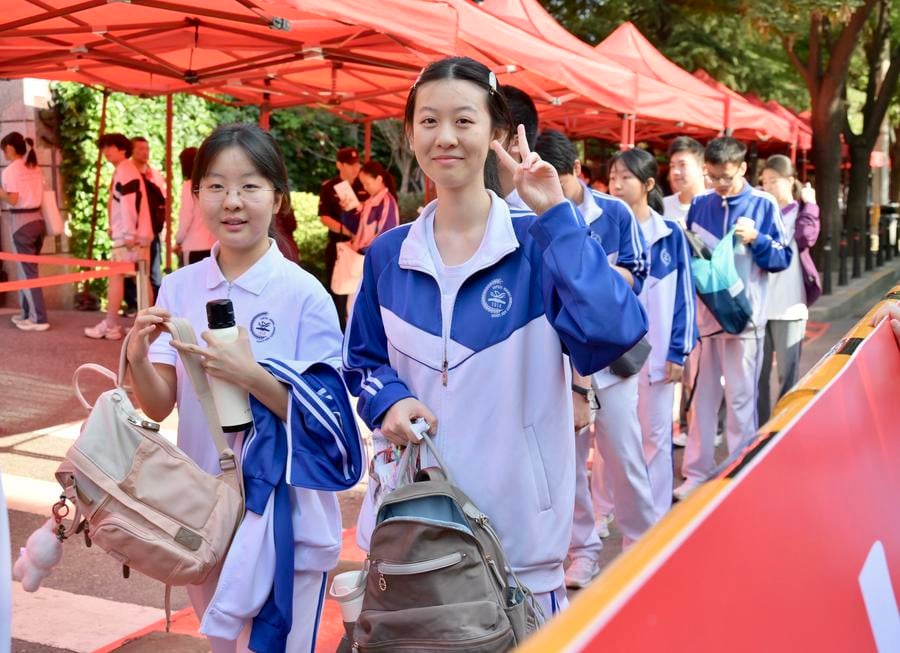
Chinese students take the Gaokao (national college entrance examination) in Beijing on June 7. Photo: Xinhua
This year, 13.35 million students in China are taking the college entrance exam. According to Bloomberg , as of June 9th, Alibaba's Qwen and ByteDance's Doubao tools were still providing image recognition services. However, when asked about exam photos, Qwen responded that the service was temporarily frozen during exam hours from June 7th to 10th, while Doubao replied that the image upload function did not comply with regulations.
China's Gaokao (National College Entrance Examination) is held annually in June, attracting millions of candidates. As the most important national examination, the Gaokao is also subject to extremely strict controls to prevent cheating. However, the rapid development of AI technology poses new challenges for schools and administrators.
Last month, the Ministry of Education released a set of regulations emphasizing that while schools should begin nurturing AI talent early on, students should not use AI-generated content as answers in homework assignments and tests.
The AI User Guide and the AI Generation User Guide for primary, middle, and high schools are important measures to standardize the promotion of AI training at all levels. Accordingly, the primary school stage focuses on cultivating basic interests and awareness, the middle school stage strengthens basic technical principles and applications, and the high school stage focuses on systematic thinking and innovative practices, while cultivating a "four-in-one" encompassing knowledge, skills, thinking, and values.
An education official stated that AI will be naturally and seamlessly integrated into subjects such as information technology, science , and in festivals, exhibitions, and projects. Through various practical activities, students will be able to showcase their creative achievements and exchange learning experiences, which will benefit their learning and personal growth.
The guidelines also aim to prevent students from becoming overly reliant on AI-generated learning, ensuring the technology is used effectively and appropriately to support teaching, promote personalized student learning, and enable smart educational management. Through multi-stakeholder collaboration involving " government , schools, businesses, families, and communities," it not only unlocks the innovative potential of technology-based education but also builds a solid foundation of educational values.
To prevent the weakening of independent thinking skills due to over-reliance on AI-generated content, the guidelines also establish a systematic preventative mechanism. On the one hand, students are strictly prohibited from directly copying AI-generated content for assignments or tests, and the overuse of AI in creative tasks is restricted. On the other hand, teachers' responsibility for guidance needs to be strengthened, and they are required to actively implement critical thinking training in their teaching practices, guiding students to analyze the logical flaws in AI-generated texts.
(According to Bloomberg and Xinhua)
Source: https://vietnamnet.vn/chatbot-ai-bi-dong-bang-de-ngan-chan-gian-lan-trong-tuyen-sinh-dai-hoc-2409721.html


![[Photo] Prime Minister Pham Minh Chinh presides over a meeting on private sector economic development.](/_next/image?url=https%3A%2F%2Fvphoto.vietnam.vn%2Fthumb%2F1200x675%2Fvietnam%2Fresource%2FIMAGE%2F2025%2F12%2F20%2F1766237501876_thiet-ke-chua-co-ten-40-png.webp&w=3840&q=75)



































































Comment (0)