

With his profound intellectual stature and philosophical poetic style, Che Lan Vien not only contributed to the renewal of Vietnamese poetry but also opened up new depths of understanding for modern poetry.
He was a poet of philosophical questions, of anxious contemplation, and of the blending of the individual and the times. He began his poetic career very early, becoming famous at the age of 17 with his first collection of poems , *Dieu Tan* (1937) - a unique phenomenon of the New Poetry movement with its strange, captivating rhythm, imbued with surreal and spiritual elements. Although not yet revolutionary in nature, the collection revealed a melancholic inner self and a yearning for metaphysical beauty, which would later develop into the intellectual depths in his resistance and philosophical poetry.
After the August Revolution, Che Lan Vien entered a new era of poetry, deeply committed to revolutionary ideals, the resistance struggle, and national reconstruction. Transforming from a metaphysical poet into a fighter on the ideological and artistic front, he not only wrote poetry to reflect reality but also used it to explain and elevate reality with sharp philosophical thinking. A prominent feature of Che Lan Vien's poetic style is its profound philosophical depth and the "thought-driven" nature of his poetry, something few poets of that era dared to fully explore. For him, poetry is not only the voice of the heart but also the voice of intellect, of national and human consciousness. The words in his poetry often take on the form of philosophical discourse, of inquiry and reflection.
"When we are here, it is simply a place to live."
As we leave, the land suddenly transforms into a soul."
These verses reflect the interplay of personal emotions with the depth of national thought, representing a crystallization of the concrete and the abstract, of land and people, of the individual and the community.
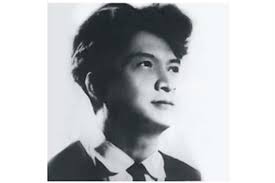
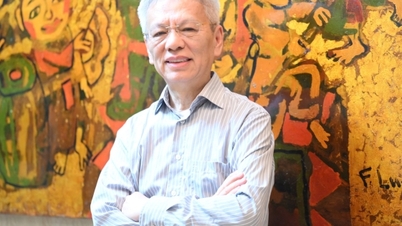
Poet Che Lan Vien
Photo: Archival material
Che Lan Vien also stands out with his concise, condensed language, full of layers of meaning, creating a poetic landscape imbued with spiritual and rational depth. He was one of the pioneers in bringing poetry into the depth of theory, enriching the poetry of the anti-French and anti-American wars by not only expressing the fighting spirit but also reflecting on values, ideals, and sacrifice.
In his poem " Has the Homeland Ever Been This Beautiful?", Che Lan Vien emphasized the aforementioned poetic style : "O Red River, the song of four thousand years/Has the homeland ever been this beautiful?/Not yet! And even in the most beautiful days/When Nguyen Trai wrote poetry and fought the enemy/Nguyen Du wrote Kieu, the country transformed into literature/ (...) These days I live are more beautiful than all the others/Even if tomorrow life is a million times more beautiful/Fruit falls into the clothes of those who admire the fruit/The path of humanity passes through the shade of lush green leaves ...".
LEAVING BEHIND A PRECIOUS POETIC LEGACY
Poet Chế Lan Viên, whose birth name was Phan Ngọc Hoan, was born in 1920 in Diễn Châu, Nghệ An. He was a member of the Communist Party of Vietnam and a member of the Vietnam Writers Association (1957). He passed away in 1989 in Ho Chi Minh City. He lived in Quy Nhơn as a child. In 1939, he went to Hanoi to study, then worked as a journalist in Saigon, and later taught in Thanh Hóa and Huế. In August 1945, he joined the revolution in Quy Nhơn, then went to Huế to work for the Quyết Thắng newspaper of the Central Vietnam Viet Minh. During the resistance against the French, he worked for newspapers in Zone IV, sometimes in Thanh Hóa , and sometimes in the occupied Bình Trị Thiên region. After peace was restored, Chế Lan Viên worked in Hanoi, holding many positions: Standing Committee Member of the Vietnam Writers Association; Member of the National Assembly for the 4th, 5th, 6th, and 7th terms; Member of the National Assembly's Unification Committee for the 4th and 5th terms.
Entering the Doi Moi (Renovation) period, Che Lan Vien was also one of the first to re-examine the responsibility of the artist in the post-war era. His poem "The Four-Faced Bayon Tower," written in 1988, is a new perspective, reflecting on himself and others in the past: " You are the four-faced Bayon tower / Hiding three, only you remain / Only that face holds a thousand smiles and tears / Causing pain to the other three faces in the realm of formlessness."
Che Lan Vien left many profound lessons for future generations of poets: Poetry is not only emotion but also intellect. Poetry can be a means of inquiry, reflection, and explanation of the great issues of the nation and humanity. ( to be continued )
Published works by Chế Lan Viên
Poems: Desolation (1937); To My Brothers (1954); Light and Alluvium (1960); Everyday Flowers - Storm-Predicting Birds (1967); Poems of Fighting the Enemy (1972); New Dialogue (1973); Flowers Before the Mausoleum of the Great Leader (1976); Harvesting According to the Season (1977); Flowers on the Stone (1985); Selected Works of Che Lan Vien (2 volumes, 1985); Posthumous Works I (1994); Posthumous Works II (1995).
Collections of essays: Golden Star (1942); Visiting China (1963); Days of Anger (1966); Hour of Success (1977).
Essays, critiques, and professional discussions: Talking about Literature and Poetry (1960); Literary Criticism (1962); Entering the Profession (1962); Thoughts and Commentary (1971); Flying Along the National Path (1976); Thinking Beside the Open Stream (1981); From Khue Van Pavilion to Trung Tan Restaurant (1981).
Literary awards : Award A of the Vietnam Writers Association in 1994 ( Posthumous Works I and II ); Award of the Vietnam Writers Association in 1995 (poetry collection Flowers on Stone ); Ho Chi Minh Prize for Literature and Arts, first round, 1996.
Source: https://thanhnien.vn/che-lan-vien-nha-tho-lon-trong-hai-cuoc-khang-chien-185250819224334629.htm




































![[Video] Sunset at Lap An Lagoon – Where the sun sets over the fishing nets](https://vphoto.vietnam.vn/thumb/1200x675/vietnam/resource/IMAGE/2026/05/31/1780192137701_beach-landscape-sea-water-nature-grass-745871-pxhere-com.jpeg)
























Comment (0)