

1. Throughout all stages of the revolution, our Party and State have always paid special attention to the prevention and fight against waste, issuing numerous resolutions, directives, and conclusions on this issue, and leading the entire political system and the whole population in organizing its implementation, achieving many positive results.
In response to the need to strengthen resources and unleash the people's potential to usher the country into a new era under the leadership of the Party, the fight against waste is facing new, urgent, and pressing demands and tasks.
During his lifetime, President Ho Chi Minh always emphasized the prevention and fight against waste. He warned , "Corruption, waste, and bureaucracy are enemies of the people, the army, and the government " 1 ; He pointed out , "Corruption is harmful, but waste is sometimes even more harmful: It is more harmful than corruption because waste is very widespread..." 2 ; "Although waste does not take public funds for personal gain, its results are also very harmful to the people and the government. Sometimes it is more harmful than corruption" 3 ;
He repeatedly emphasized , “We must cherish public property: All the food, clothing, and necessities of our compatriots are the sweat and tears of our people. We must be thrifty, preserve them, and not waste them ; “Corruption, waste, and bureaucracy are a kind of ‘enemy within’.”
If soldiers and the people strive to fight against foreign invaders but forget to fight against internal enemies, then they have not fulfilled their duty. Therefore, soldiers and the people must enthusiastically participate in that movement.” 5
Not only did President Ho Chi Minh frequently admonish, remind, and discuss the importance of saving and combating waste from a theoretical perspective, but he was also a shining example of practicing thrift and combating waste, inspiring the entire Party, the entire people, and the entire army to strive in emulation, mobilizing and converging potential and strength to defeat colonialism and imperialism, liberate the nation, and unify the country.
Since the start of the reform process, the Central Committee, the Politburo, and the Secretariat of various terms have issued numerous directives, resolutions, and conclusions on preventing and combating waste.
On August 21, 2006, the Third Conference of the Central Committee of the Party (10th term) issued Resolution No. 04-NQ/TW on strengthening the Party's leadership over the work of preventing and combating corruption and waste; on May 25, 2012, the Central Committee (11th term) issued Conclusion No. 21-KL/TW on continuing to implement the Resolution of the Third Conference of the Central Committee (10th term); on December 21, 2012, the Secretariat issued Directive No. 21-CT/TW on promoting the practice of thrift and combating waste; on December 25, 2023, the Politburo issued Directive 27-CT/TW on strengthening the Party's leadership over the work of practicing thrift and combating waste.
The documents of the 13th National Congress of the Party clearly state: “The work of preventing and combating corruption and waste… has not seen significant changes… the detection and handling of corruption and waste are still limited… Corruption and waste… are still serious and complex… becoming increasingly sophisticated, causing public outrage” 6 .
Institutionalizing the Party's policies, the Standing Committee of the 10th National Assembly issued the Ordinance on Practicing Thrift and Combating Waste in 1998; the National Assembly passed the Law on Practicing Thrift and Combating Waste in 2005 and 2013; the 2013 Constitution stipulates that "Agencies, organizations, and individuals must practice thrift, combat waste, and prevent and combat corruption in socio-economic activities and state management" 7 .
Implementing the resolutions, directives, and conclusions of the Central Party Committee, the Politburo, the Secretariat, the Constitution, and legal regulations, Party committees, governments, departments, and mass organizations at all levels, from the central to local levels, have more clearly defined their responsibilities in directing and organizing the implementation of tasks to prevent and combat waste. The effectiveness and efficiency of state management and the exploitation and use of the country's resources have been enhanced.
The state budget is strictly controlled from the planning stage to the execution and final accounting; the procurement, equipping, management, and use of assets, vehicles, and work equipment in agencies and organizations using the budget are carried out in accordance with prescribed norms, standards, and regulations; and the management of investment projects using state capital and assets has seen positive changes.
The restructuring and handling of state-owned houses and land have been implemented; the management and use of state capital and assets in enterprises, and the people's awareness of saving in production and consumption have seen many positive changes.
The results of practicing thrift and combating waste have contributed to the great achievements of the reform process; achieving and surpassing most economic and social development goals and targets over the terms, even in the context of unprecedented challenges such as epidemics and natural disasters; effectively mobilizing, managing, and utilizing human resources, material resources, and financial resources; ensuring national defense, security, foreign relations, social security, and social welfare of the country.
Besides the negative results, waste is also quite common, occurring in many different forms, and has been causing many serious consequences for development.
Wastefulness leads to a depletion of human and financial resources, reduced production efficiency, increased cost burdens, resource exhaustion, and an increase in the gap between rich and poor. Furthermore, wastefulness erodes public trust in the Party and the State, creates invisible barriers to socio-economic development, and causes the country to miss opportunities for growth.
Several forms of wastefulness are emerging acutely today, namely: The quality of lawmaking and the refinement of legislation do not meet the practical requirements of the reform process, leading to difficulties and obstacles in implementation, causing losses and waste of resources.
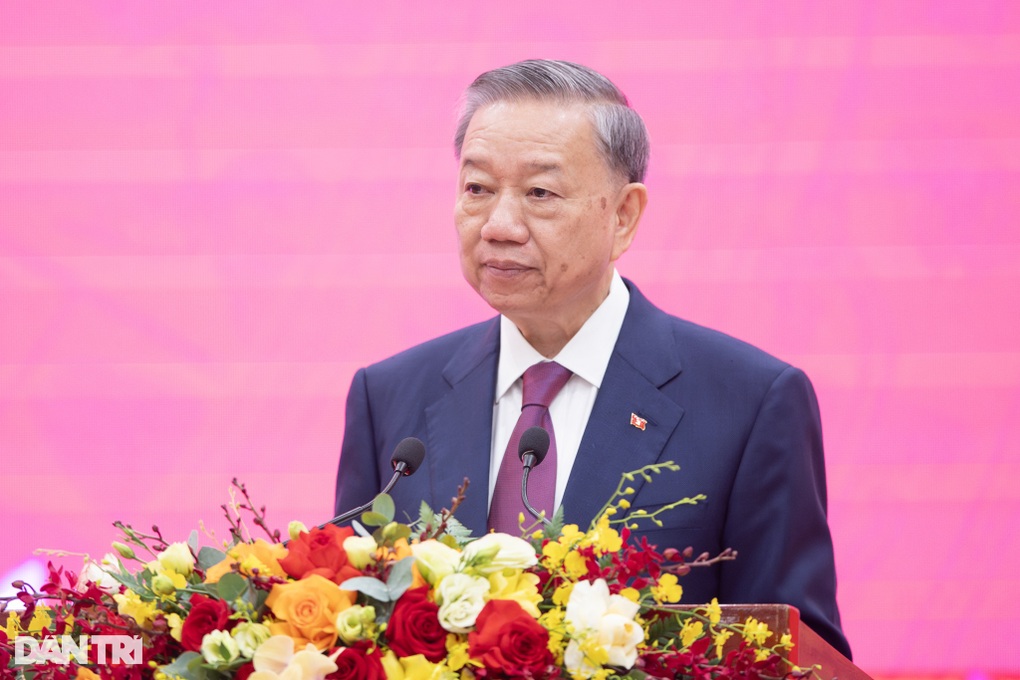
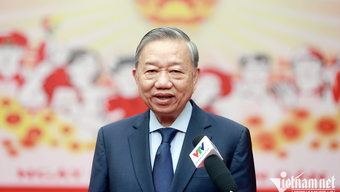
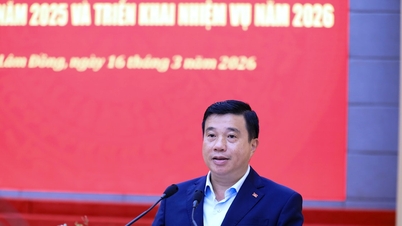
General Secretary and President To Lam (Photo: Tien Tuan).
Businesses and individuals waste time and effort due to cumbersome administrative procedures and inconvenient, non-smooth online public services. Opportunities for local and national development are wasted because the state apparatus sometimes operates inefficiently, with some officials engaging in corruption, incompetence, shirking responsibility, and fearing accountability; and due to low labor quality and productivity.
Waste of natural resources; waste of public assets due to inefficient management and use, including the disbursement of public investment capital; privatization and divestment of state-owned enterprises; restructuring and handling of state-owned houses and land, projects that use a lot of land and water resources; implementation of national programs and targets, and credit packages supporting social security development are mostly very slow.
Wastefulness in production, business, and consumption by the people occurs in many forms.
Besides the causes leading to each form of waste, there are also limitations in the implementation of resolutions, directives, and legal documents on preventing and combating waste; the system of standards, norms, and regulations, some of which are not in line with reality, are slow to be revised and supplemented; and the handling of waste has not been given sufficient importance, often being linked to the handling of corruption as a consequence.
A widespread emulation movement on practicing thrift and combating waste has not yet been created, nor has strong public opinion been formed to criticize and condemn wasteful behaviors. The development of a culture of thrift and non-wastefulness in society has not received adequate attention.
2. We are facing a historic opportunity to usher our country into an era of national progress. This is also the time to shape our future.
To seize opportunities, overcome challenges, significantly increase resources for the welfare of the people, enrich the country in the new revolutionary period, and build a better future, the fight against waste needs to be implemented decisively and synchronously with effective solutions, creating a strong ripple effect, becoming voluntary and conscious among every cadre, Party member, and citizen, and a culture of conduct in the new era; focusing on the following key solutions:
Firstly, it is necessary to unify the understanding that the fight against waste is a challenging and complex battle against an "internal enemy"; it is part of the class struggle; and it holds a position equivalent to the fight against corruption and negative phenomena in building a strong Party, "which is morality and civilization." Focus on widespread propaganda to raise awareness and responsibility among cadres, Party members, and workers, first and foremost through the exemplary leadership of leaders in each agency, organization, and individual in the public and private sectors, regarding the meaning, importance, and responsibility of practicing thrift and combating waste.
Saving and combating waste must be clearly demonstrated through commitments and plans, with leadership, specific targets, and carried out regularly and thoroughly. Practical campaigns and emulation movements on practicing saving and combating waste should be developed and implemented, creating a vibrant and widespread atmosphere of competition throughout the Party, the people, and the armed forces.
Timely commendation, rewarding, and replication of advanced models in effectively implementing the work of practicing thrift and combating waste.
Secondly, focus on perfecting and effectively implementing the institutional framework for preventing and combating waste; strictly punish individuals and groups whose actions cause loss and waste of public assets .
The Party has issued regulations specifically identifying manifestations of wastefulness in the performance of duties by cadres and Party members; defining the roles and responsibilities of Party committees, Party organizations, government agencies, and heads of agencies, organizations, and units in the work of preventing and combating wastefulness; and developing and implementing a national strategy on preventing and combating wastefulness.
Continue researching and amending legal regulations on practicing thrift and combating waste, aiming to create a complete and synchronized legal basis for monitoring, inspecting, detecting, and strongly and deterrently handling wasteful acts; and build a truly effective mechanism for monitoring and detecting waste by the Fatherland Front, mass organizations, and the people.
Strengthen the detection and strict handling of violations that cause significant waste of public assets, in the spirit of "handling one case to serve as a warning to the entire region and sector".
Thirdly, focus on thoroughly addressing the root causes of waste of public assets, natural resources, and resources intended for the welfare of the people and national development.
The focus is on: (i) Strongly innovating the work of building, perfecting and enforcing laws, considering this as an important factor in preventing and combating waste. In this, lawmaking must stem from practice; learning from experience as we go; avoiding perfectionism and haste; putting the people and businesses at the center and as the subjects; promptly resolving difficulties and obstacles, unlocking resources, resolving and overcoming bottlenecks, expanding space, and creating momentum for development.
Regularly evaluate the effectiveness and quality of policies after their promulgation to promptly address shortcomings and contradictions, and minimize resource losses and waste. Review and supplement regulations on management mechanisms and economic-technical standards that are no longer suitable for the country's development realities.
完善 regulations on handling wasteful practices; regulations on the management and use of public assets; institutional frameworks for the application of information technology and digital transformation, creating synergy in the transformation to minimize waste.
(ii) Thoroughly reform and minimize administrative procedures and compliance costs for citizens and businesses; combat bureaucracy.
(iii) Utilize resources, manpower, and materials efficiently; enhance sustainability and optimize work processes; improve energy efficiency. Resolve long-standing issues related to nationally important projects, key projects, projects with low efficiency causing significant losses and waste; and weak commercial banks.
Expedite the equitization process and improve the operational efficiency of state-owned enterprises.
In summary, the experience gained from implementing the 500kV circuit 3 power line project from Quang Trach (Quang Binh) to Pho Noi (Hung Yen) should be replicated to shorten the implementation time of key national and important public investment projects, expressways, key inter-regional projects, and projects with spillover effects.
(iv) Focus on building and streamlining the organizational apparatus of the Party, National Assembly, Government, Fatherland Front, and socio-political organizations to operate effectively and efficiently; build a team of cadres, especially leaders at all levels, with sufficient qualities, capabilities, and prestige to match the tasks in the new conditions. Implement specific solutions to increase labor productivity and enhance the value of Vietnamese labor in the new period.
Fourth , build a culture of preventing and combating waste; make the practice of saving and combating waste "conscious," "voluntary," and "everyday necessities like food, water, and clothing."
Building a culture of thrift and combating waste in agencies and organizations; encouraging the people to strengthen the practice of thrift and combat waste, creating a habit of valuing state assets, the people's efforts, the collective contributions, and the efforts of each individual; considering the practice of thrift and combating waste as a daily task.
Implement synchronized solutions to build a culture of saving and a sense of frugality; develop a scientific work mindset, manage time effectively, and foster social ethical responsibility coupled with strict adherence to discipline and regulations.
VI Lenin said , "We must practice extreme austerity in our state apparatus."
We must eradicate all traces of waste that monarchical Russia and its capitalist bureaucracy have left behind in abundance . 8 Beloved President Ho Chi Minh emphasized , “To advance towards socialism, we must overcome shortcomings, that is, we must increase production, save, fight waste, and protect public property.” 9 To lead the country steadily towards socialism, to successfully achieve the strategic goals of the 100 years under the leadership of the Party, the 100th anniversary of the founding of the nation, we must resolutely prevent and combat waste in conjunction with preventing and combating corruption and negative phenomena.
TO LAM
General Secretary of the Central Committee of the Communist Party of Vietnam
President of the Socialist Republic of Vietnam
———————
[1] Ho Chi Minh: Complete Works, National Political Publishing House, Hanoi, 2011, vol. 7, p. 357
[2] Ho Chi Minh: Complete Works, op. cit., vol. 7, p. 345
[3] Ho Chi Minh: Complete Works, op. cit., vol. 7, p. 357
[4] Ho Chi Minh: Complete Works, op. cit., vol. 9, p. 221
[5] Ho Chi Minh: Complete Works, op. cit., vol. 7, p. 362
[6] Documents of the 13th National Congress of Delegates, National Political Publishing House, Hanoi, 2021, vol. 1, pp. 92, 93
[7] Constitution of the Socialist Republic of Vietnam, National Political Publishing House, Hanoi, 2013, p.12
[8] V. Lenin: Complete Works, Progress Publishers, Moscow, 1979, vol. 45, pp. 458, 459
[9] Ho Chi Minh: Complete Works, op. cit., vol. 11, p. 110
Dantri.com.vn
Source: https://dantri.com.vn/xa-hoi/chong-lang-phi-20241013102423085.htm

![[Photo] Prime Minister Pham Minh Chinh holds a phone call with Angolan President João Manuel Gonçalves Lourenço](https://vphoto.vietnam.vn/thumb/1200x675/vietnam/resource/IMAGE/2026/03/16/1773674632171_ndo_br_dsc-4772-jpg.webp)
![[Photo] Prime Minister Pham Minh Chinh presides over meetings of the Government Standing Committee to discuss several important issues.](https://vphoto.vietnam.vn/thumb/1200x675/vietnam/resource/IMAGE/2026/03/16/1773674631996_ndo_br_img-5789-jpg.webp)
![[Photo] Prime Minister Pham Minh Chinh receives the Ministers of Foreign Affairs, Defense, and Public Security of China.](https://vphoto.vietnam.vn/thumb/1200x675/vietnam/resource/IMAGE/2026/03/16/1773659638054_ndo_br_dsc-4386-6157-jpg.webp)
![[Photo] General Secretary To Lam receives the Chinese Ministers of Foreign Affairs, National Defense, and Public Security attending the Conference on the “3+3” Strategic Dialogue Mechanism](https://vphoto.vietnam.vn/thumb/1200x675/vietnam/resource/IMAGE/2026/03/16/1773659640884_a1-bnd-0963-2144-jpg.webp)
![[Photo] Secretary of the National Assembly Party Committee, Chairman of the National Assembly presides over the fourth meeting of the National Assembly Party Committee Executive Board.](https://vphoto.vietnam.vn/thumb/1200x675/vietnam/resource/IMAGE/2026/03/16/1773656046264_ndo_br_bnd-0533-jpg.webp)




























































Comment (0)