

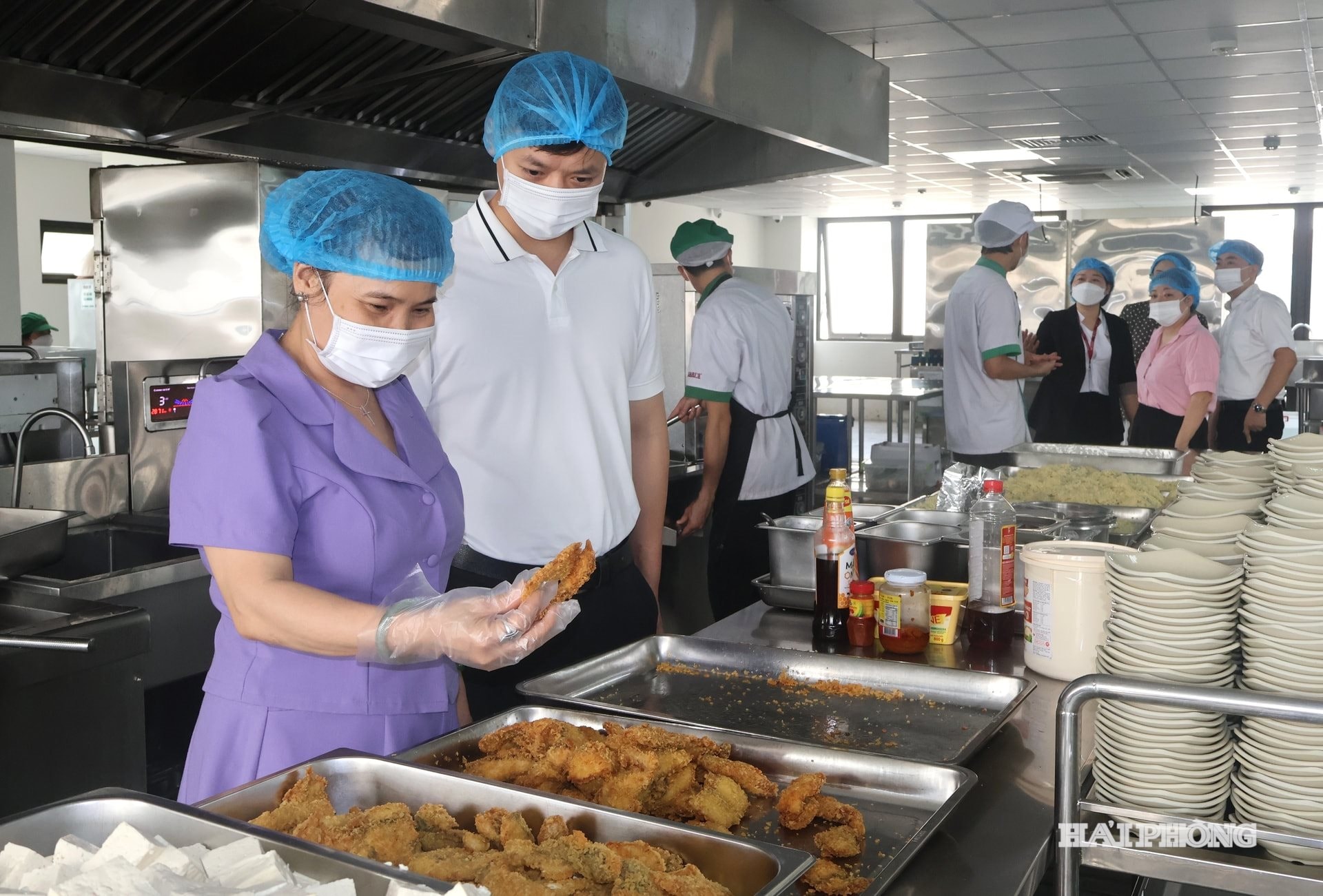
The hot, humid summer weather, with alternating rain and sunshine, always poses a risk of disease outbreaks. Dr. Dong Trung Kien, Director of the Hai Phong Center for Disease Control (CDC), spoke with reporters from Hai Phong Newspaper and Radio & Television about the current situation and key directions for implementing comprehensive and effective disease control measures during the summer months, starting early and at the grassroots level.
- Summer is often a time when many infectious diseases increase. Could you please tell us which diseases are at high risk of outbreaks in Hai Phong and what the main causes are?
- Summer is always identified by the health sector as the peak season for many infectious diseases. In Hai Phong, through the disease surveillance system, we have recorded a significant increase in the risk of several diseases such as hand, foot and mouth disease, dengue fever, respiratory diseases (seasonal flu, COVID-19), and some gastrointestinal diseases such as acute diarrhea, and the risk of food poisoning, especially in collective kitchens...
Of particular note are hand, foot, and mouth disease and dengue fever – two diseases with distinct seasonal characteristics. Regarding hand, foot, and mouth disease, the number of cases in the city during the first few months of 2026 showed a rapid increase, exceeding 1,000 cases. Recently, dozens of cases have been recorded in a single day. Of concern is the appearance of severe cases (grades 2b and 3), indicating that the virus is highly virulent and spreading rapidly. The majority of cases are concentrated in children under 5 years old, especially those under 3 years old.
Dengue fever cases are still being recorded sporadically in the area, warning of the risk of the disease spreading in the community and escalating strongly in the coming period if not prevented and treated promptly and thoroughly. In addition, according to records in Hai Phong from the beginning of the year to date, there have been more than 30 cases of COVID-19, while in the same period last year only 4 cases were recorded.
The increase in summer diseases is primarily due to weather conditions. Prolonged hot weather combined with rain showers creates a favorable environment for disease-causing microorganisms to thrive, while also increasing the density of disease vectors such as mosquitoes. For hand, foot, and mouth disease, the virus can survive for a long time in the environment, especially in hot and humid conditions.
Furthermore, social factors also play a significant role. Hai Phong is a densely populated area with many industrial zones and densely populated residential areas; children are concentrated in preschools and private daycare centers… These are environments where diseases can easily arise and spread if not properly controlled. In addition, children's awareness of personal hygiene is still limited. Some parents still have a complacent attitude, failing to take their children for early examination when they show signs of illness, leading to the risk of community spread.

- So, what specific solutions has the Hai Phong CDC implemented to proactively monitor, detect early, and control the disease outbreak?
- We have clearly defined our position: Summer disease prevention and control must be implemented proactively, early, and at the grassroots level, avoiding passivity and surprises in all situations. In that spirit, the Hai Phong CDC advises the Department of Health and coordinates with localities to implement many solutions simultaneously, closely adhering to the practical realities and epidemiological characteristics of the city.
First and foremost, the epidemiological surveillance system needs to be strengthened in a comprehensive, continuous, and in-depth manner. Currently, the surveillance system is maintained smoothly from the city level down to communes, wards, and special zones. Disease data is updated daily, analyzed weekly, and categorized by area and disease group. This helps to identify high-risk areas early, as well as trends in the increase of each type of disease, such as dengue fever, hand, foot and mouth disease, respiratory diseases, and gastrointestinal diseases. Thanks to this, the health sector can proactively provide early warnings and implement timely intervention measures.
In localities with high numbers of cases, local health authorities proactively intervene from the outset. Upon detecting a case, rapid response teams are activated to conduct epidemiological investigations, quarantine affected areas, manage outbreaks, and guide residents on preventive measures. For dengue fever, activities to eliminate mosquito larvae and pupae, and spray insecticides are implemented comprehensively in residential areas. For hand, foot, and mouth disease, disinfection of the environment, school supplies, and children's toys—especially in schools and childcare facilities—is strictly enforced. For gastrointestinal diseases, the health sector strengthens food safety monitoring, inspects drinking water sources, and prevents outbreaks early on.
Alongside monitoring and managing outbreaks, communication efforts have been intensified, focusing on diverse approaches tailored to specific target groups. The city's CDC collaborates with local authorities to conduct awareness campaigns in communities, residential areas, schools, and industrial zones, focusing on practical topics such as personal hygiene, environmental sanitation, cooking food thoroughly, preventing mosquito bites, and recognizing early signs of the disease. Raising awareness and changing people's behavior is identified as a key factor in sustainable disease control.
A key highlight is the inter-sectoral coordination, especially with the education sector. At educational institutions, particularly preschools, children's health is monitored daily. When a suspected case is detected, the school proactively coordinates with parents to guide them to keep their children home from school and take them to a medical facility for examination and treatment. Simultaneously, they coordinate with local health authorities to handle the situation promptly, implement sanitation and disinfection of classrooms, and monitor close contacts to prevent the spread of the disease within the school environment.
Treatment is also organized scientifically, tailored to each patient group. Healthcare facilities are clearly categorized, ensuring effective reception and treatment. Mild cases are managed at the primary care level, while severe cases with complications are promptly referred to specialized hospitals.
Furthermore, ensuring adequate resources is always a top priority. Healthcare facilities are required to maintain sufficient reserves of medicines, supplies, disinfectants, and necessary equipment; and to assign medical staff to be on duty and ready to support localities when situations arise. Mobile rapid response teams for epidemic prevention and control are always ready to ensure quick, efficient, and effective handling from the moment an outbreak occurs.
It can be said that, with the synchronized implementation of solutions ranging from monitoring, handling, treatment to communication and resource allocation, Hai Phong is maintaining a proactive stance in preventing and controlling summer diseases, not only hand, foot and mouth disease but also other infectious diseases, contributing to protecting public health and stabilizing social life.
- What advice do you have for the public on proactively preventing summer illnesses, especially for vulnerable groups such as children and the elderly?
- It can be affirmed that the role of the people is extremely important in the prevention and control of epidemics. No matter how hard the health sector tries, it will be difficult to achieve high effectiveness without the coordination and proactive participation of the community.
For hand, foot, and mouth disease, people need to strictly implement personal hygiene measures, especially families with young children. Children should wash their hands frequently with soap, before eating and after using the toilet. This is a simple but very effective measure in preventing the disease. Families should regularly clean their homes, toys, and children's utensils; ensure food is cooked thoroughly, water is boiled, and clean water sources are used. These are basic factors that help limit the risk of infection.
Parents need to closely monitor their children's health. If children show symptoms such as fever, mouth sores, or rashes on their hands and feet, they should be taken to a medical facility for timely examination and advice. Do not be complacent or attempt self-treatment at home without guidance from a healthcare professional. Children who are sick should stay home from school and limit contact with other children to prevent the spread of the disease. Simultaneously, implement hygiene and disinfection measures as instructed.
For other diseases like dengue fever, people need to actively eliminate mosquito larvae, remove objects that hold stagnant water, and sleep under mosquito nets to prevent mosquito bites. For respiratory diseases, it is necessary to maintain the habit of wearing masks when in crowded places and to get vaccinated fully as recommended.
Regarding the COVID-19 situation in Hai Phong, there are no alarming developments, and cases are being closely monitored. The effectiveness of vaccines remains high, contributing to community protection. The Hai Phong CDC advises people to continue implementing preventive measures while maintaining a calm and non-panic attitude. Proactive prevention and cooperation with health authorities are crucial factors in effectively controlling the epidemic.
With the proactive efforts of the health sector and the cooperation of the people, we are confident that Hai Phong will continue to effectively control summer diseases, protect public health, and contribute to maintaining stability and socio-economic development of the city.
Thank you very much, sir!
DUC THANH (compiled)Source: https://baohaiphong.vn/chu-dong-kiem-soat-dich-benh-540602.html
![[Image] Shipbuilders exposed to steel and record-breaking heat.](https://vphoto.vietnam.vn/thumb/1200x675/vietnam/resource/IMAGE/2026/06/04/1780545781745_ndo_br_img-5402-4683-jpg.webp)




















































![[Video] Sunset at Lap An Lagoon – Where the sun sets over the fishing nets](https://vphoto.vietnam.vn/thumb/1200x675/vietnam/resource/IMAGE/2026/05/31/1780192137701_beach-landscape-sea-water-nature-grass-745871-pxhere-com.jpeg)































Comment (0)