

At the Ho Chi Minh City socio-economic press conference on May 14th, the Ho Chi Minh City Department of Tourism put forward a series of recommendations to tighten management of short-term apartment rentals. Notably, they proposed that the operation of tourist apartments should only be permitted with the consent of the management board or relevant residents.
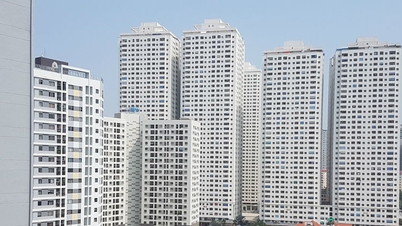
Airbnb boomed after Covid-19.
According to Mr. Le Truong Hien Hoa, Deputy Director of the Ho Chi Minh City Department of Tourism, the development of online booking platforms is an inevitable trend in the context of the digital economy and international integration. Especially after the Covid-19 pandemic, the accommodation needs of tourists have changed significantly; many people choose to stay longer, combining tourism and remote work. This group of tourists often prioritizes private, flexible spaces with full amenities such as kitchens, washing machines, living rooms, etc., instead of traditional hotels. "The short-term apartment model has contributed to diversifying the accommodation supply, especially during holidays or when Ho Chi Minh City hosts major events," Mr. Hoa stated. The Department of Tourism also assessed that this type of accommodation helps spread the flow of tourists beyond the central area, boosting spending on food, transportation, and shopping in many residential areas; however, the rapid and spontaneous development of Airbnb in recent times is posing a series of challenges.

Experts believe that the legal framework for short-term accommodation models needs to be finalized soon.
Photo: Le Nam
One of the biggest issues is the conflict between actual residents and apartment owners who operate short-term rentals. According to the Ho Chi Minh City Department of Tourism, most Airbnb properties are currently located in residential apartment buildings, while the Housing Law strictly prohibits the use of apartment units for purposes other than residential use. This is a point of legal conflict between the current Housing Law and the Tourism Law.
Speaking with Thanh Nien newspaper on the afternoon of May 19th, Dr. Duong Duc Minh, Deputy Director of the Institute for Economic and Tourism Development Research, stated that the global trend in Airbnb management has changed significantly in recent years. While many cities previously viewed Airbnb as a symbol of the digital economy, most major urban areas now shift to stricter management to protect access to housing, maintain community stability, and ensure sustainable tourism development.
Singapore virtually prohibits short-term stays in residential spaces, with minimum rental periods of 3 months for private homes and 6 months for public housing. New York (USA) requires landlords to register their properties and holds digital platforms legally responsible for violations. Barcelona (Spain) even announced the termination of all tourist apartment permits by 2028 to restore housing for residents. In reality, constant visitor traffic can put pressure on elevators, parking lots, waste disposal, noise levels, and fire safety systems, while most apartment buildings in Ho Chi Minh City are designed for stable residential use, not for hotel operations.
Is "resident consensus" enough?
Based on the above situation, the Ho Chi Minh City Department of Tourism proposed regulations clearly defining which areas are permitted to operate tourist apartments, the scale of operation, and requiring "the consent of the management board or relevant residents." However, many experts believe that a comprehensive legal framework is needed, including mandatory registration, guest declaration, tax obligations, fire safety standards, rental time limits, the responsibility of the digital platform, and a transparent monitoring mechanism. "Only with a comprehensive management system can Airbnb survive as part of the sharing economy and modern urban tourism without affecting the social structure, living environment, and long-term sustainable development goals of Ho Chi Minh City," said Dr. Duong Duc Minh.

Ho Chi Minh City is seeking to bring short-term apartment rentals under regulated control.
Photo: Le Nam
Dr. Chau Huy Quang (Rajah & Tann LCT law firm) believes that soliciting resident opinions can be a governance solution to address emerging needs, but it cannot unilaterally change the legal nature of the approved project's function. According to him, the 2023 Housing Law recognizes the right of owners to rent out their legally owned housing. However, current legislation lacks clear criteria to determine when apartment rental activities transition from residential use to commercial accommodation business. The biggest difficulty in applying the "residential consensus" mechanism is defining the scope and legal value of this consensus. If only the majority principle is applied, the rights of minority resident groups could be significantly affected.
According to lawyer Diep Nang Binh, Head of Tinh Thong Law Office (Ho Chi Minh City Bar Association), there are currently no specific regulations on what percentage of residents must agree to short-term apartment rentals. Does this mean all residents agree or only those directly affected? Without clear regulations, practical application could easily lead to disputes and lawsuits. Granting the Management Board the power to "allow" or "not allow" short-term rentals risks exceeding its authority. Furthermore, the issue of protecting the rights of apartment owners who have already invested in rental properties arises. If the building management later votes against short-term rentals, how will this be handled? Will there be retroactive action or a mechanism for compensation? These are all legal questions that need answering.
Lawyer Binh suggested that Ho Chi Minh City should establish a system of specific conditions such as registration of accommodation activities, resident declaration, compliance with fire safety requirements, security and order, and clearly define the legal responsibility of apartment owners if tenants cause disorder or violate the law. Simultaneously, it is necessary to clearly classify purely residential apartment buildings and mixed-use projects with accommodation and commercial functions from the outset, instead of applying a single mechanism to all models. "It is impossible to apply the same management mechanism to purely residential apartment buildings and projects that have a mixed-use function from the outset, combining accommodation, commerce, and services. This is a very important point to avoid mechanical application, which affects the investment environment and the rights of homebuyers. In the long term, there needs to be consistency between the Housing Law 2023, the Tourism Law 2017, and regulations on residence and short-term accommodation business to avoid the current legal loopholes," said Lawyer Binh.
The condominium owners' meeting is currently primarily designed to decide on routine management and operational issues, and is not intended for changing the legal or operational nature of the project. Furthermore, the condominium management board is not a state management agency and does not have the authority to "legalize" an activity if that activity is not consistent with the initially approved function.
Dr. Chau Huy Quang, Rajah & Tann LCT Law Firm
Source: https://thanhnien.vn/chung-cu-cho-thue-ngan-ngay-ai-quyet-185260520185434009.htm




































































































Comment (0)